
- 18 Ağustos 2026
- 3490 defa okundu.
Mansiyon, TerraViva Urban Toilets
Spika Mimarlık'ın "TerraViva Urban Toilets" yarışması için tasarladığı proje, mansiyon ödülünü kazandı.
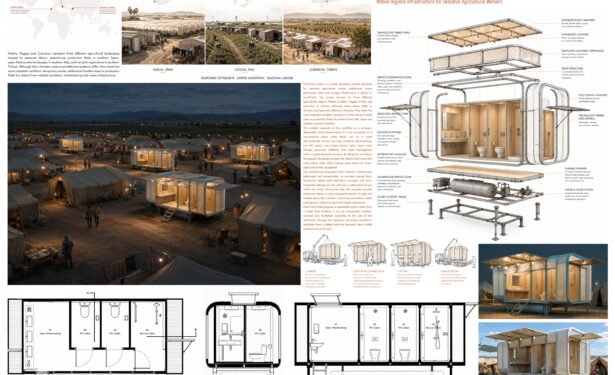
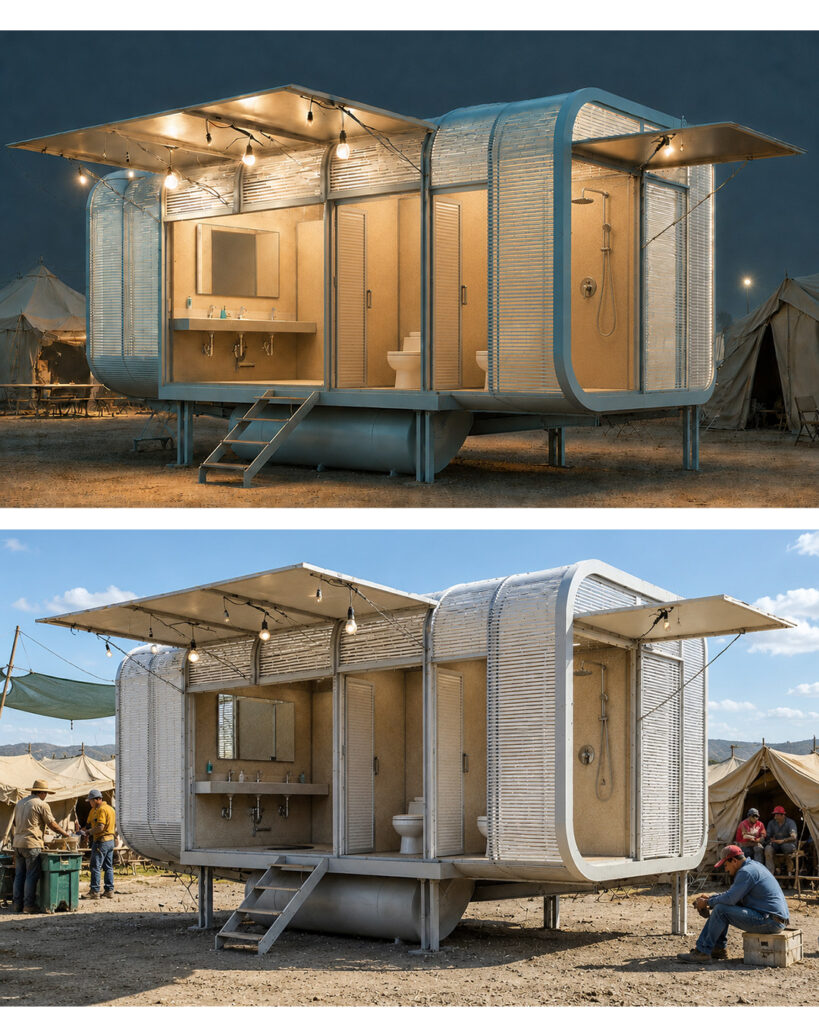
Urban Toilets yarışmasında Honorable Mention ödülünü kazanan Field Care Node; mevsimlik tarım işçilerinin geçici yerleşimlerinde sanitasyon ihtiyacını yalnızca teknik bir altyapı problemi olarak değil, insan onuru, bakım ve güvenlik üzerinden ele alan yaklaşımıyla dikkat çekiyor. Tasarım, kalıcı altyapının bulunmadığı veya yetersiz kaldığı tarımsal alanlarda temel hijyen hizmetlerini doğrudan yerleşimlere taşıyan, taşınabilir ve çoğaltılabilir bir mikro-altyapı sistemi öneriyor. Tuvalet, duş, temiz su ve el yıkama gibi temel ihtiyaçları tek bir yapı içerisinde bir araya getiren proje, sanitasyonu geçici yerleşimlerin görünmez bir teknik gerekliliği olmaktan çıkararak tanımlı ve erişilebilir bir mekansal deneyime dönüştürmeyi amaçlıyor. Yapının zeminden yükselen kurgusu ve gece bir fener gibi görünmesini sağlayan aydınlatması, farklı ve zorlu çevresel koşullarda hem işlevsel hem de güven veren bir odak oluşturuyor.
Proje Raporu:
Field Care Node
Mobile Hygiene Infrastructure for Seasonal Agricultural Workers
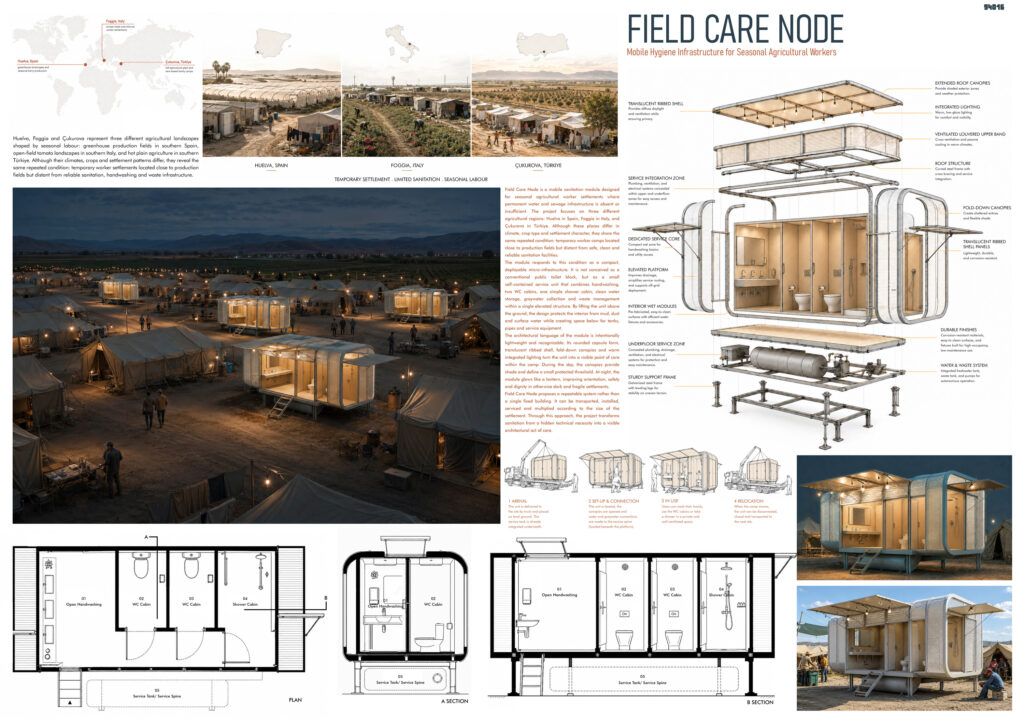
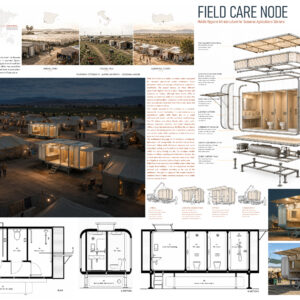
Field Care Node is a mobile sanitation module designed for seasonal agricultural worker settlements where permanent water and sewage infrastructure is absent, insufficient, or unable to respond to temporary population growth during harvest periods. The project addresses a repeated condition in agricultural landscapes: workers live close to fields and greenhouses, yet remain distant from safe, clean, and reliable sanitation facilities. Instead of treating the toilet as a secondary technical object, Field Care Node frames sanitation as an architectural act of care, visibility, dignity, and infrastructure.
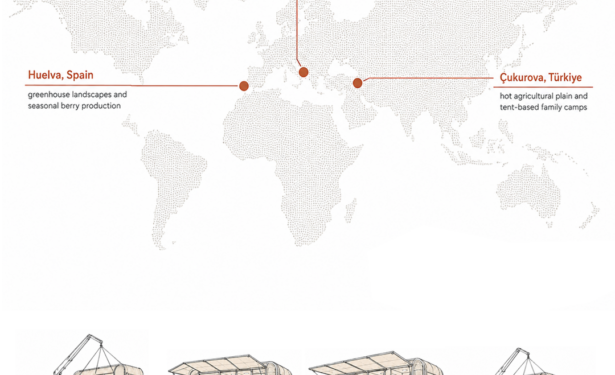
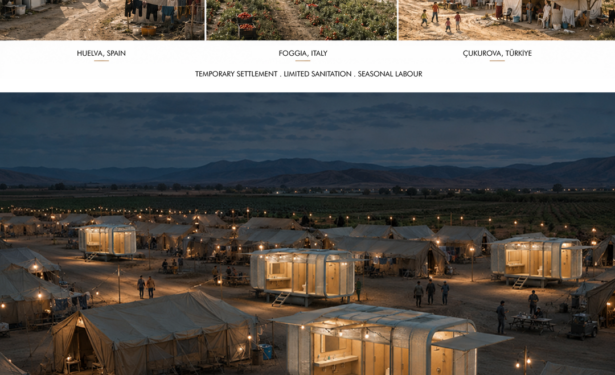
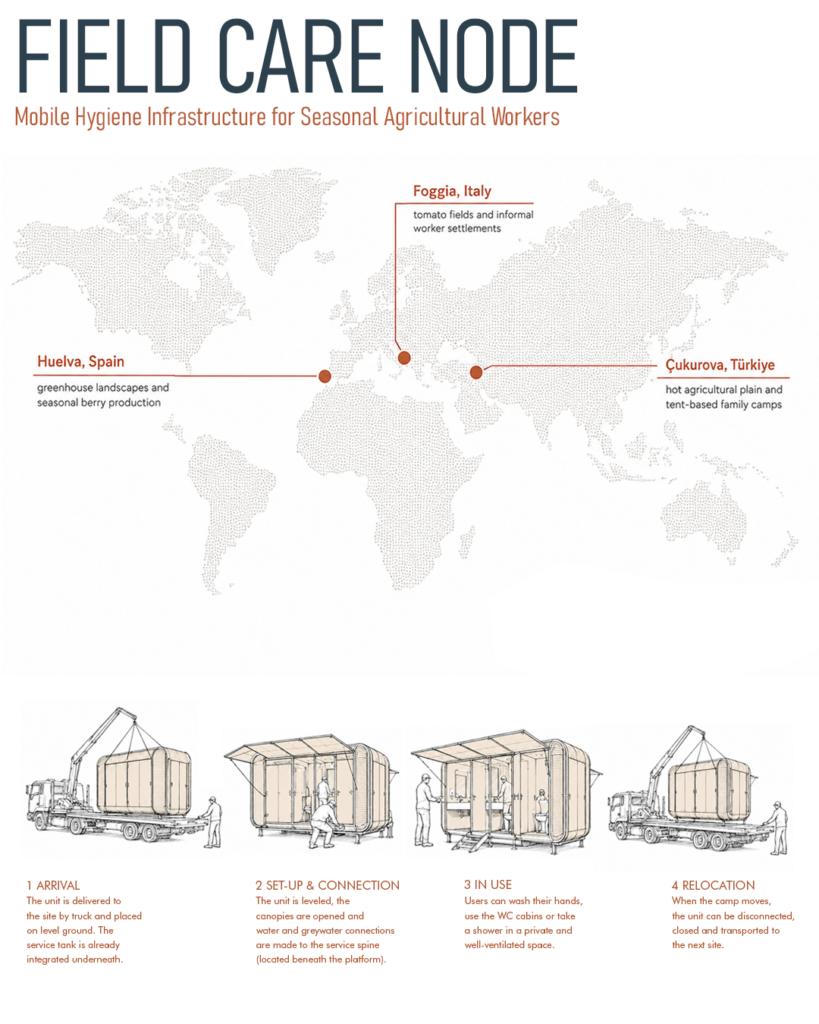
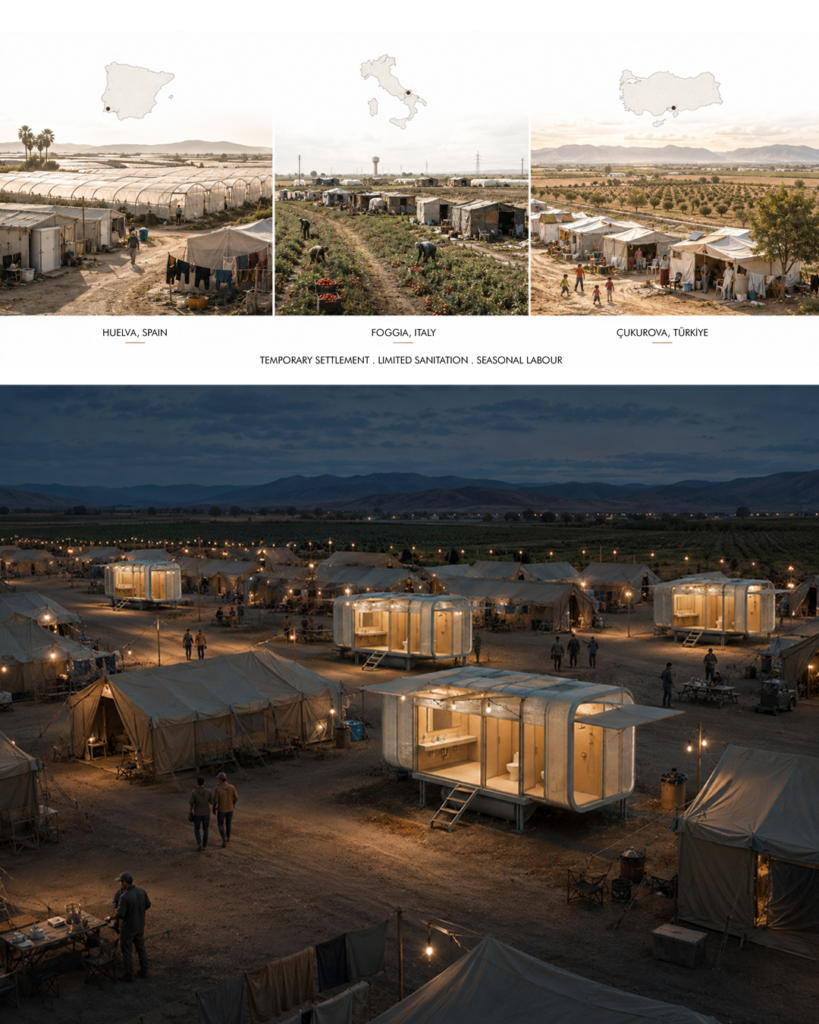
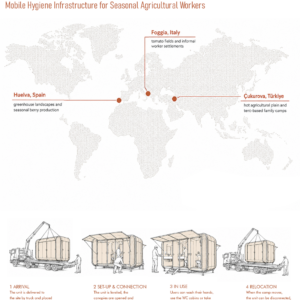
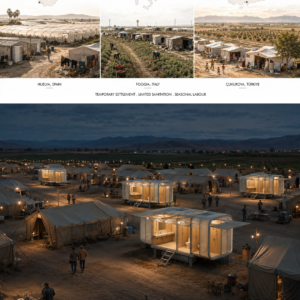
The project focuses on three agricultural regions: Huelva in Spain, Foggia in Italy, and Çukurova in Türkiye. These places differ in climate, crop type, labour patterns, and settlement character. Huelva is shaped by greenhouse and intensive agricultural production; Foggia represents open-field tomato landscapes in southern Italy; and Çukurova is defined by hot plain agriculture in southern Türkiye. Despite these differences, they reveal the same problem: temporary worker settlements are located near production areas but remain disconnected from dependable toilets, handwashing, water supply, and waste removal systems.
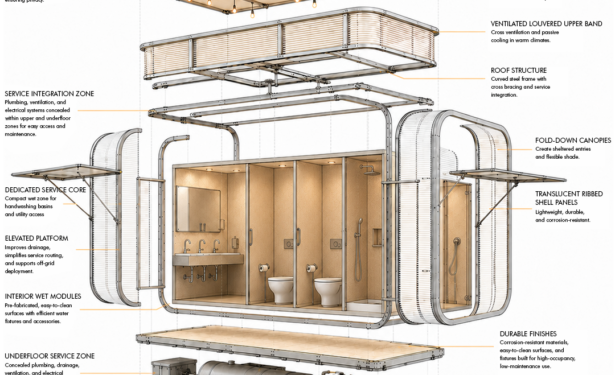
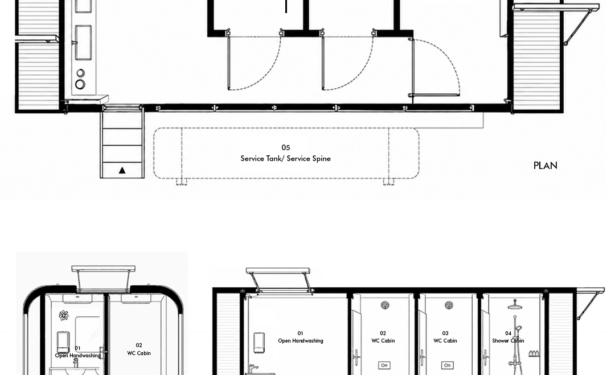
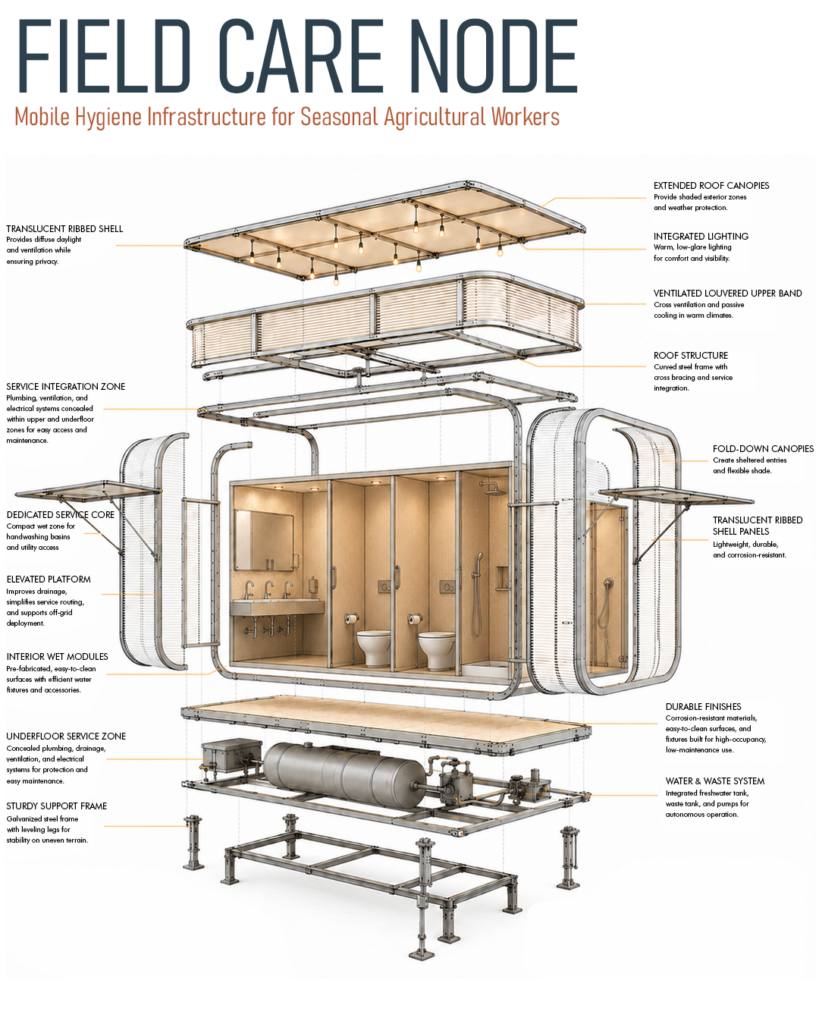
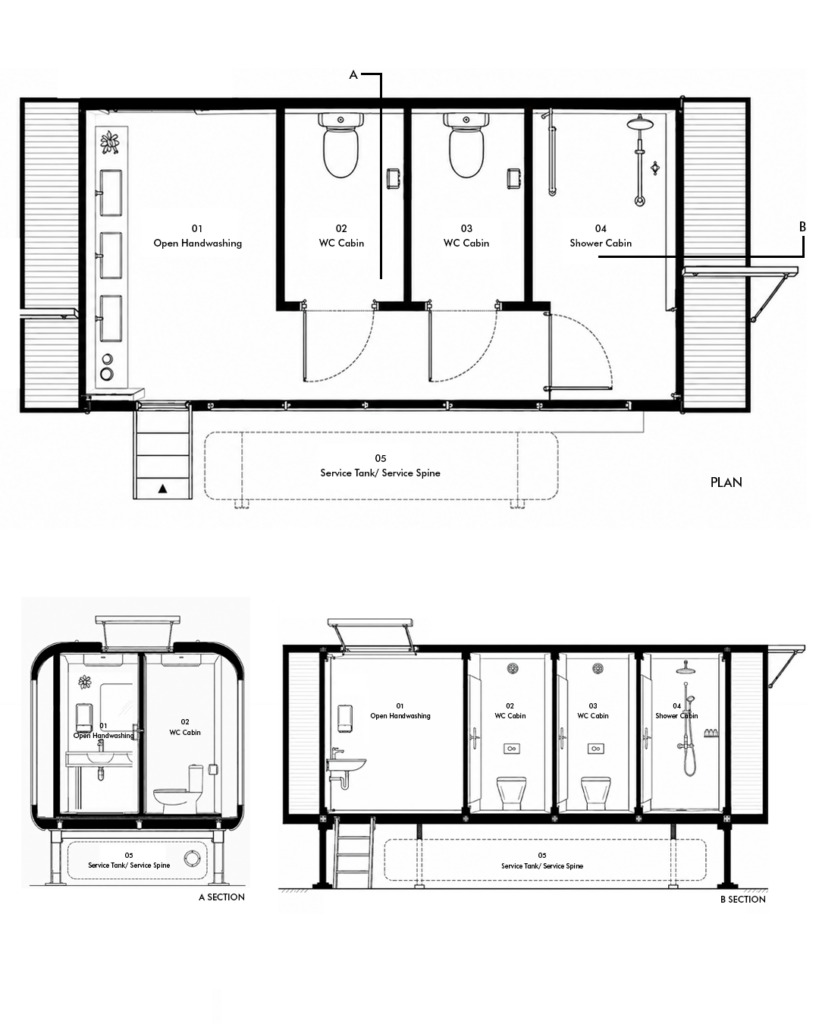
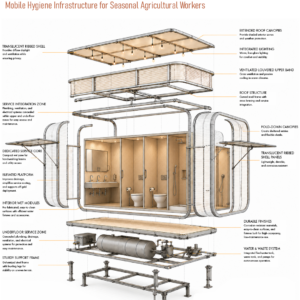
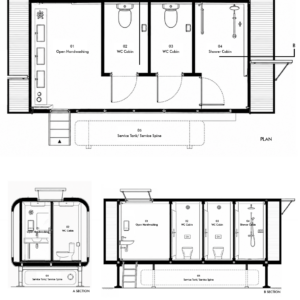
Field Care Node responds to this condition as a compact and deployable micro-infrastructure unit. It is not a conventional public toilet block or a generic portable WC cabin. It is a self-contained service module that brings essential hygiene infrastructure directly into temporary settlements. The unit combines an open handwashing area, two WC cabins, one simple shower cabin, clean water storage, greywater collection, blackwater management, and service connections within a single elevated structure. This organization allows the module to operate independently where fixed infrastructure is missing or unreliable.
The elevated platform is central to the design. By lifting the unit above the ground, the interior is protected from mud, dust, surface water, and uneven terrain. The space beneath the platform becomes a technical service zone for tanks, pipes, pumps, and maintenance equipment. Clean water is stored and supplied within the module, while greywater and toilet waste are collected separately and removed through a controlled service cycle. The project therefore does not wait for permanent infrastructure; it installs a temporary but effective sanitation system where it is urgently needed.
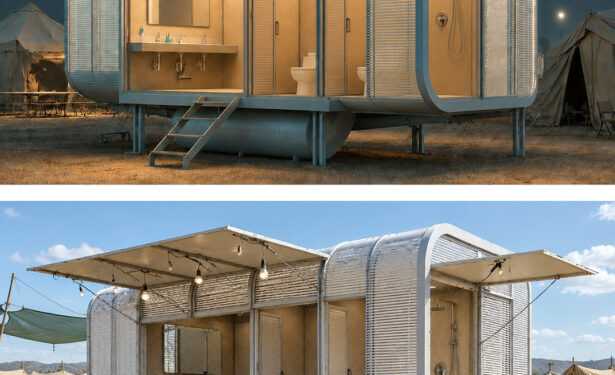
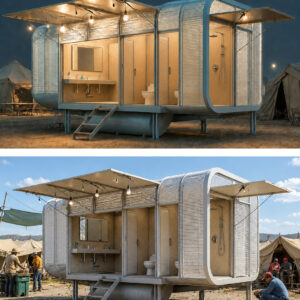
Architecturally, Field Care Node is lightweight, recognizable, and humane. Its rounded capsule form, translucent ribbed shell, fold-down canopies, and warm integrated lighting give the module a clear identity within the camp. During the day, the canopies provide shade and define a protected threshold. At night, the module glows like a lantern, improving orientation, safety, and visibility in dark settlements. This light is not decorative; it turns sanitation into a visible point of care.
Field Care Node is also a repeatable system. It can be transported, installed, serviced, and multiplied according to the size of the settlement. Multiple modules can form a small sanitation network connected by service routes for clean water delivery and waste removal. Through this approach, the project transforms sanitation from a hidden technical necessity into a visible architectural commitment to human dignity.
Etiketler