- 17 Haziran 2026
- 7485 defa okundu.
The Civic Kiosk
TerraViva Competitions tarafından düzenlenen "The Civic Kiosk" başlıklı yarışma için 4 Aralık 2026 tarihine kadar başvuru yapılabiliyor.
Intro
Newsstands have long been part of the everyday choreography of city life. Before becoming fixed kiosks, newspapers were sold by street criers, travelling vendors and small shops. It was during the 19th century, as many European cities began granting portions of public space for the sale of printed material, that the kiosk gradually took shape as a recognisable urban object.
Built in iron, wood, glass or masonry, these compact structures quickly became much more than points of sale. They were places where newspapers, magazines, comics, postcards, toys, cassettes, CDs and later DVDs coexisted under the same small roof.
Around them, daily rituals took shape through morning walks, familiar newsagents, brief conversations about the neighbourhood, coffee at the bar and the newspaper folded under one arm.
For decades, the kiosk was a familiar presence in almost every district, serving as a democratic gateway to information, culture and casual conversation. Yet from the early 2000s onwards, the digital revolution radically changed the way people read, communicate and access news.
As the habits surrounding printed media began to fade, the role of the kiosk entered a deep transformation…
The Competition
Cities are made of multiple layers: buildings, streets, infrastructures, green spaces, signs, benches, lights and countless small devices that quietly shape the way people meet, move and spend time outdoors. Within this complex urban fabric, the kiosk has always occupied a special position. Compact, recognisable and accessible, it is a microarchitecture capable of activating public life from a very small footprint.
The Civic Kiosk invites architects, designers and creatives to question how these small structures can evolve in response to contemporary needs. What new functions could give them a second life?
Could a kiosk change use throughout the day, serving coffee and newspapers in the morning, becoming a flower shop or book exchange in the afternoon, and transforming into a tiny open-air cinema at night?
Could it support daily routines, host cultural activities or offer unexpected services to the neighbourhood? Whether conceived as a practical device or a small social catalyst, its new life could take countless forms: from a local radio booth or a library to a venue for exhibitions and community events.
This competition is not only about redefining the function of the kiosk, but also about redesigning its architectural identity. Participants are invited to imagine how a 21st-century kiosk should look, feel and operate. Materials, colours, textures, openings, façades and structural systems are completely open to interpretation.
How does the kiosk appear when it is closed? How does it unfold, expand, illuminate or transform when active? Can its shutters become counters, screens, benches or canopies?
Last but not least, designers are encouraged to extend their intervention to the surrounding public space, incorporating seating, lighting, paving, shading devices, evening lightning, signage or other urban elements that enhance the overall proposal.
Be bold, experimental and optimistic, transforming an endangered urban typology into a new landmark for civic life.
Prizes
1° Prize: 3.000 $
2° Prize: 2.000 $
3° Prize: 1.000 $
5 Golden Mentions: coupon for a free membership
10 Honorable Mentions: coupon for a free competition
30 Finalists: published on Terraviva channels
Calendar
“Early” registrations: 16.06.2026 — 04.09.2026 (h 3:00 pm CET)
“Standard” registrations: 04.09.2026 — 06.11.2026 (h 3:00 pm CET)
“Late” registrations: 06.11.2026 — 04.12.2026 (h 3:00 pm CET)
Submission deadline: 04.12.2026 (h 3:00 pm CET)
Winners announcement: 11.01.2027 (h 12:00 pm CET)
Jury
• Athanasios Nikolopoulos [Milan, Italy] | AMDL Circle
• Valentina Tambovtseva [San Francisco, United States] | Jayson Architecture
• Samer El Sayary [Alexandria, Egypt] | Alexandria University
• Wenxi Qi [Dallas, United States] | Aproject Factory
• Yutao Chen [Los Angeles, United States] | HKS Architects
• Anna Galizia [Modena, Italy] | RS2 Architetti
• Yufeng Tu [Tokyo, Japan] | Nikken Sekkei
• Bahar Sultan Qurraie [Safranbolu, Türkiye] | Karabük University
Etiketler

Yarışmalar
-
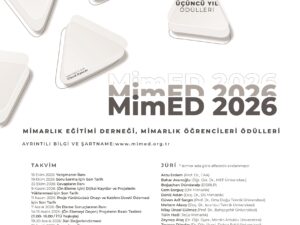
 MimED2026 Mimarlık Öğrencileri Proje Ödülleri
-
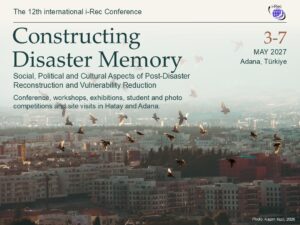
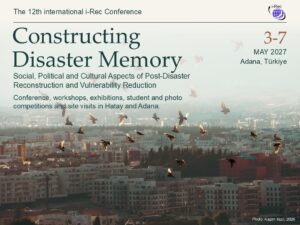
"Risk, Afet ve İyileşmenin Temsilleri: Eleştirel Peyzajlar, Mekanlar ve Anlamlar" Temalı Öğrenci Tasarım Yarışması
-
"Fotoğraf Aracılığıyla Afet Belleğinin İnşası" Temalı Fotoğraf Yarışması
-
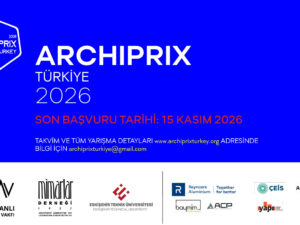
Archiprix Türkiye 2026
-
im2026 | İçmimarlık Öğrencileri Proje Yarışması