Katılımcı, International Competition for the Conceptual Architectural Design of the Central University Library in Podgorica

- 30 Aralık 2025
- 5557 defa okundu.
Katılımcı, International Competition for the Conceptual Architectural Design of the Central University Library in Podgorica
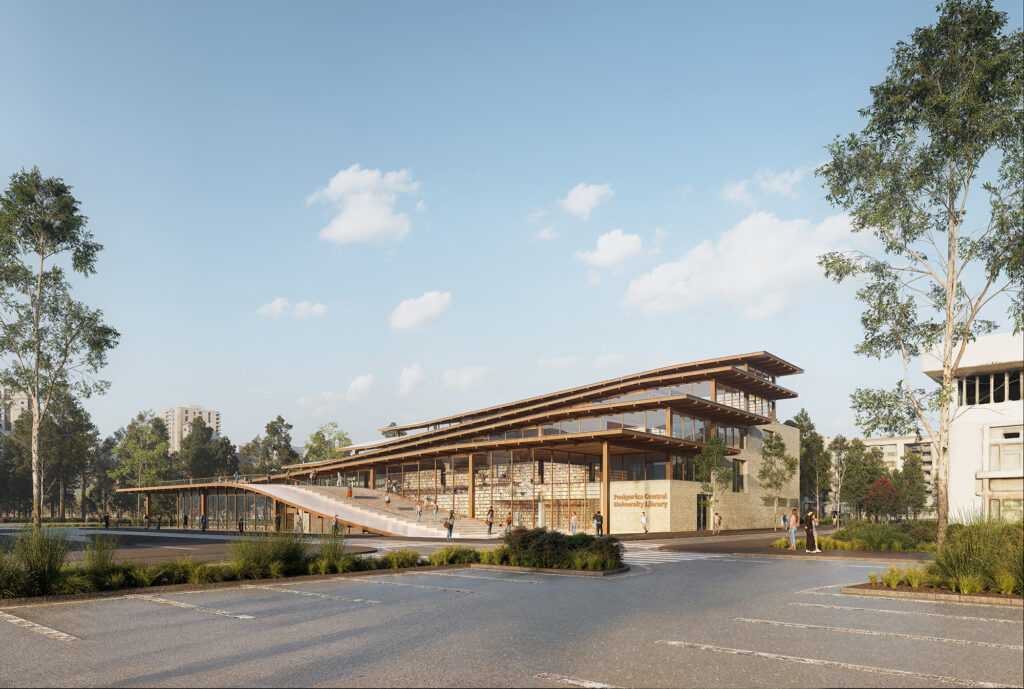
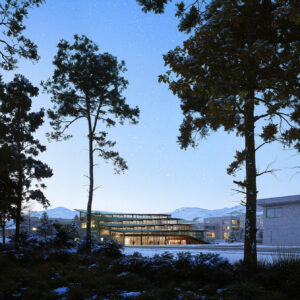
Studio FORA’nın "International Competition for the Conceptual Architectural Design of the Central University Library in Podgorica" için tasarladığı proje önerisi.
Proje Raporu:
Site Analysis and Contextual Readings
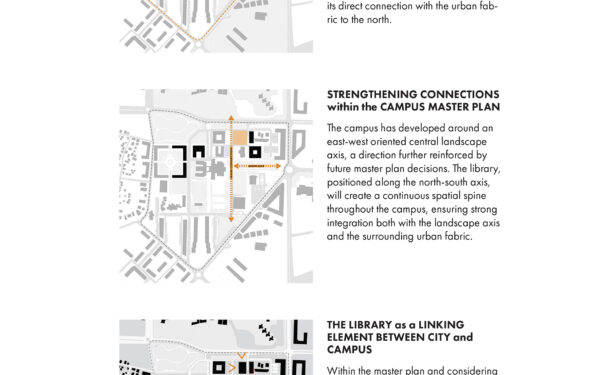
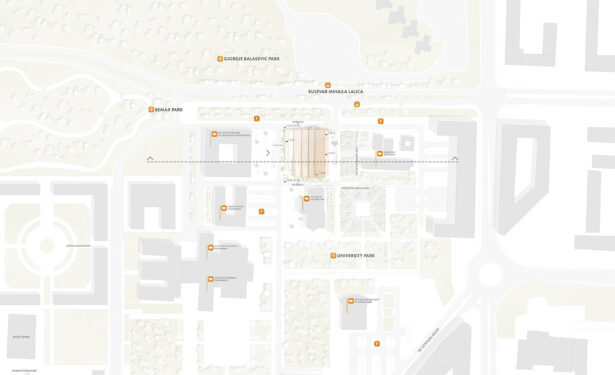
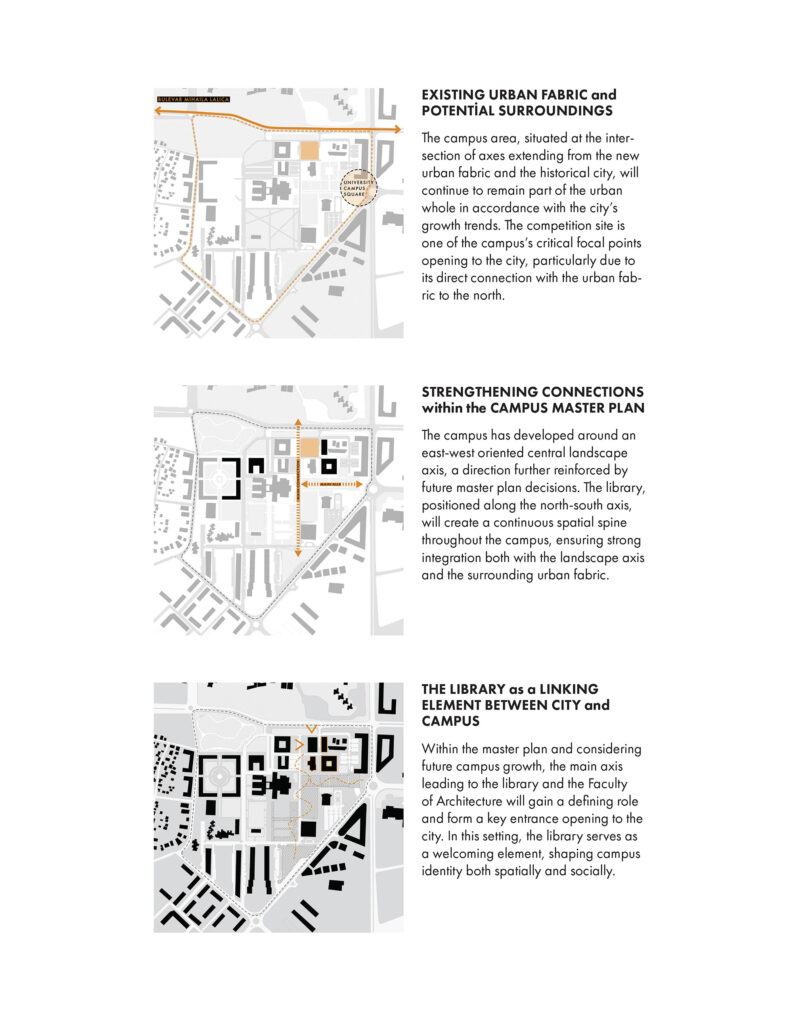
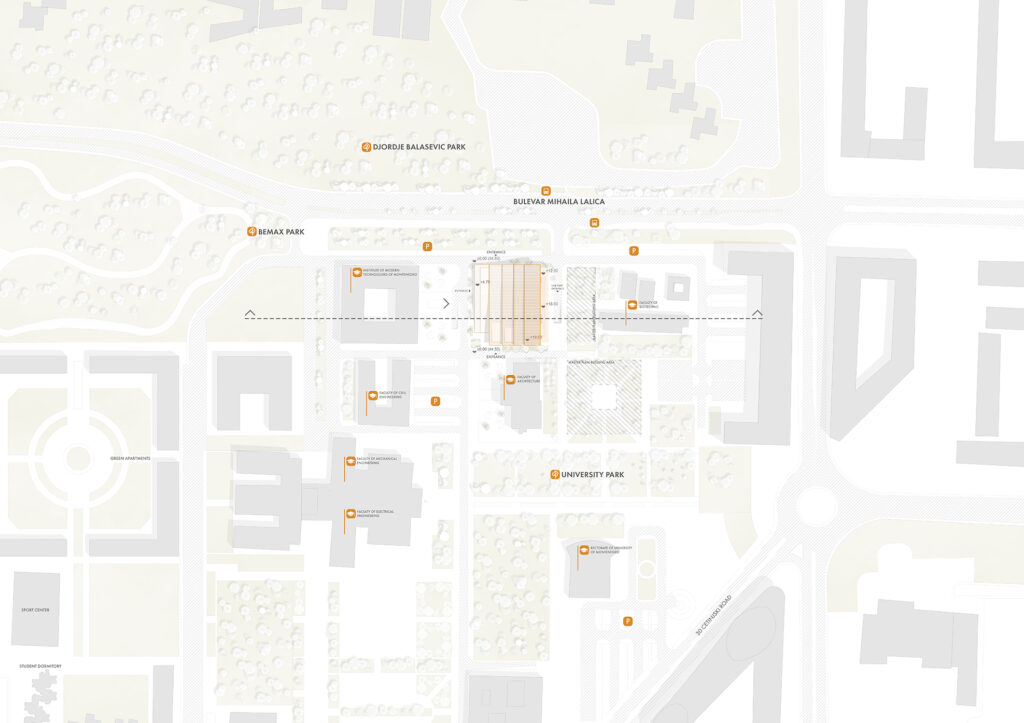
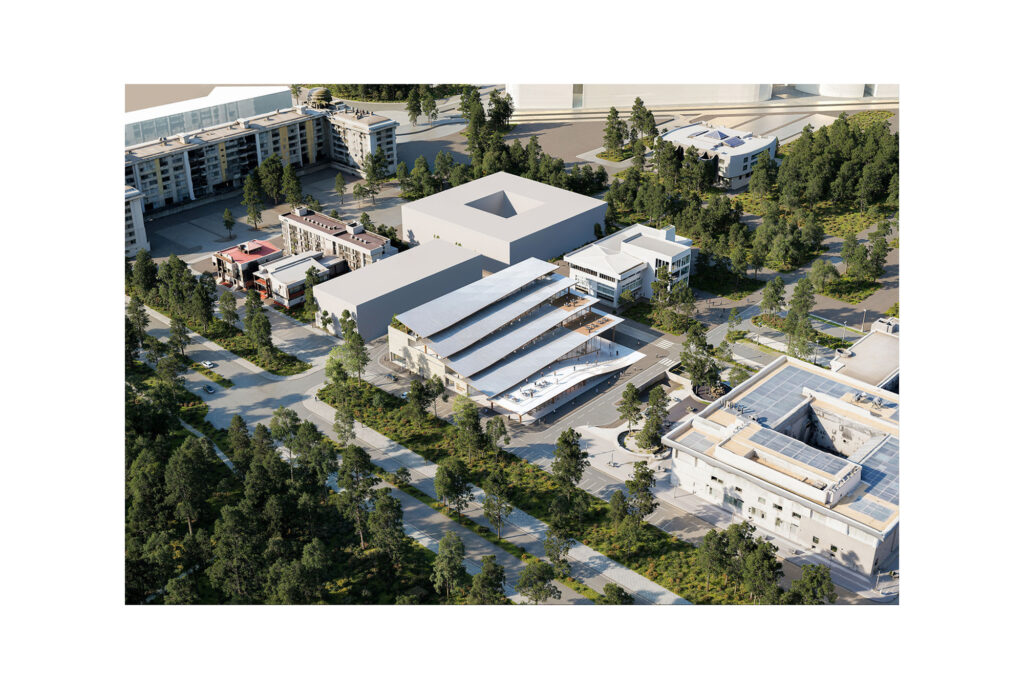
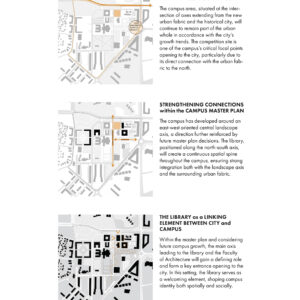
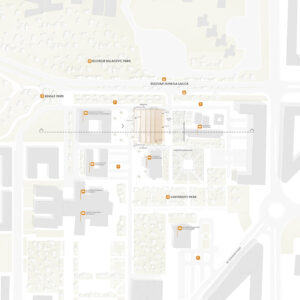
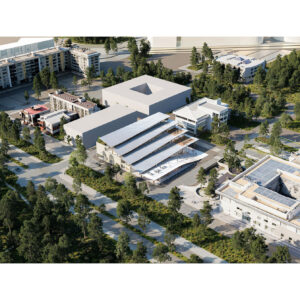
The library, located within the campus of the University of Podgorica, functions as a focal point that strengthens campus life around educational institutions and plays a unifying role. Situated on the northern edge of the campus, the building holds strategic significance due to its position both at the interface between the campus and the city, and adjacent to the main internal axes of the campus. Accessible via Mihaila Lalica Street, which connects directly to the city’s commercial, tourism, and residential centers, the central library is designed as a public space operable throughout the day, aiming to provide spatial and social added value to its immediate surroundings.
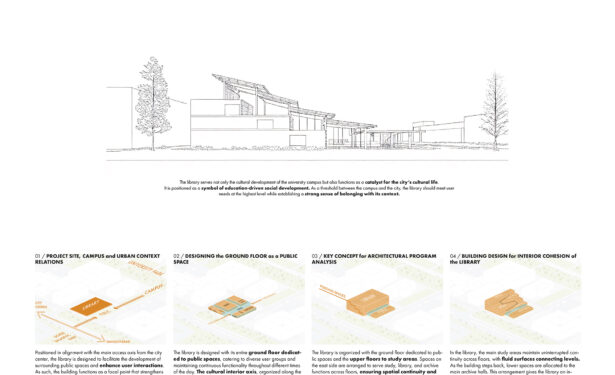
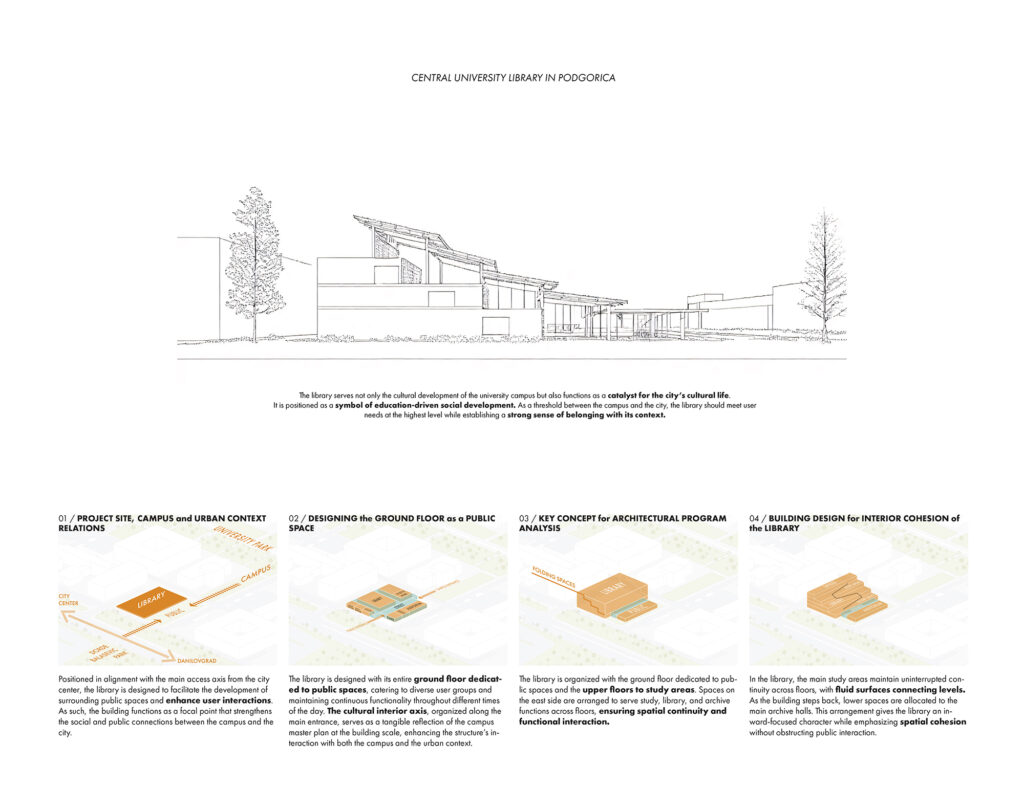
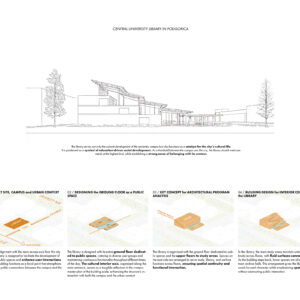
The library serves not only the cultural development of the university campus but also functions as a catalyst for the city’s cultural life. It is positioned as a symbol of education-driven social development. As a threshold between the campus and the city, the library should meet user needs at the highest level while establishing a strong sense of belonging with its context.
A review of Podgorica’s historical development reveals that the city has gradually expanded toward its peripheries under different urban planning approaches. This process has fostered a unique spatial condition, allowing urban forms from various periods to coexist. From the ancient city of Doclea to the Ottoman-era neighborhoods, pre-World War II urban areas, and regions developed during the Soviet period, these layers constitute complementary elements of Podgorica’s urban fabric, preserving historical continuity. In this context, the city’s spatial organization and architectural continuity support social interactions from different periods, reinforcing the urban identity. Moreover, strategic planning approaches facilitate the functional integration of historical and modern textures, creating a sustainable framework for spatial coherence and social interaction in Podgorica’s urban development.
Despite changes in urban planning philosophies over time, the city’s geographic characteristics—mountains and rivers—remain central to its urban memory. The city’s defining traits are deeply rooted in its historical and spatial memory. Respecting local and natural elements while acknowledging unique geographic conditions is essential for preserving urban memory, maintaining landscape continuity, and sustaining cultural heritage. Consequently, producing sustainable architectural structures that respond to contemporary needs, harmonize with the local context, integrate environmentally, and reinforce urban identity should be a core objective in the city’s development.
Conceptual and Functional Framework in Library Design
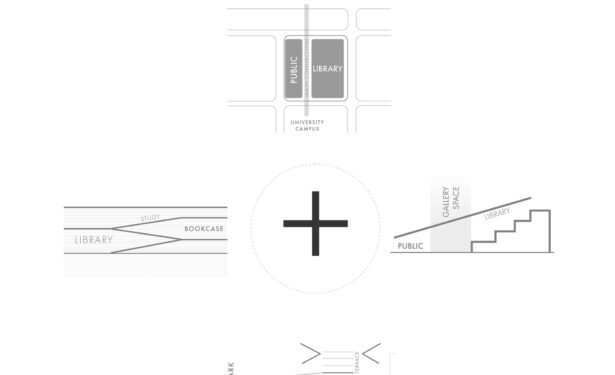
Based on preliminary analyses of the city and campus, the spatial, social, and cultural context of the library site was evaluated, along with the potential contributions of the building to its immediate surroundings. Within this framework, the following key design questions were defined to optimize both user experience and urban interaction:
1. Urban and Campus Positioning: How should the library be located at the intersection between campus and city to ensure visual and functional coherence? The answer will determine its role as both a campus focal point and an interface to the city.
2. Interior Spatial Layout and Scale: Can spaces of varying scales be organized around a coherent internal structure that satisfies all user needs, ensuring functional and experiential continuity?
3. Integration of Archive Areas: Can the core archive spaces be maximally integrated across the floors to create an accessible and spatially cohesive structure?
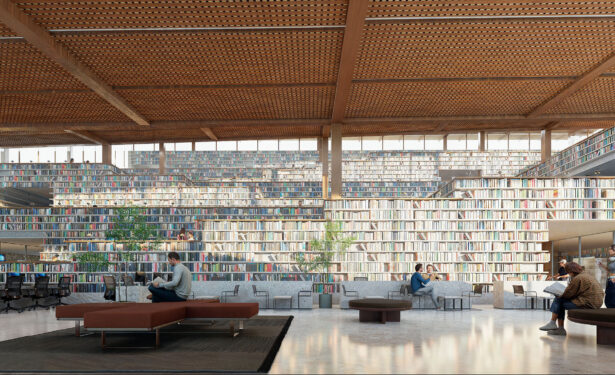
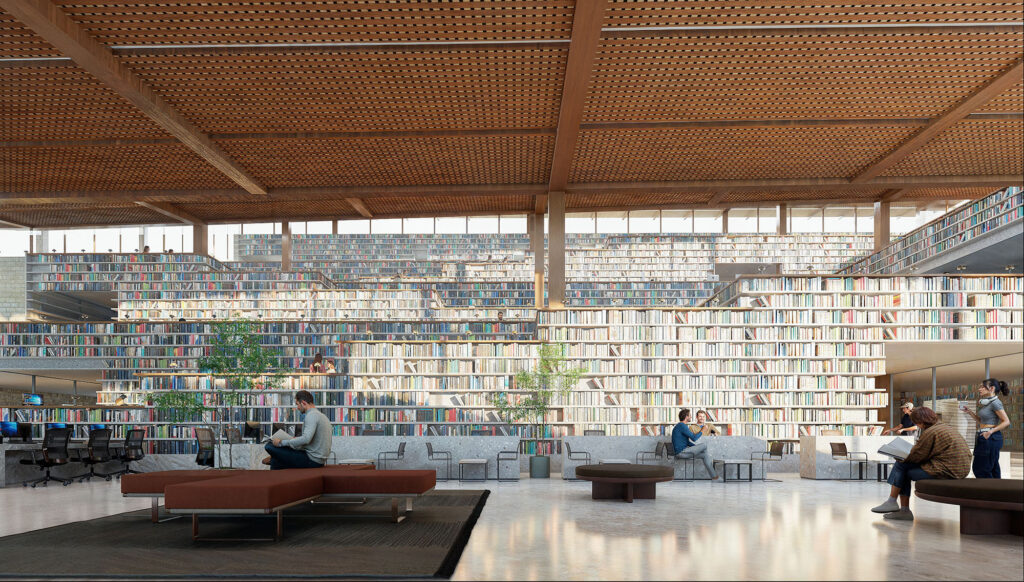
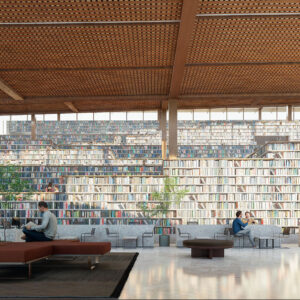
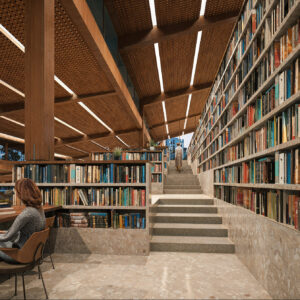
4. Books as an Urban Interface: Can books function not only as storage but also as display elements and interfaces to the city, thereby contributing to urban identity?
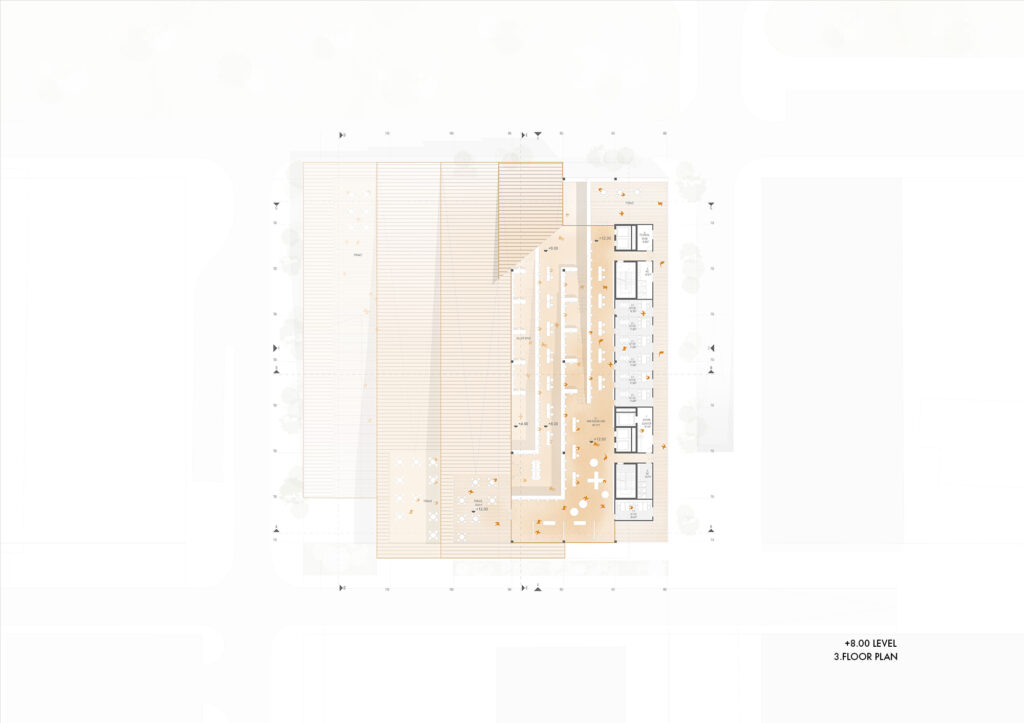
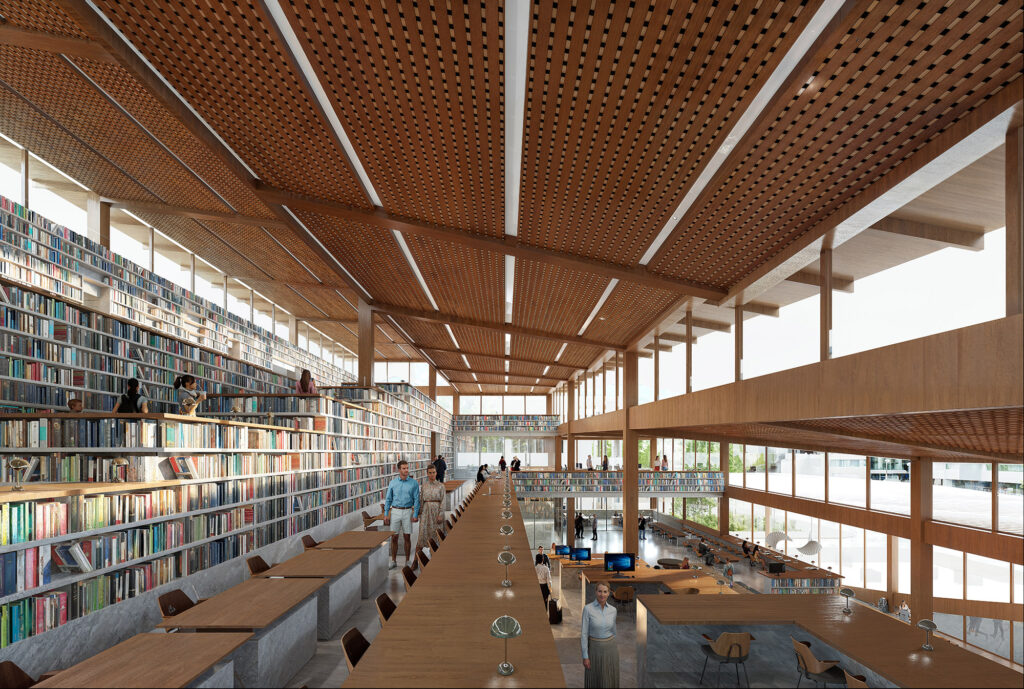
5. Relational Design of Study Areas: How can study areas interact across floors to form a holistic layout, enhancing user experience and social interaction?
6. Social Function of the Ground Floor: How can the ground floor provide social spaces accessible both from the campus and the city, supporting public access and multifunctionality?
7. Independence of the Conference Hall: Can the conference hall operate independently of the library while optimizing user flow?
8. Terraces and Outdoor Access: How can terraces and outdoor access points be planned to relate to urban life, enhancing spatial diversity and user experience?
This framework establishes the conceptual and spatial parameters guiding the library design, ensuring the building assumes a strategic role at the intersection of campus and city.
Design Approach and Decisions
Comprehensive site analyses informed the development of the above research questions. The design process aims to mature the spatial and functional solutions and architectural language of the project while fostering a strong relationship between the building and its surroundings.
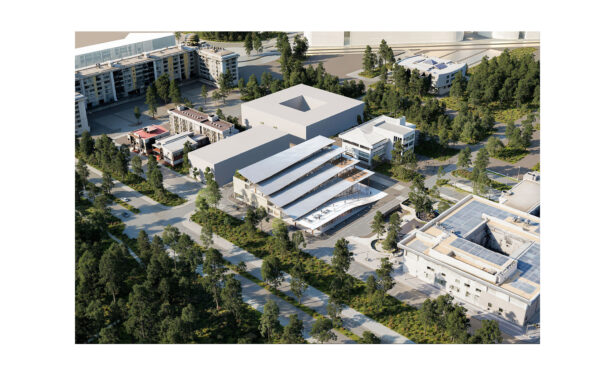
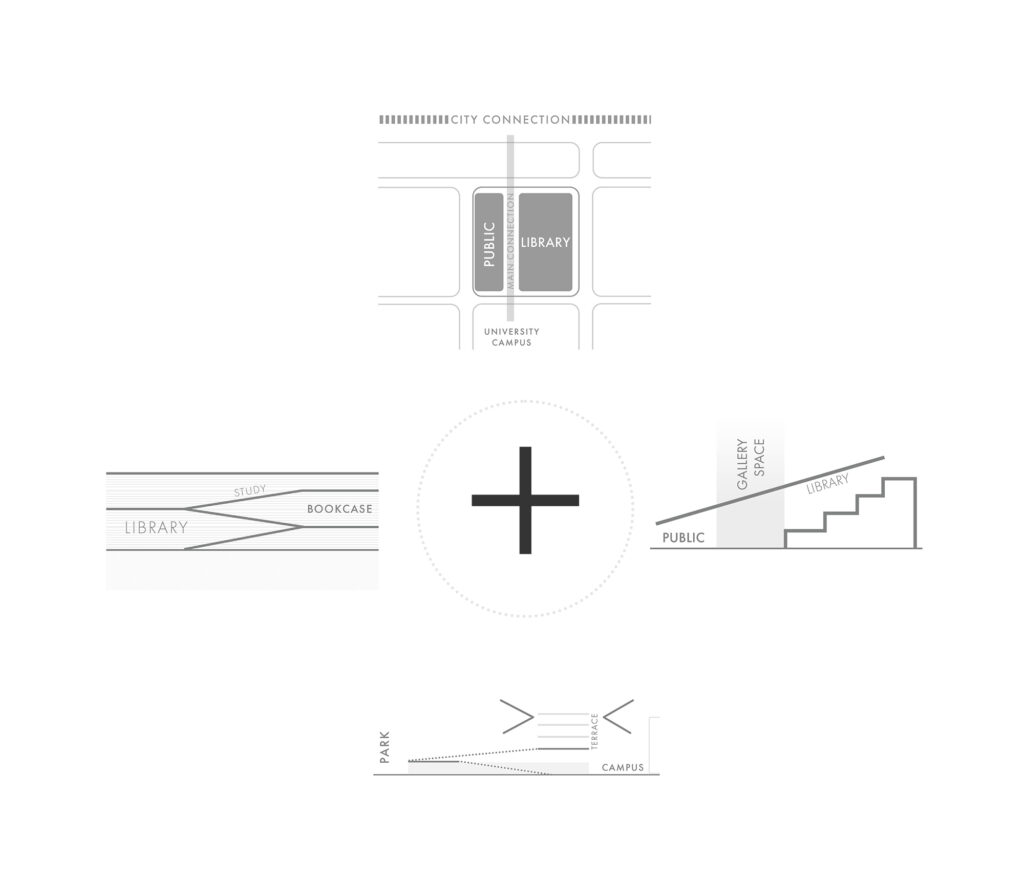
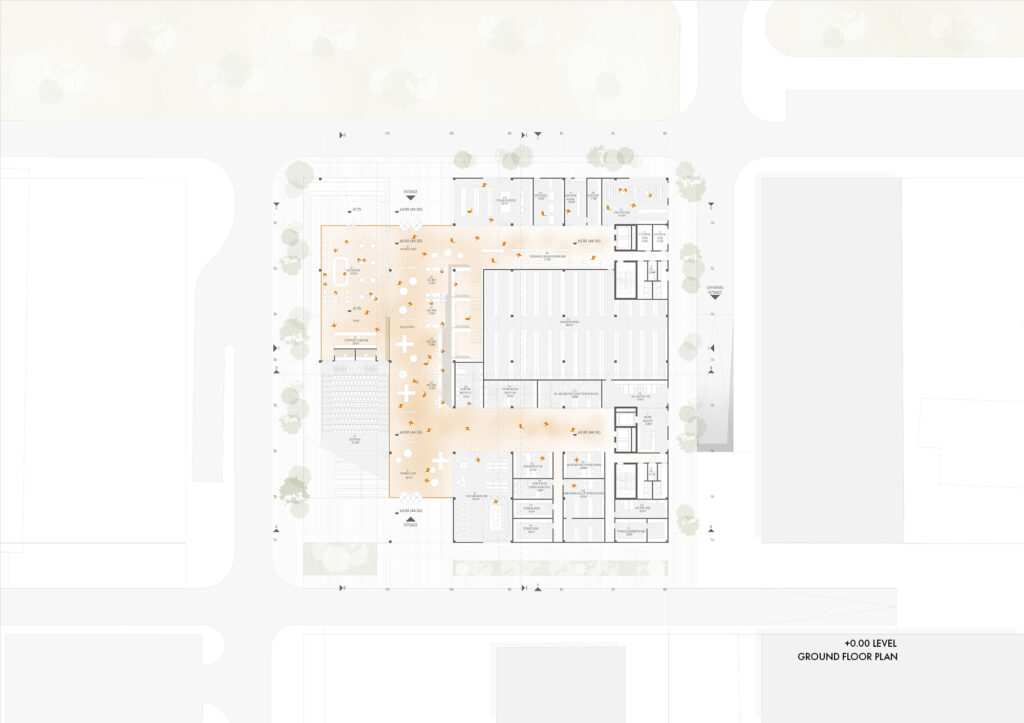
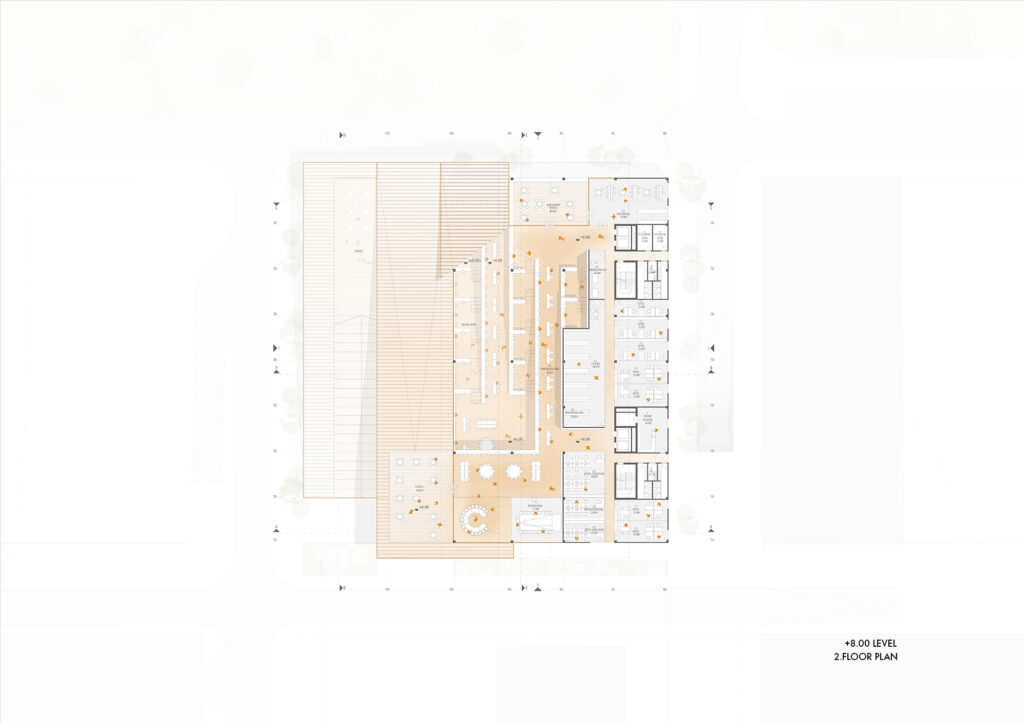
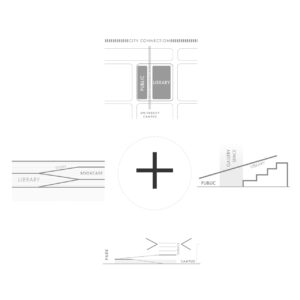
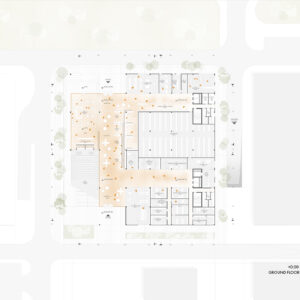
The project site forms the campus’s northern urban-facing edge, establishing the library as a strategic focal point at both campus and city scales. Considering development plans along the north-south axis, the library is positioned along the main spine connecting campus and city, enhancing spatial continuity and urban connectivity. Access to the east-west green axis of the campus is primarily facilitated through the library from the north, supporting interaction between the building and the campus. This locational strategy aims to integrate the library within the campus, provide an inviting entrance, and organize ground-floor functions to support campus social spaces, ensuring both spatial and social contributions to campus life.
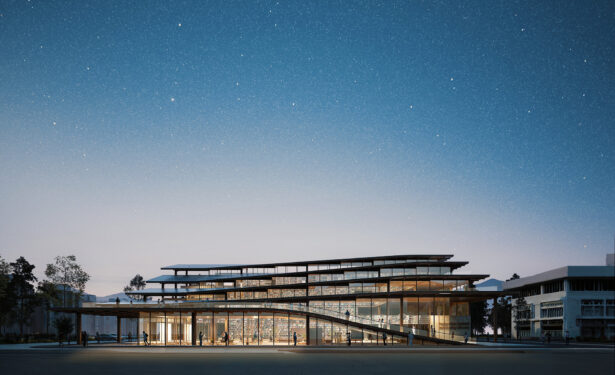
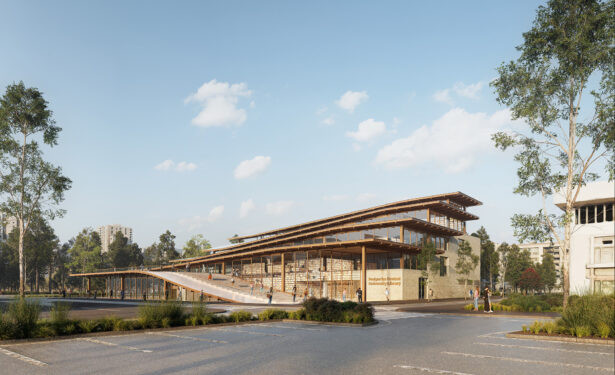
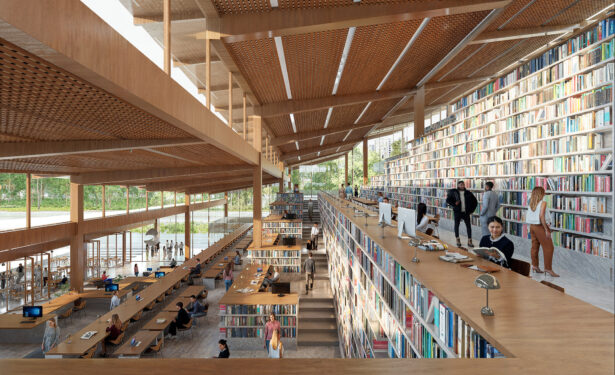
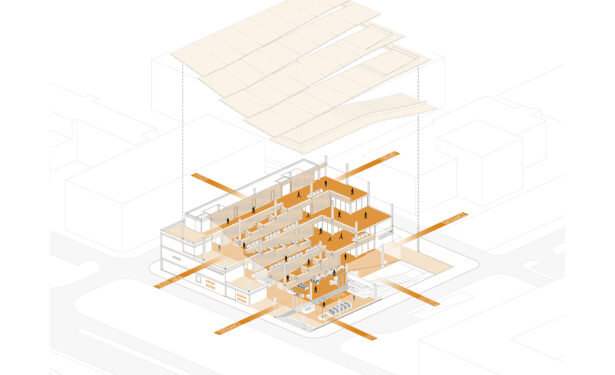
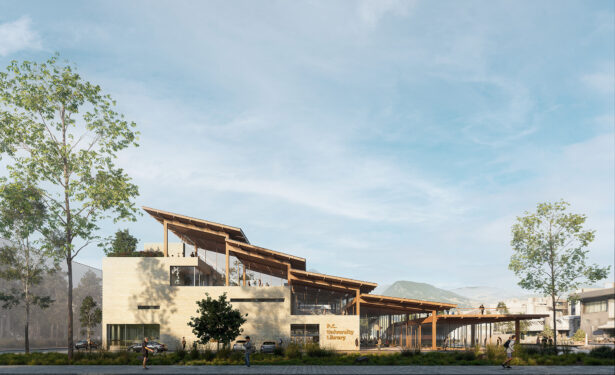
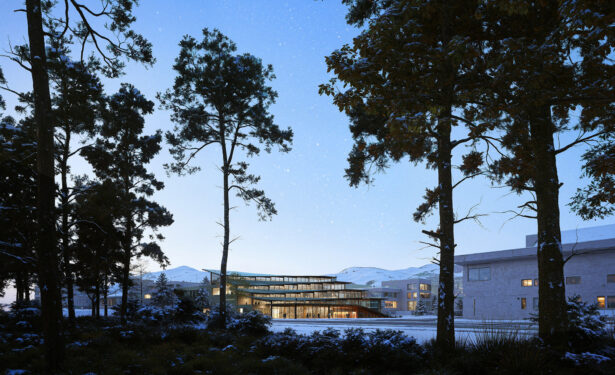
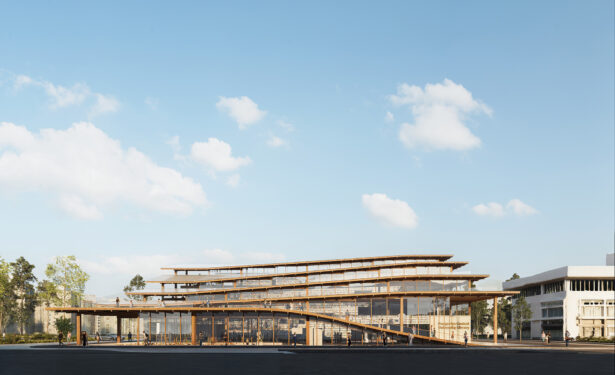
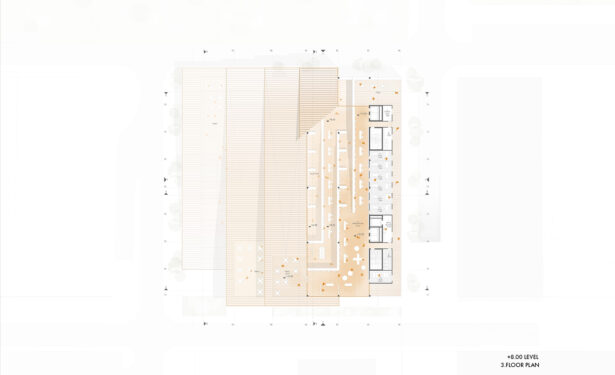
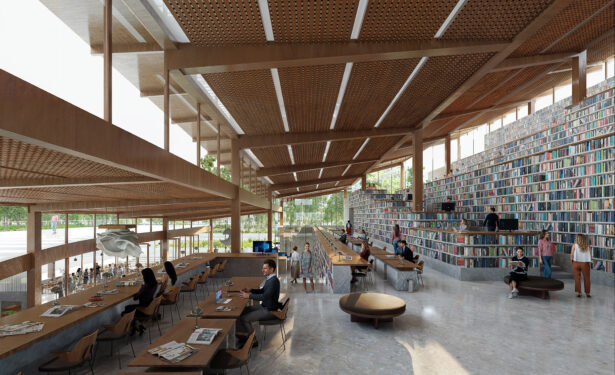
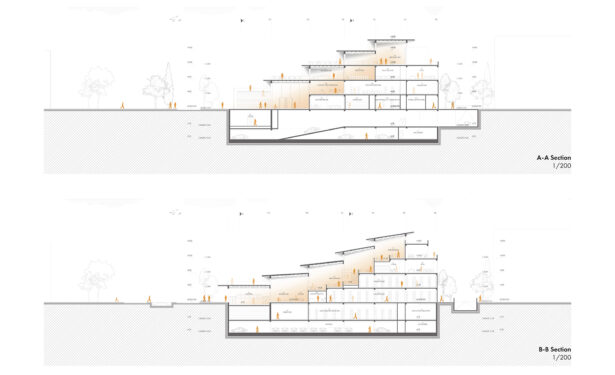
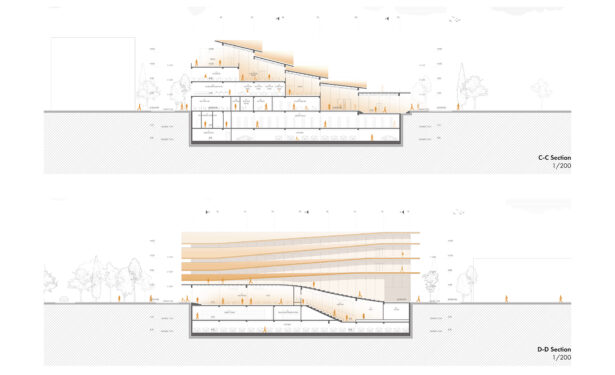
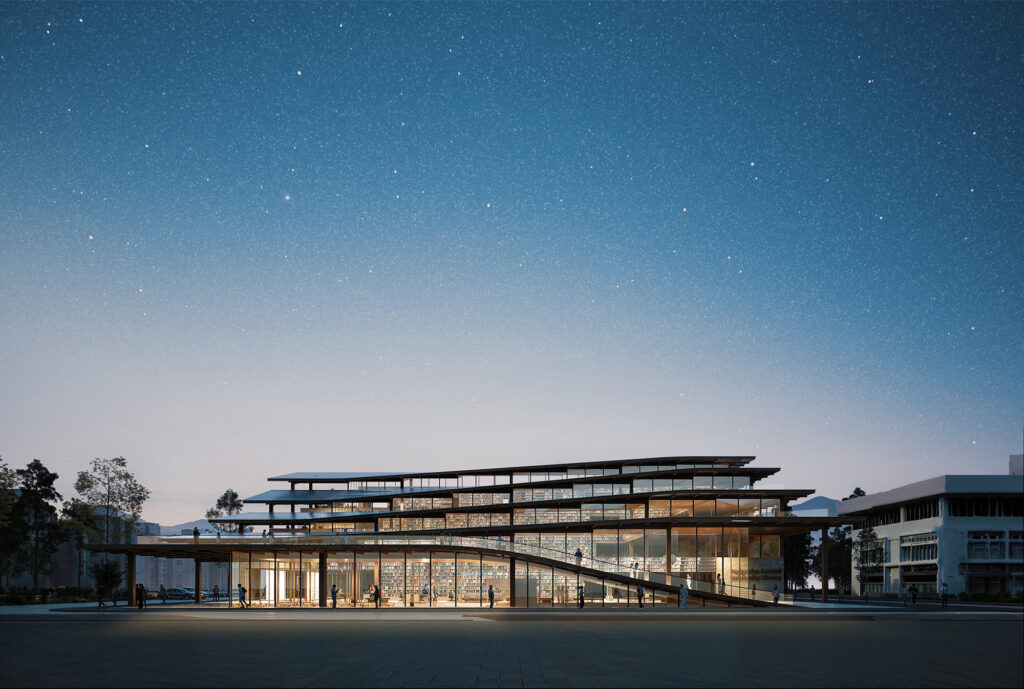
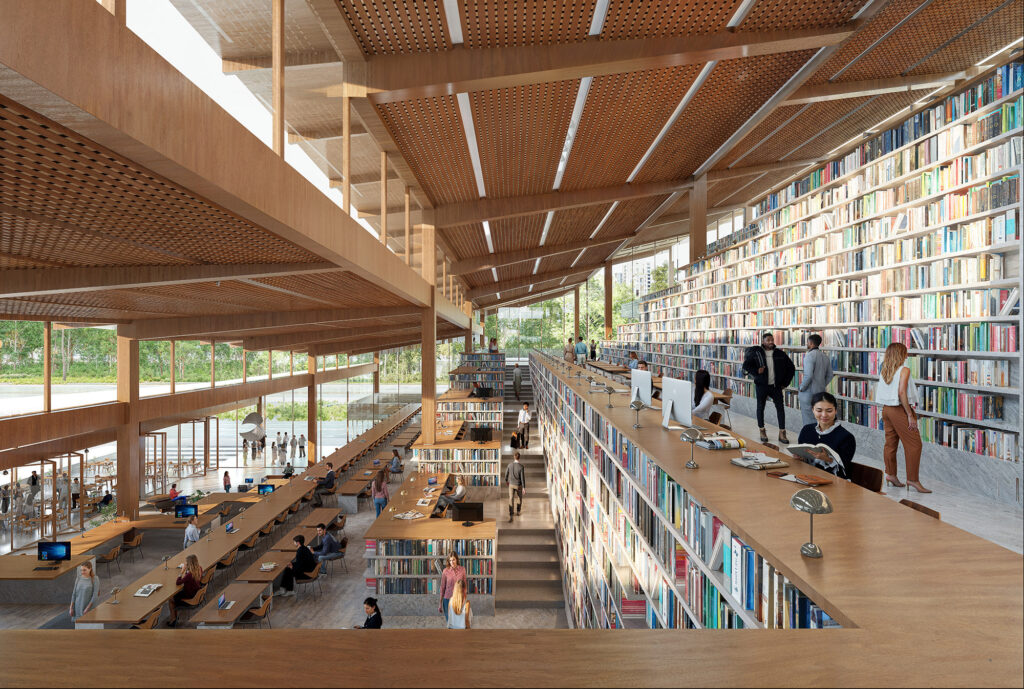
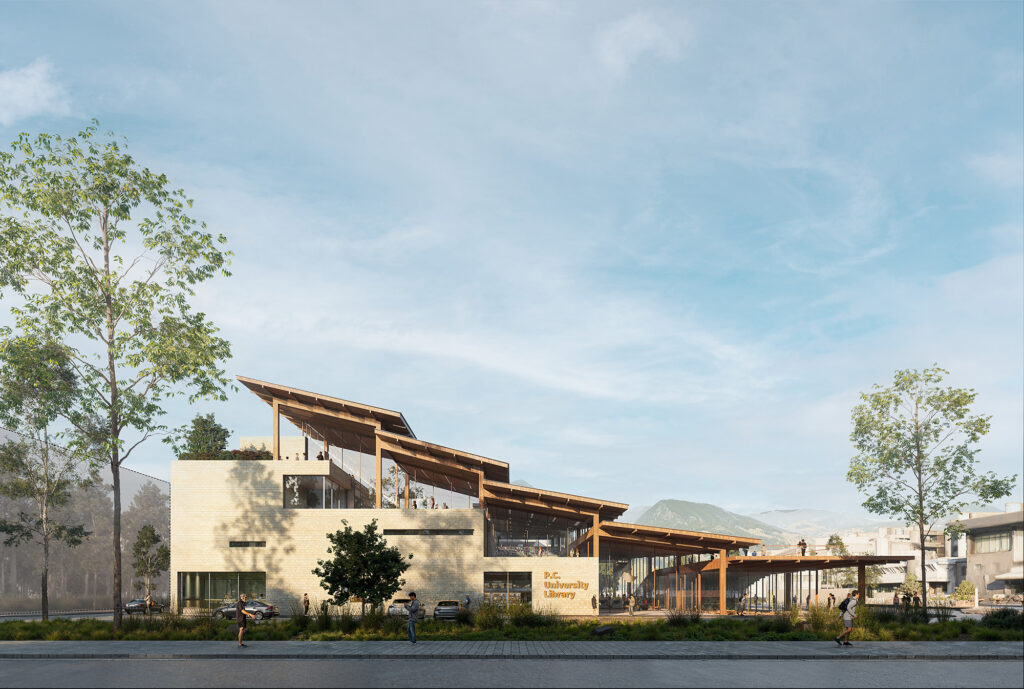
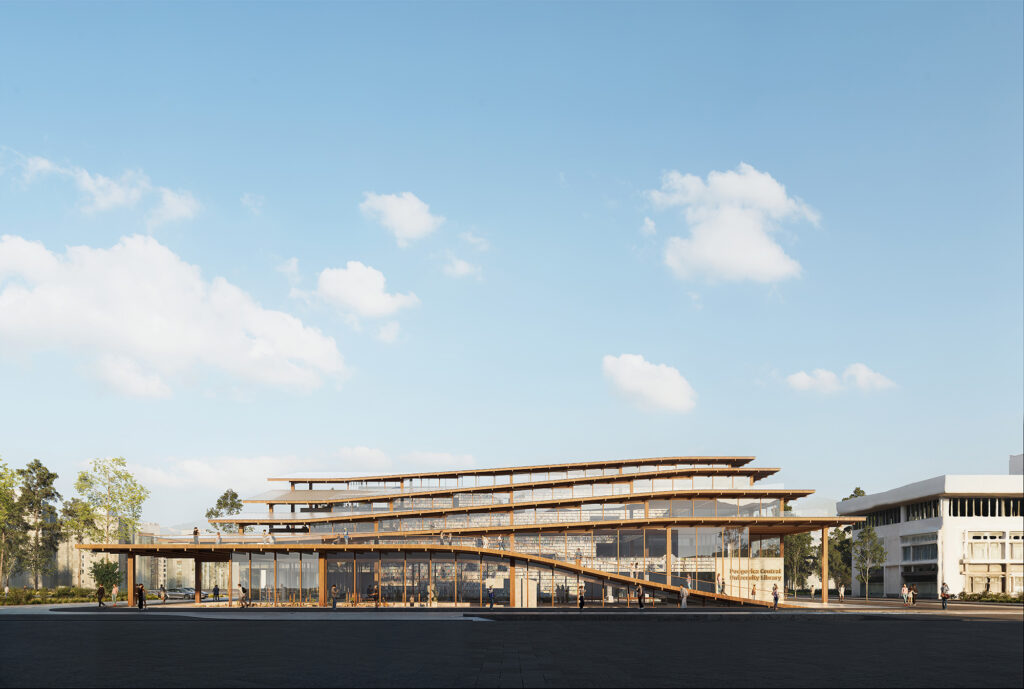
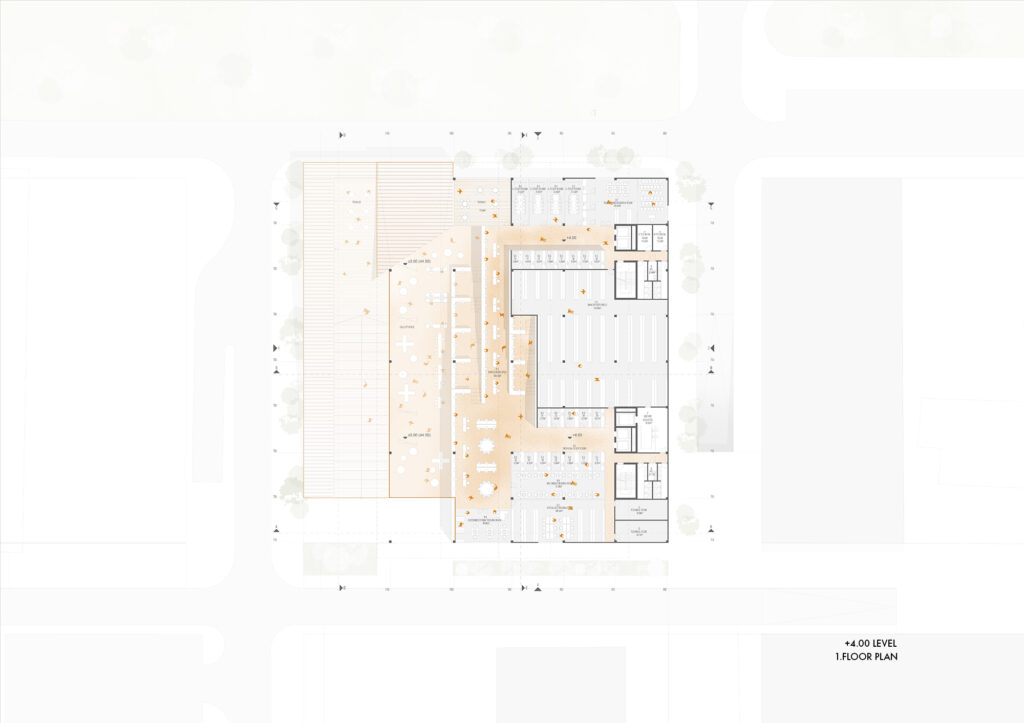
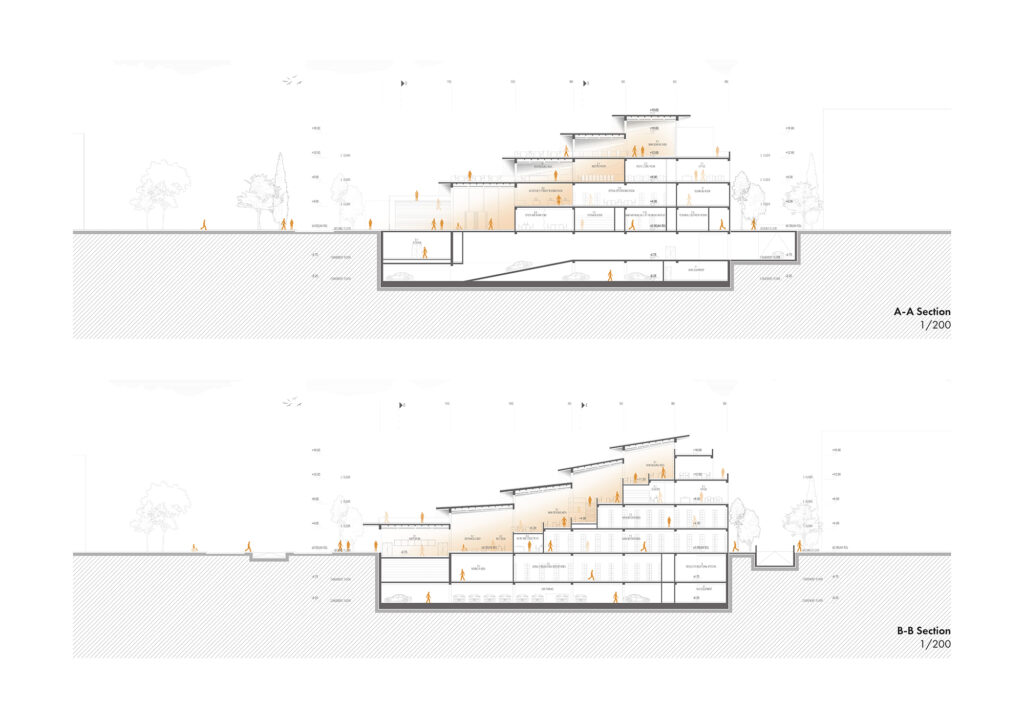
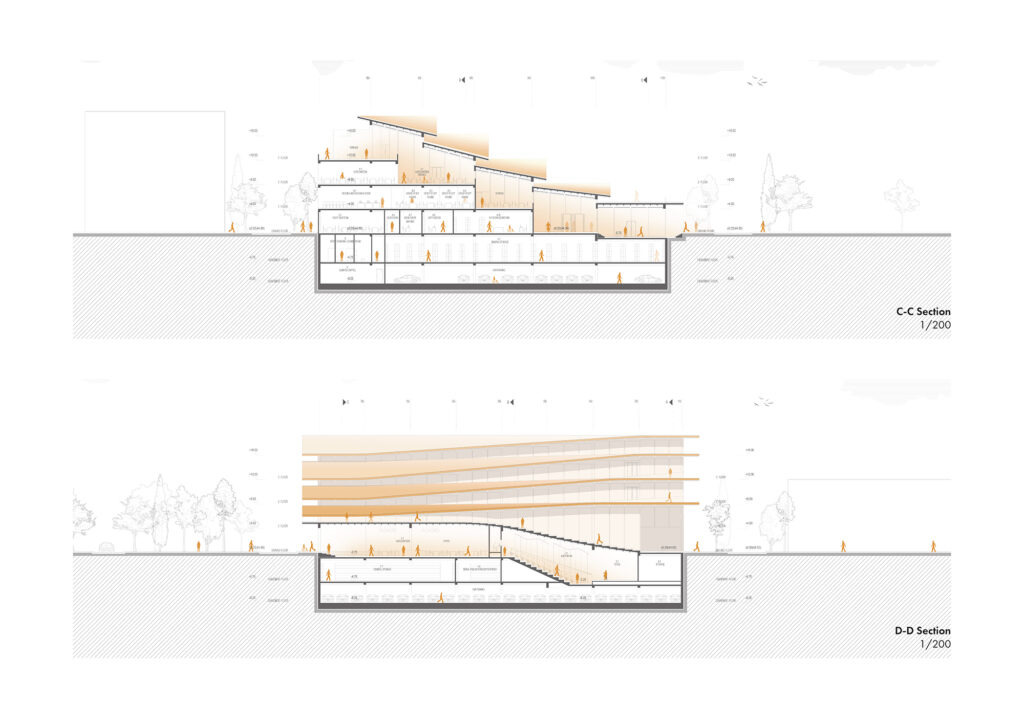
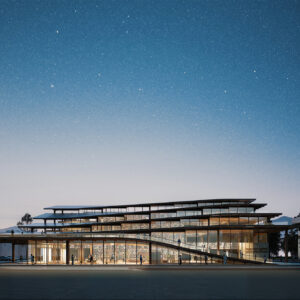
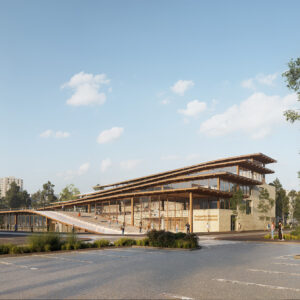
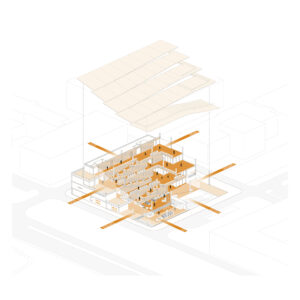
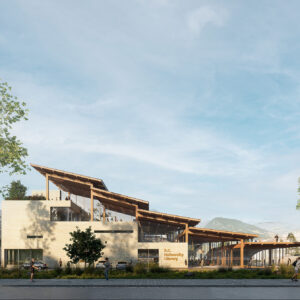
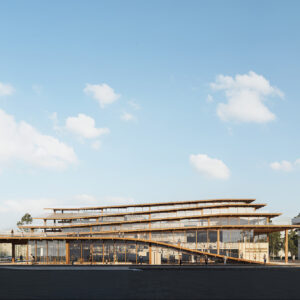
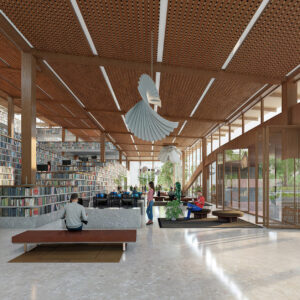
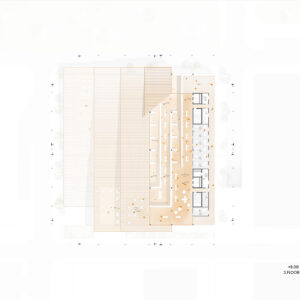
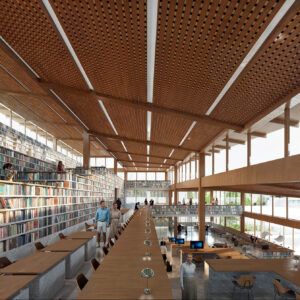
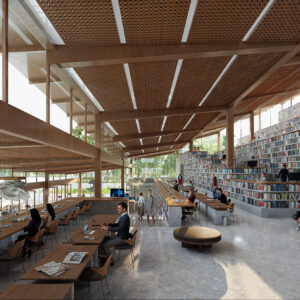
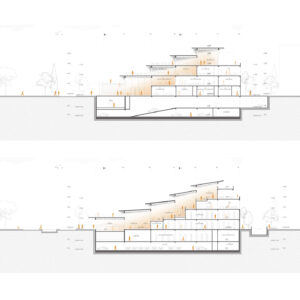
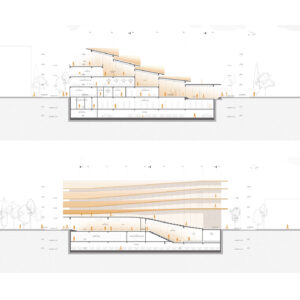
Within this approach, a holistic and hierarchical organization was established in both interior and exterior spaces, directly reflecting the building’s structural identity. The library develops interrelated study areas through volumes that recede along the floors, promoting spatial continuity and user interaction. The building aligns with the urban silhouette through its masses and roof elements, while intermediate levels at varying heights support flexible interior use and diverse user experiences. Floors, transforming into terraces at city-facing interfaces, reinforce interior-exterior continuity and enrich the spatial experience. This holistic approach strengthens the building’s functional and urban role, enabling a dialogue between a user-centered architectural experience and the urban landscape.
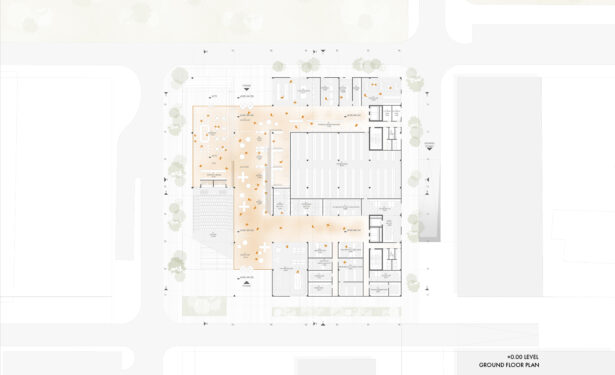
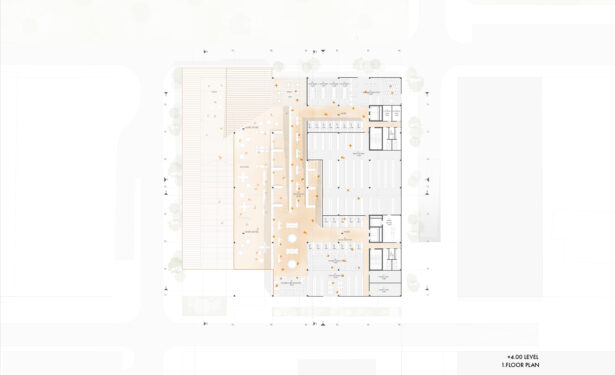
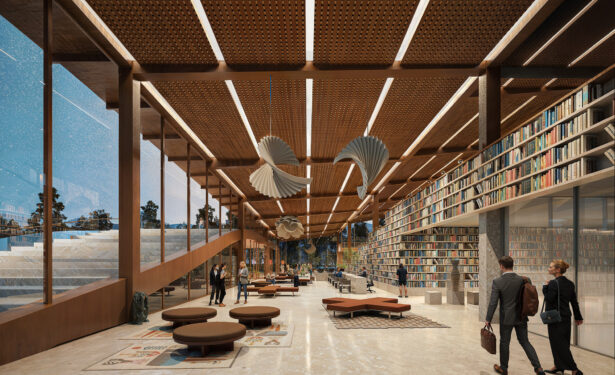
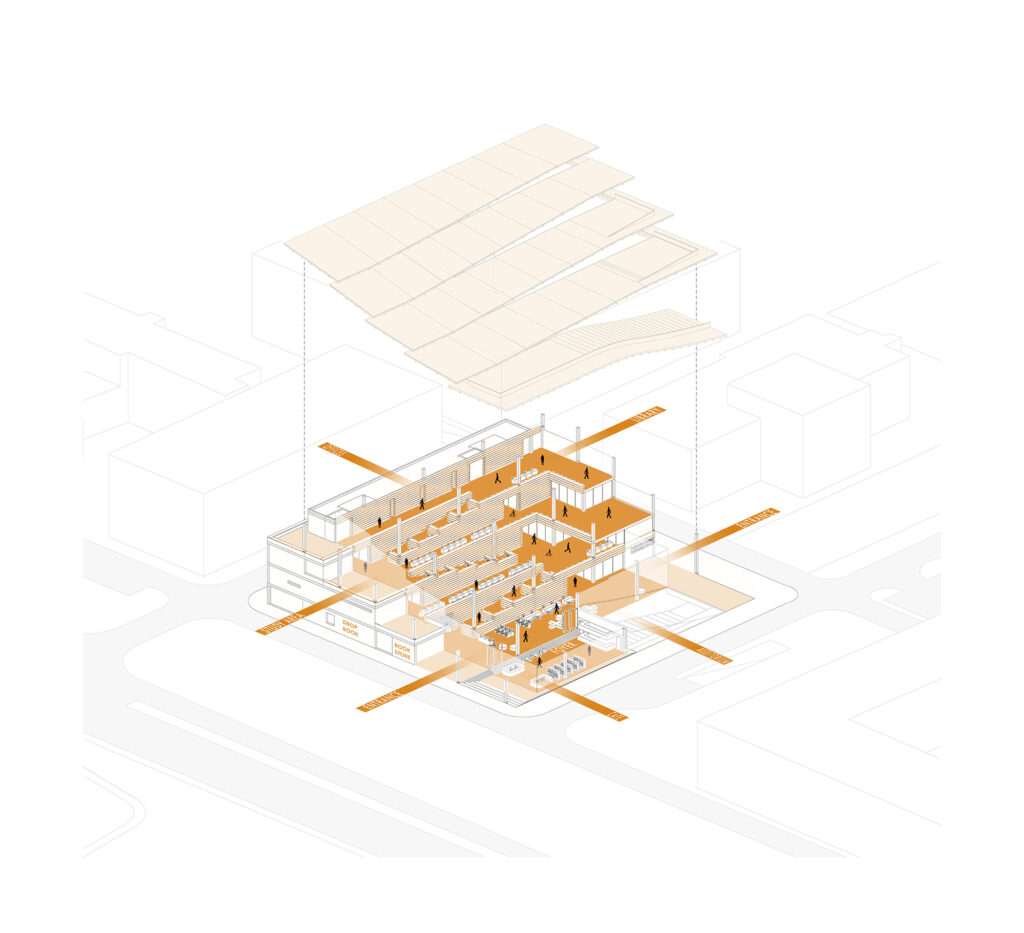
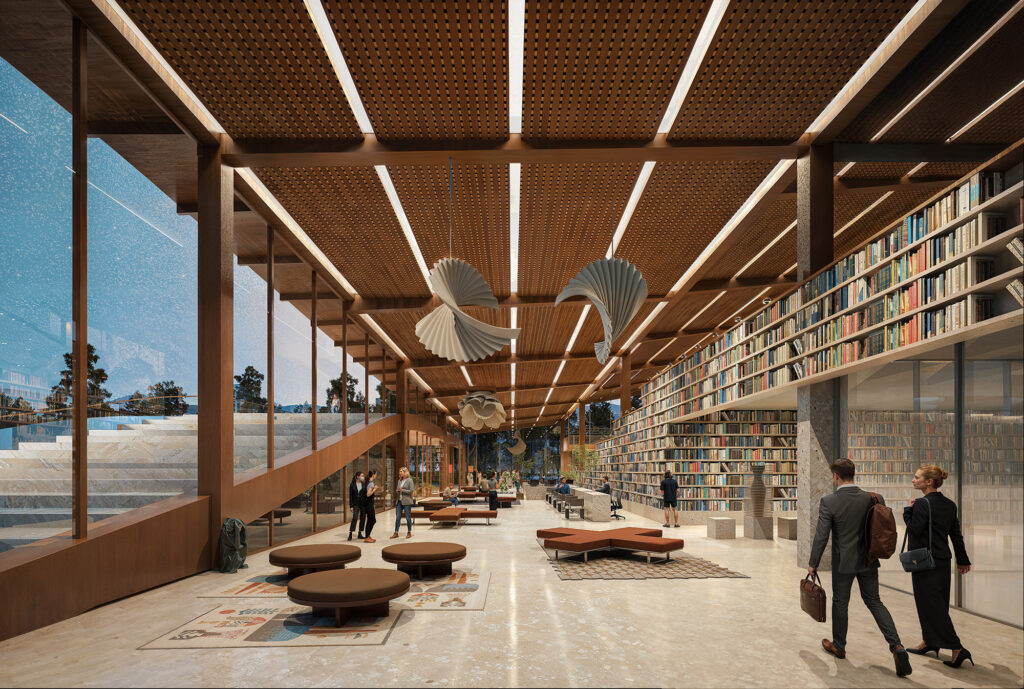
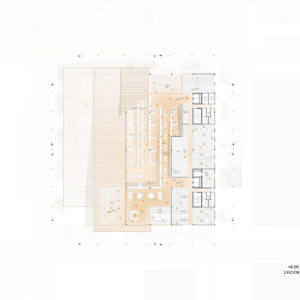
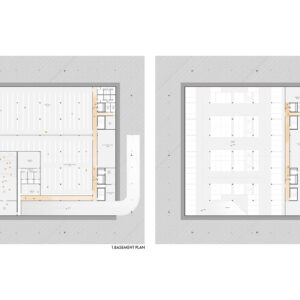
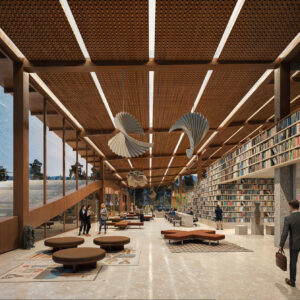
From the entrance onward, ground-floor units are designed as spaces directly connected to both campus and city, facilitating seamless integration. Social areas are organized along an internal street functioning as a spine between the campus and the city, supporting continuity and interaction. The conference hall, located on the east side, allows direct external access and can operate independently when needed, connecting to an amphitheater and adjacent café to enrich social interaction. Book sales and borrowing areas engage directly with the main entrance street, ensuring accessibility for both campus users and city residents. This approach positions the library as a dynamic, user-centered public platform in continuous interaction with its urban and campus context.
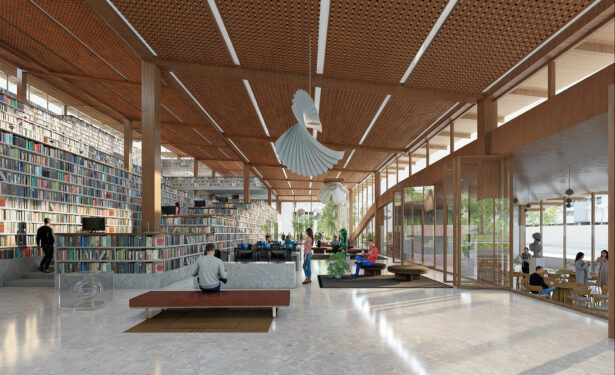
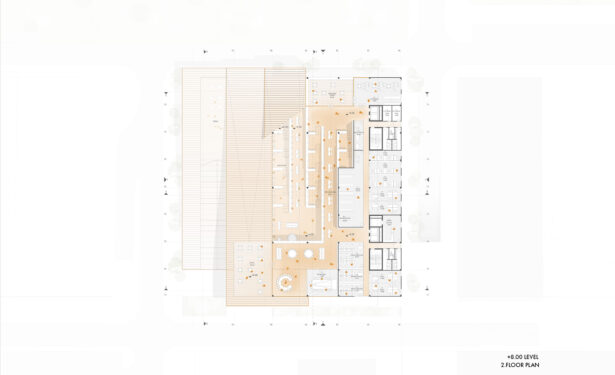
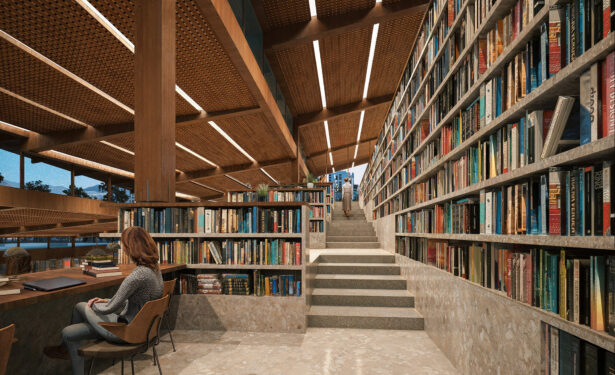
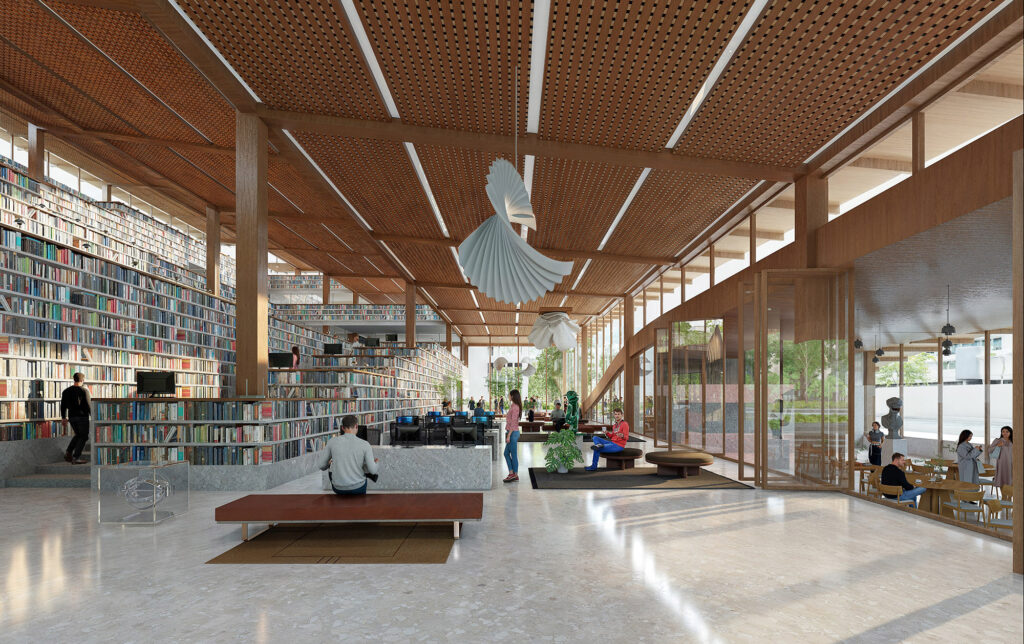
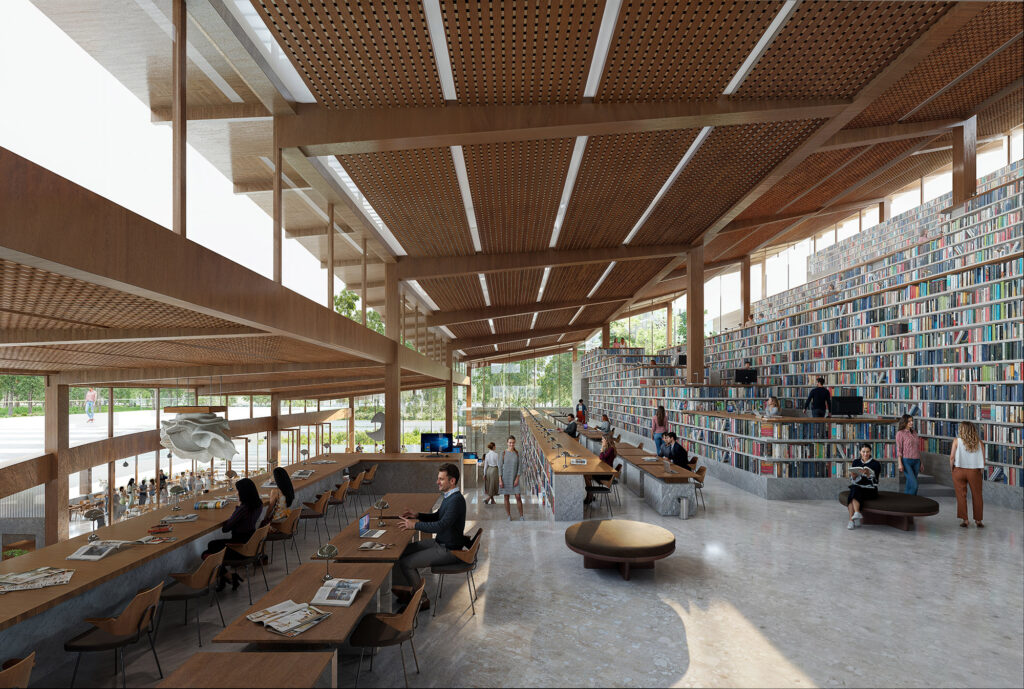
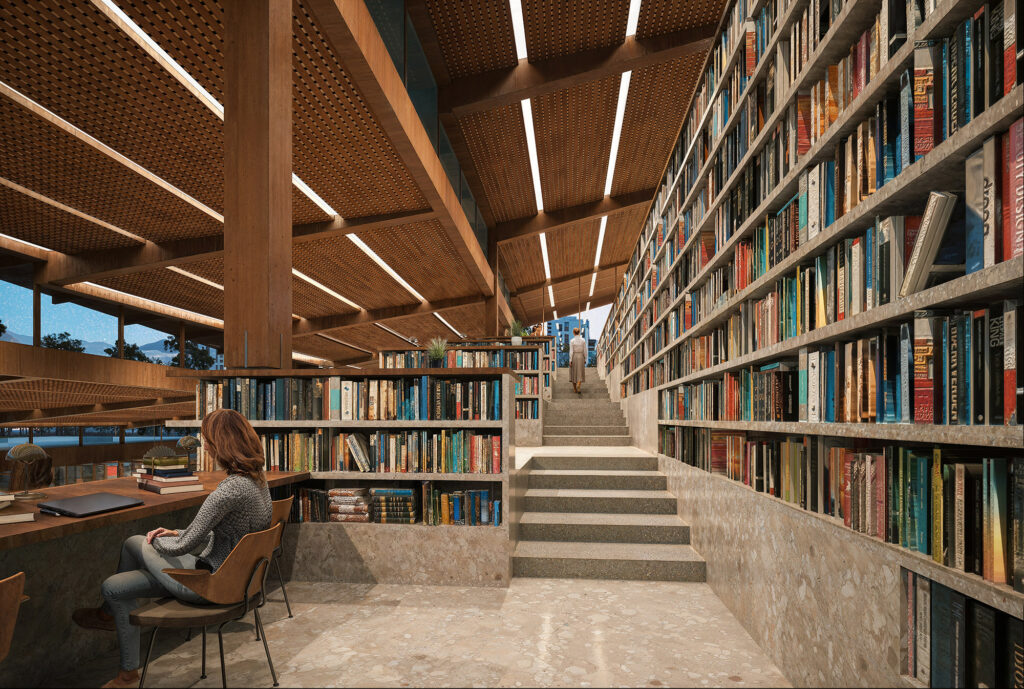
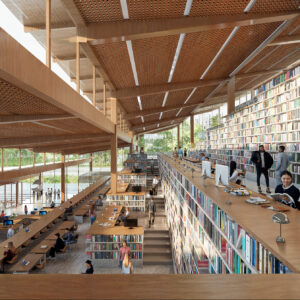
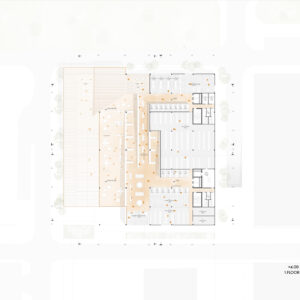
Spatial relationships between ground and upper floors are reinforced through gradually elevated study areas, with library shelves serving as internal background elements and display surfaces accessible to all users, enhancing orientation and access to information. Receding volumes create enclosed interior spaces beneath upper floors, housing core archive areas and providing controlled user experiences. Floor and roof terraces on all levels allow direct engagement with outdoor spaces, reinforcing interior-exterior continuity as an integral part of the architectural design. This comprehensive approach integrates functional and experiential aspects, positioning the library as a dynamic, user-centered spatial platform within campus and city contexts.
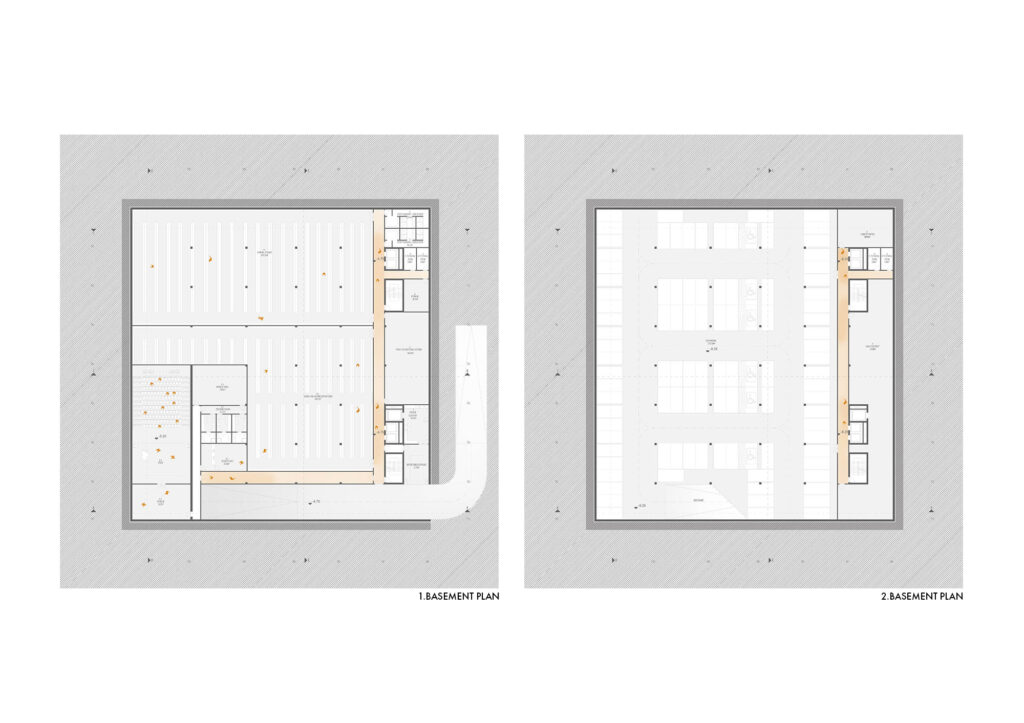
Independent office units are located along the eastern rear façade, ensuring functional separation and privacy. Horizontal and vertical circulation systems are designed to enable efficient movement for users and staff, with sufficient elevators and fire escapes. A dedicated elevator serving archive areas on all floors enhances operational efficiency and supports the integration of archive functions into the structural system, optimizing spatial experience for different user groups.
Structural and Material Decisions
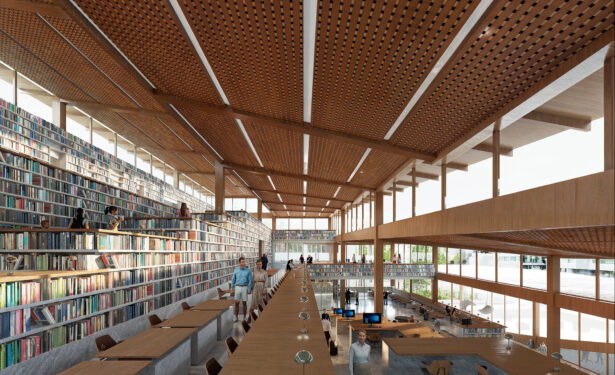
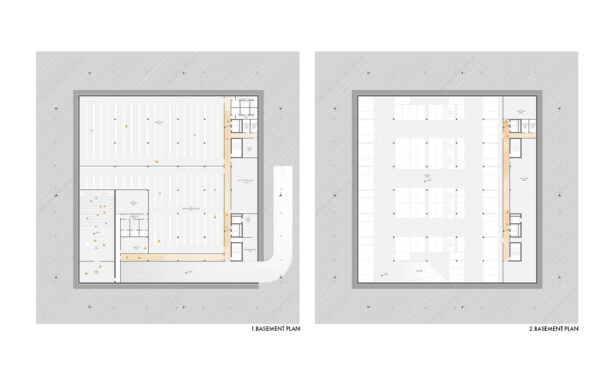
The library’s structural design references traditional construction techniques and regional architectural examples, integrating them with modern engineering solutions. The structural system employs a hybrid approach of timber and reinforced concrete to ensure both mechanical resilience and aesthetic continuity. All working and archive areas, including basement floors, are supported by a reinforced concrete foundation. Concrete slabs, beams, and columns extend through the building, intersecting with timber structural systems supporting the roof at the main atrium, enabling diverse spatial experiences.
The structural network of beams and columns is expressed through varying interior sections, facilitating fluid and organic roof surfaces. Roofs are detailed to safely carry their own weight, reflecting an approach that balances aesthetic integrity and structural safety.
Material selection prioritizes local availability and sustainability. Locally sourced timber serves as the primary structural element, minimizing carbon emissions during production and logistics. CLT (Cross-Laminated Timber) columns, beams, and panels ensure longevity and energy efficiency. Low-emission, recycled glass is used throughout the façades, partially reflecting sunlight, controlling interior temperature, and optimizing energy costs. The hybrid system harmonizes concrete and timber, offering a cohesive solution for structural and spatial continuity while defining the building’s architectural character.
Conclusion
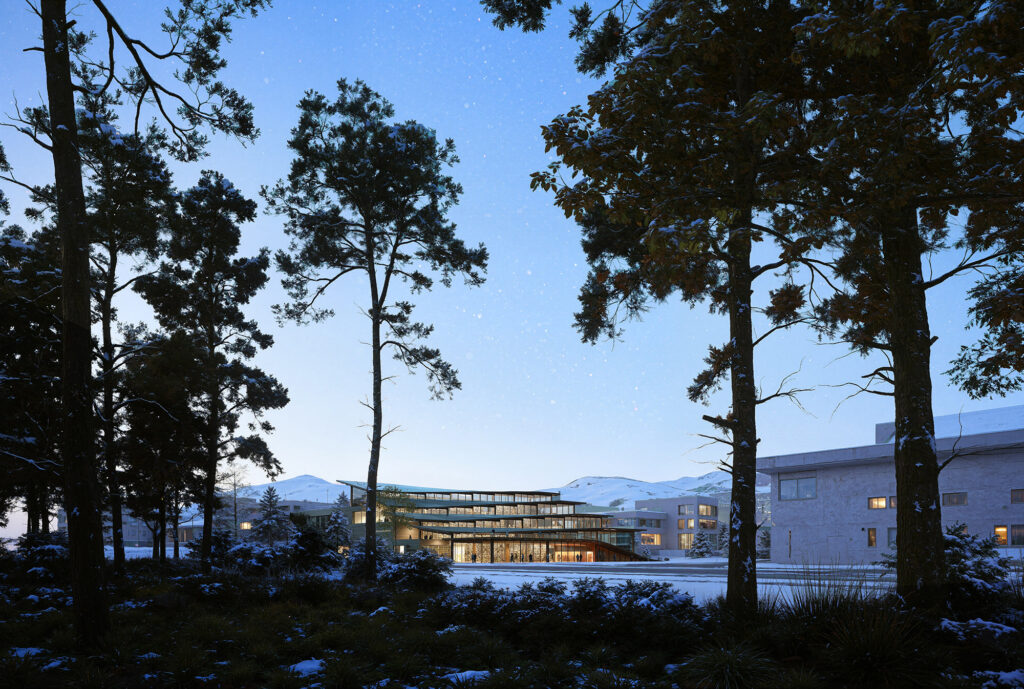
The library is designed with a context-sensitive approach, integrating with its surroundings and drawing inspiration from the city’s memory. Positioned at the intersection of campus and city, it serves a unifying role, offering an inspiring functional and experiential environment. The building represents a modern architectural approach rooted in local materials and techniques, conceived as a bold, contemporary library that will serve as a model for future generations.
This design strategy not only unites aesthetics and functionality but also integrates urban context and sustainability objectives, ensuring the library creates lasting value for both campus and city life. The spatial organization across multiple levels, combined with exterior terraces and roof surfaces, enriches user experience and positions the library as a vibrant, interactive public space.
Etiketler

İlgili Projeler
-
 Mansiyon, TerraViva Nidos De Aqua
-
Eşdeğer Mansiyon, SATSO Üretim ve Dijital Dönüşüm Merkezi Ödüllü Mimari Proje Yarışması
-
Katılımcı, Kayseri Mimarsinan OSB Giriş Mekanları Öğrenci Mimari Fikir Yarışması
-
Deep Flow – Hafriyat Geri Dönüşümü ve Entegre Ekolojik Yaşam Modeli
-
Satın Alma, Muğla Büyükşehir Belediyesi Sosyal Kültürel ve İdari Hizmetler Binası Mimari Proje Yarışması