
- 13 Nisan 2026
- 27212 defa okundu.
Finalist, The Sport District Competition
Spika Mimarlık tarafından The Sport District Competition için önerilen proje, finalist projeler arasında yer aldı.
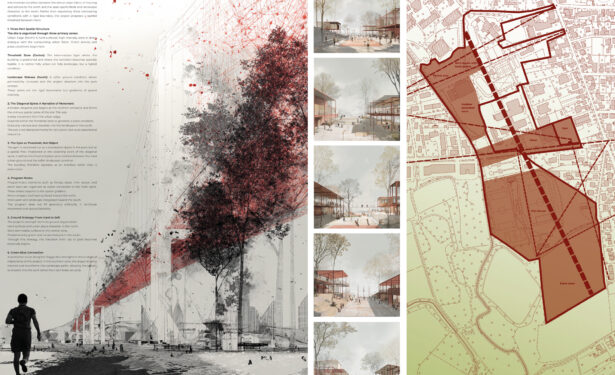
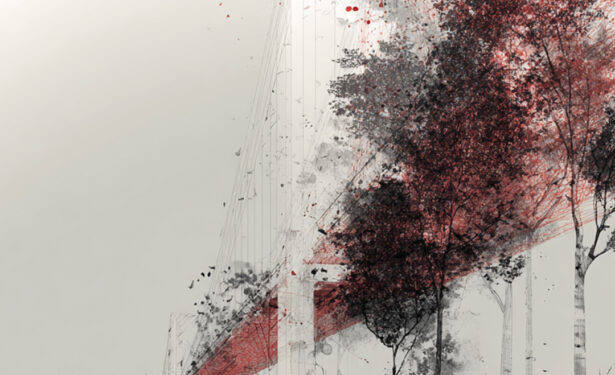
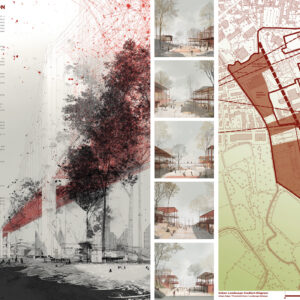
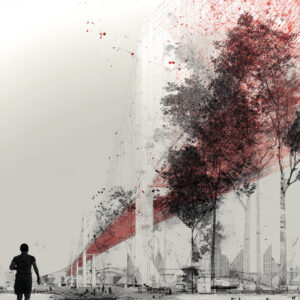
Spika Mimarlık’ın Terraviva’nın The Sport District Competition yarışmasında finalist olan “Field of Transition” projesi, alanı doldurulacak bir boşluk değil, dönüştürülecek bir mekânsal gerilim hattı olarak ele alır. Kuzeydeki yoğun kentsel doku ile güneydeki açık spor ve park alanları arasındaki karşıtlık, keskin bir sınır yerine kademeli bir geçiş olarak yeniden kurgulanır. Projenin ana omurgasını oluşturan kırık diyagonal hat, yalnızca bir dolaşım elemanı değil, mekân üreten bir sistem olarak çalışır. Zemin, program ve hareket bu omurga boyunca sert kentsel yüzeylerden geçirgen ara katmanlara ve doğal peyzaja doğru evrilir. Bu yaklaşım, kent ile peyzaj arasındaki ayrımı ortadan kaldırarak, süreklilik içinde deneyimlenen bütüncül bir mekânsal alan önerir.
Proje Raporu:
FIELD OF TRANSITION
Between Urban Density and Landscape Openness
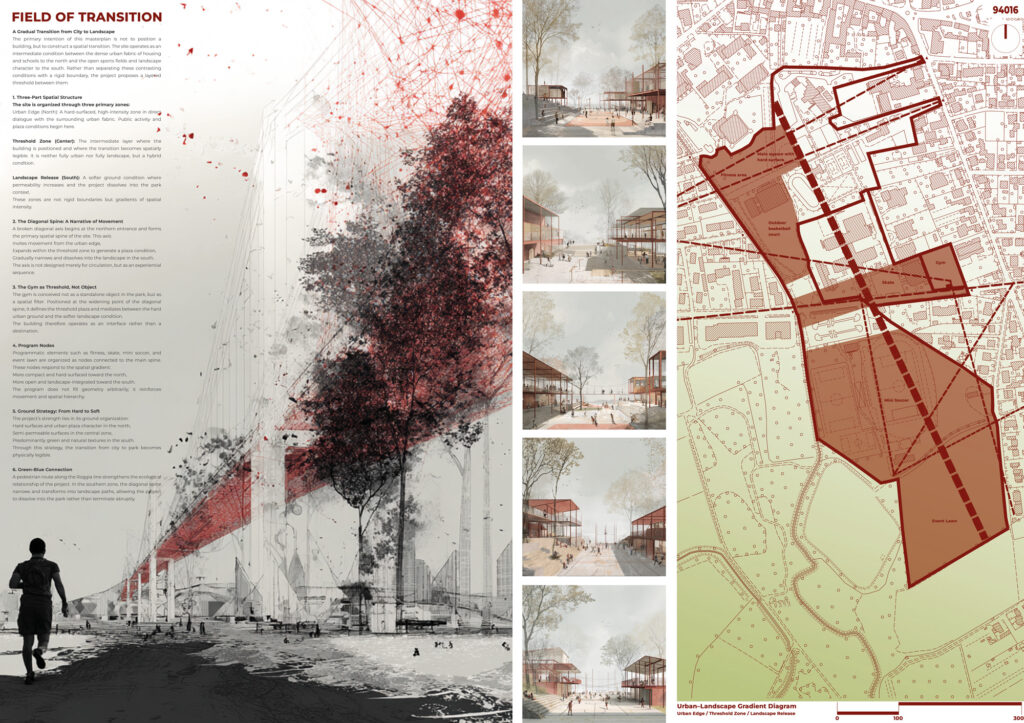
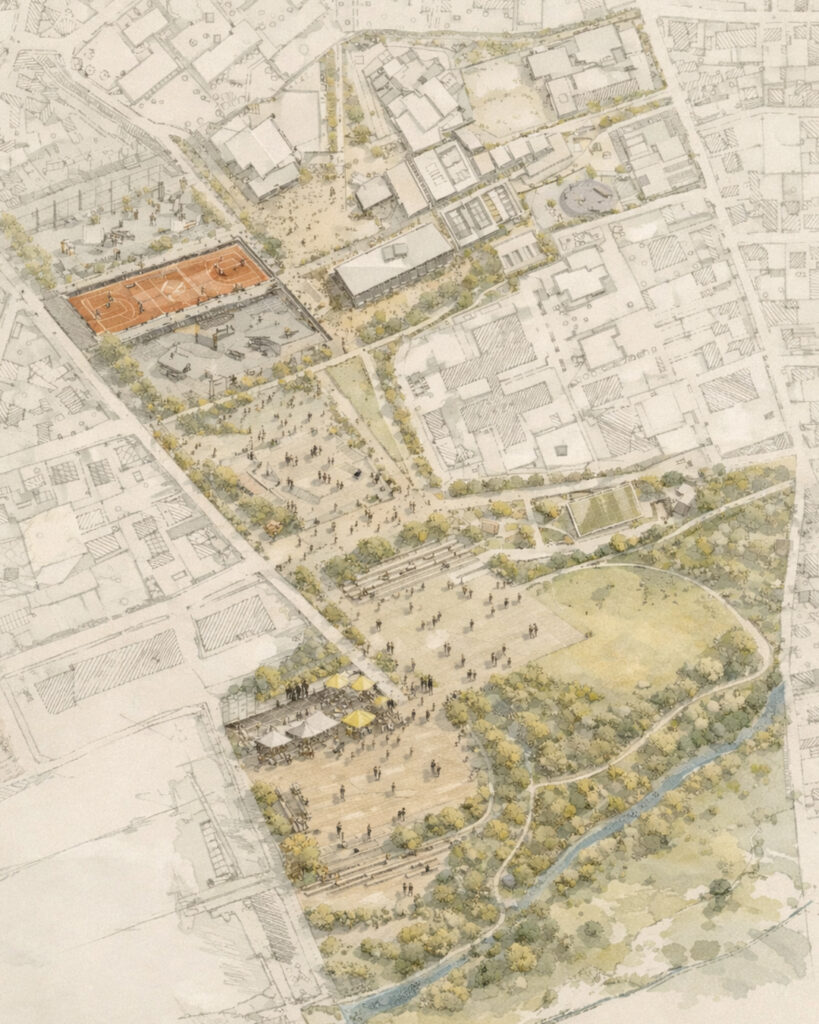
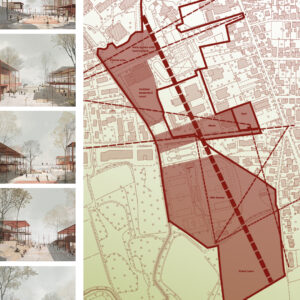
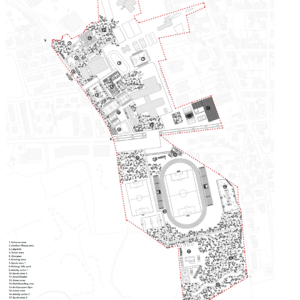
Field of Transition understands the site not as a void to be filled, but as a spatial condition to be transformed. Located between the dense urban fabric of housing and schools to the north and the open sports fields and park landscape to the south, the area operates as a zone of tension. Rather than separating these conditions, the project turns this contrast into a gradual and continuous transition.
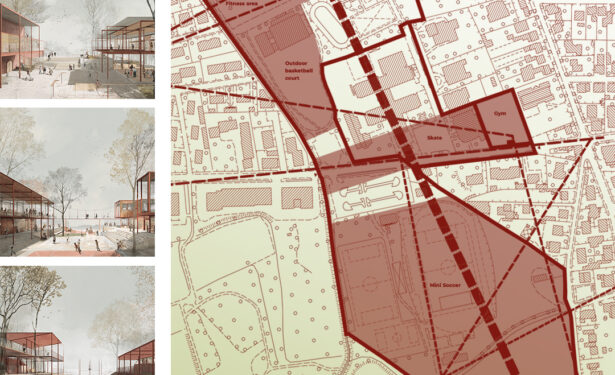
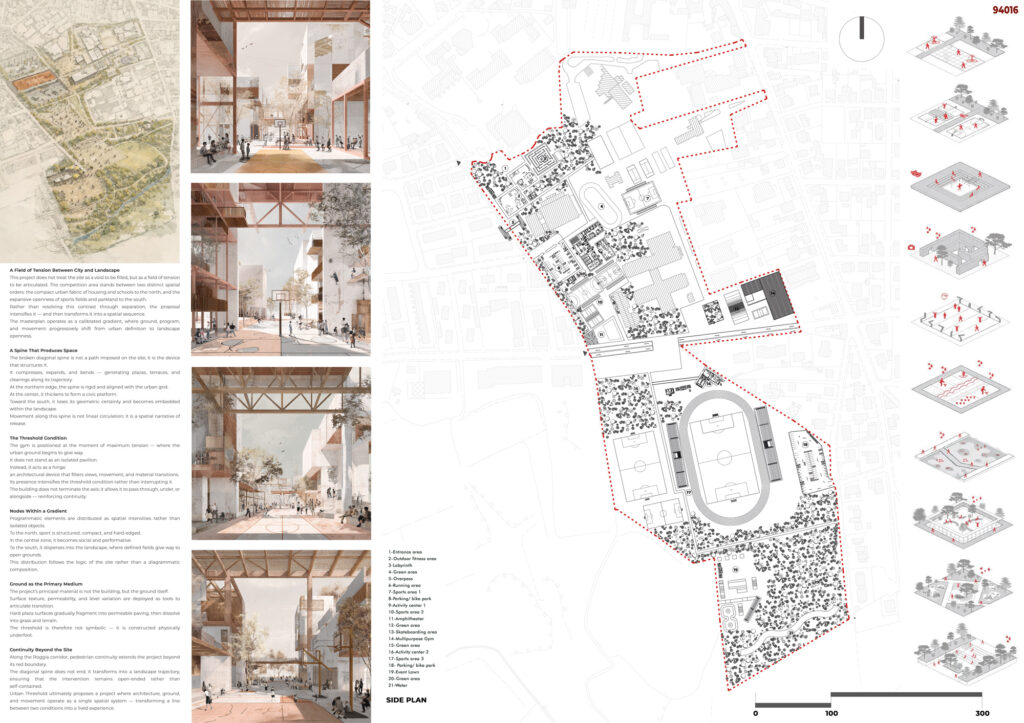
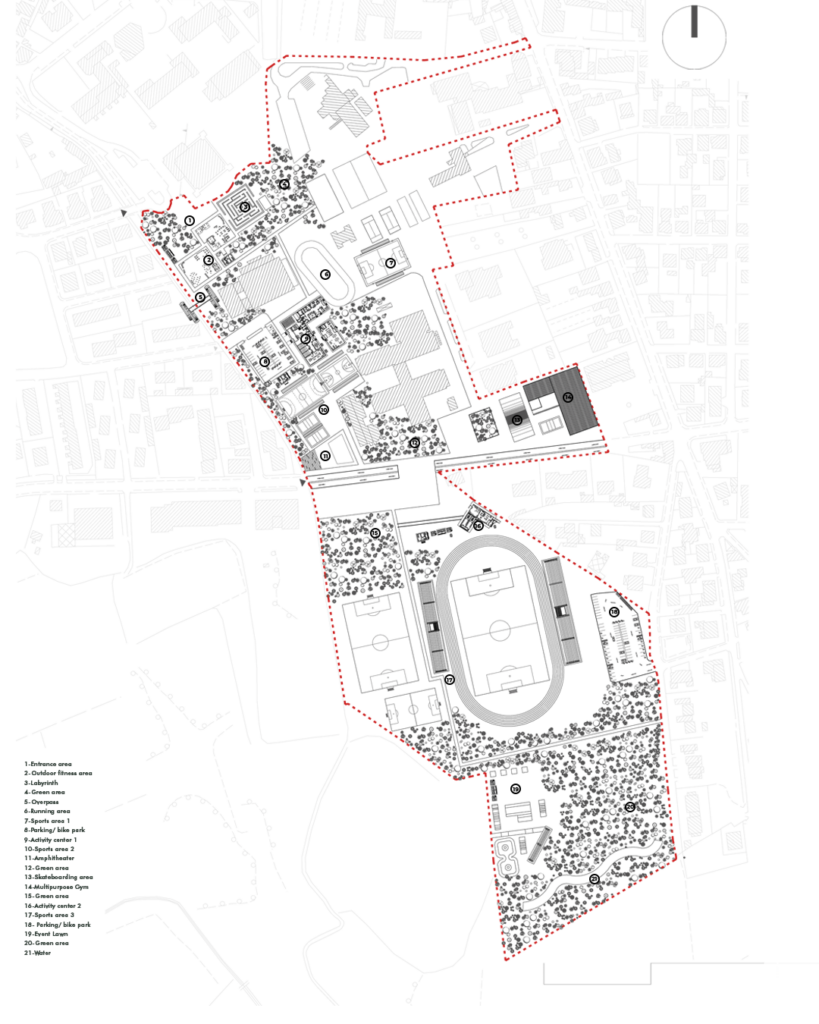
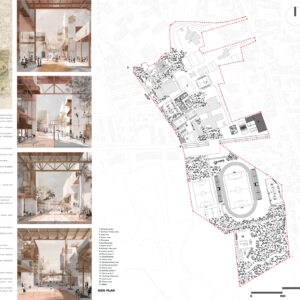
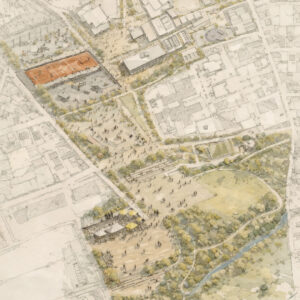
The masterplan is structured as a spatial field where ground, program, and movement progressively shift from urban definition to landscape openness. Instead of drawing a boundary between city and park, the proposal constructs a gradient.
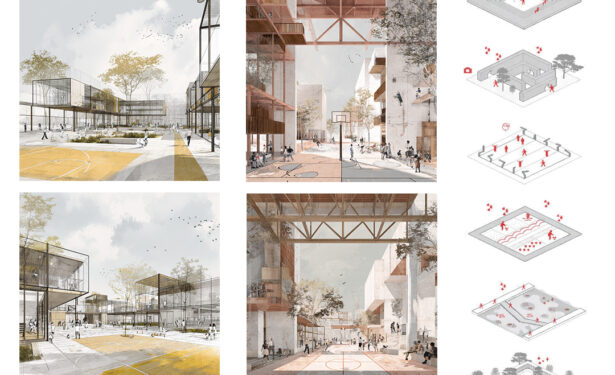
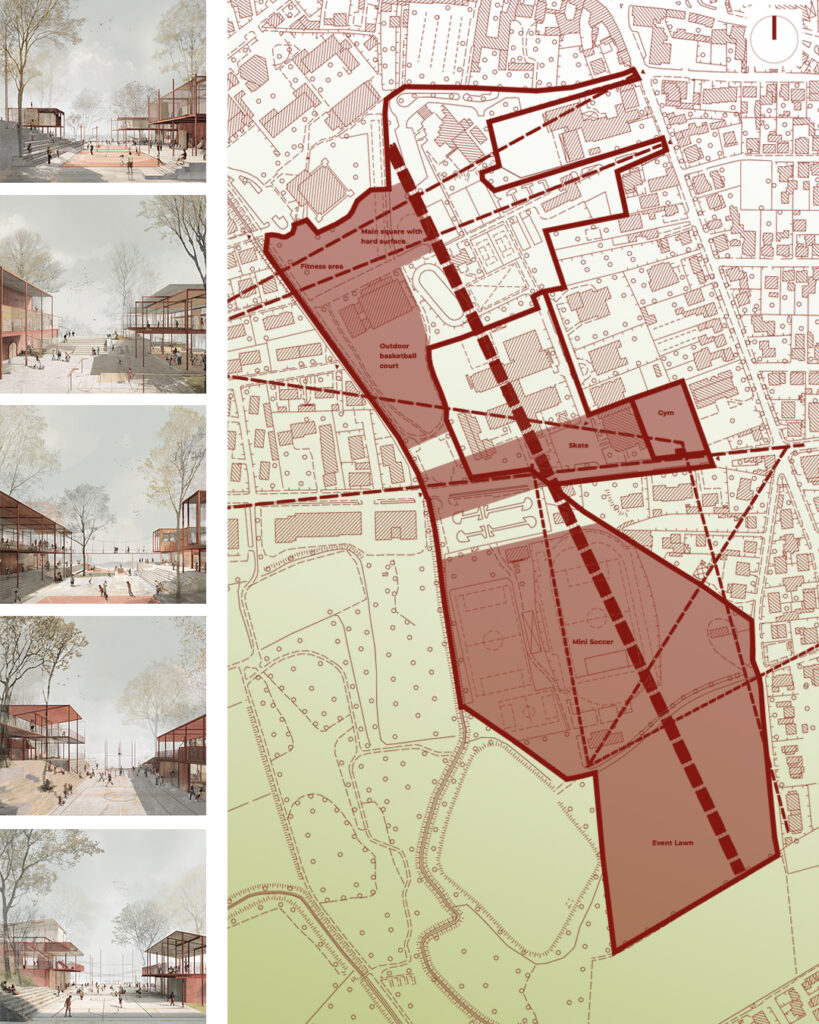
The northern band, defined as the Urban Edge, maintains a strong relationship with the surrounding built fabric. Hard surfaces, defined plazas, and structured activity characterize this zone. The ground is compact, geometric, and urban in expression.
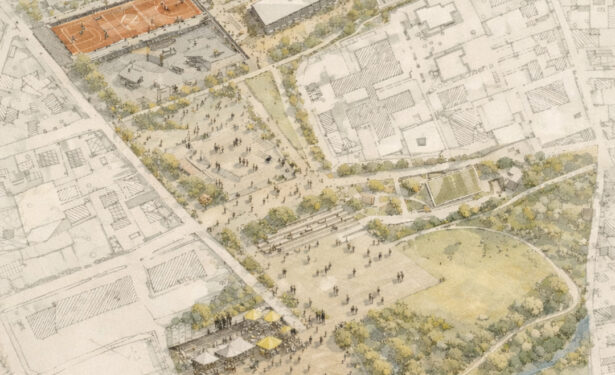
Moving southward, the site enters the Threshold Zone, where the transition becomes spatially legible. This intermediate layer is neither fully urban nor fully landscape. Materials soften, permeability increases, and public space expands. At its center, the diagonal spine widens to form a civic platform.
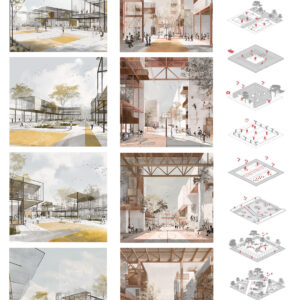
The broken diagonal spine is the primary spatial generator of the project. It is not merely a circulation route but a device that produces space. Beginning at the northern entrance, it compresses and expands, forming plazas and terraces. Toward the south, its geometric clarity dissolves into the landscape. Movement along this spine becomes an experiential sequence — from structure to openness, from hardness to release.
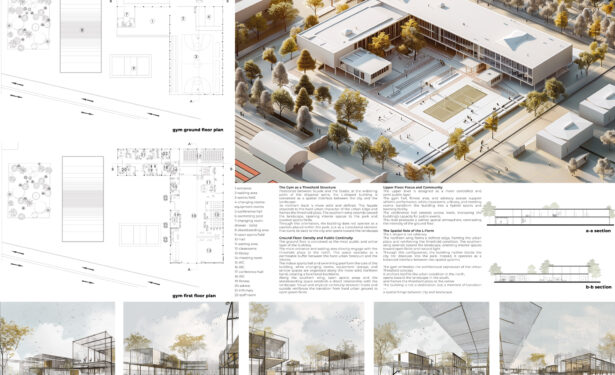
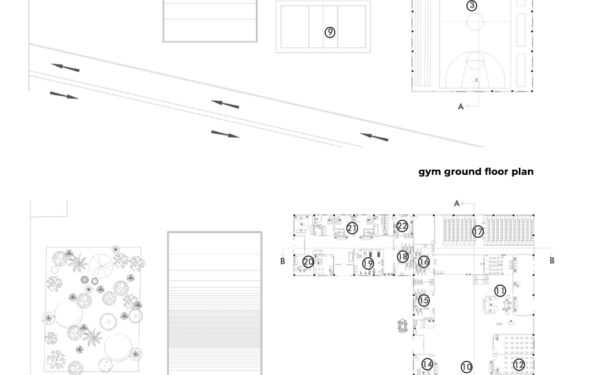
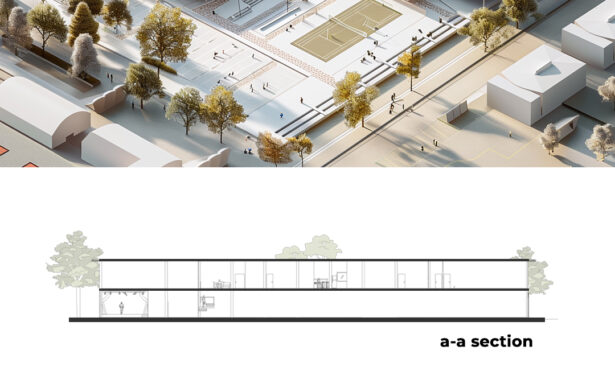
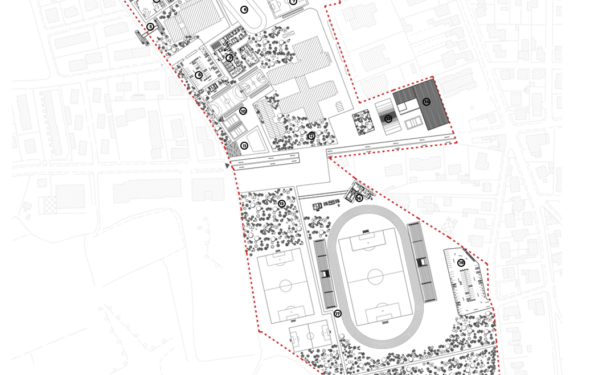
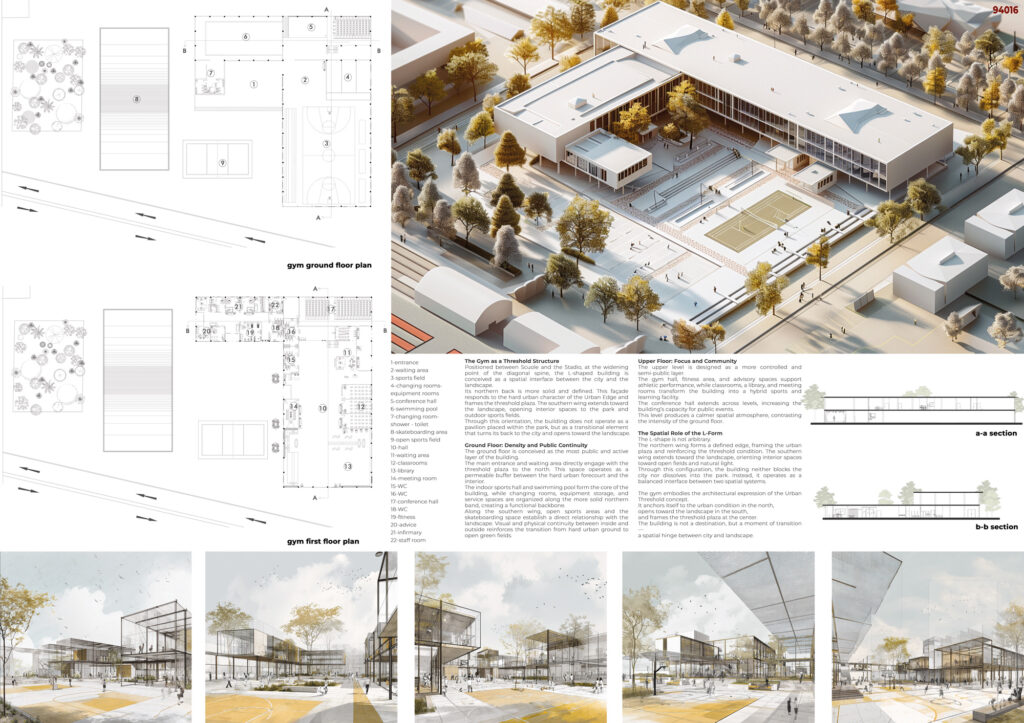
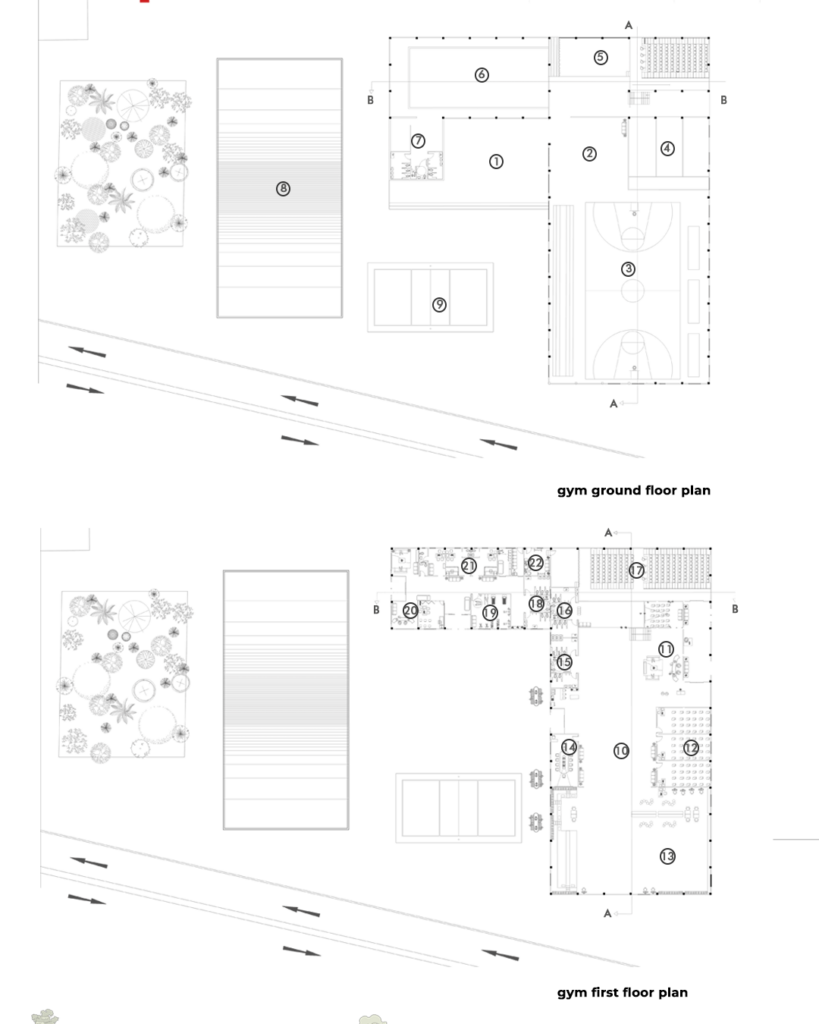
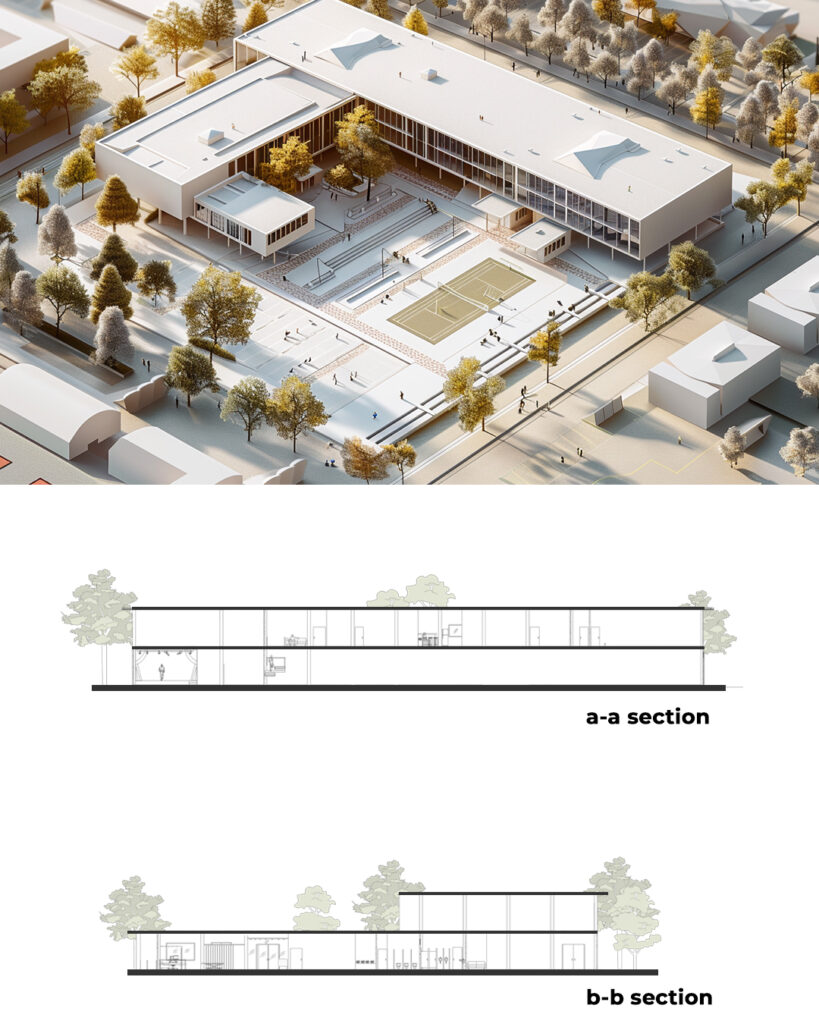
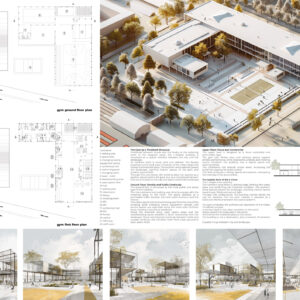
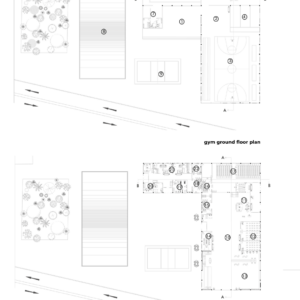
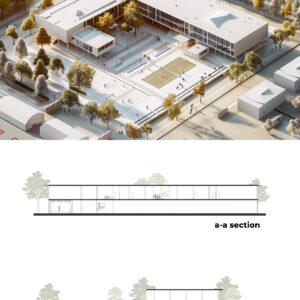
Between Scuole and the Stadio, the L-shaped gym is positioned at the moment of maximum spatial tension. Its northern façade forms a defined urban edge, reinforcing the plaza condition, while its southern wing opens toward the park. The building operates as a mediator rather than an object, filtering movement, views, and ground conditions between two systems.
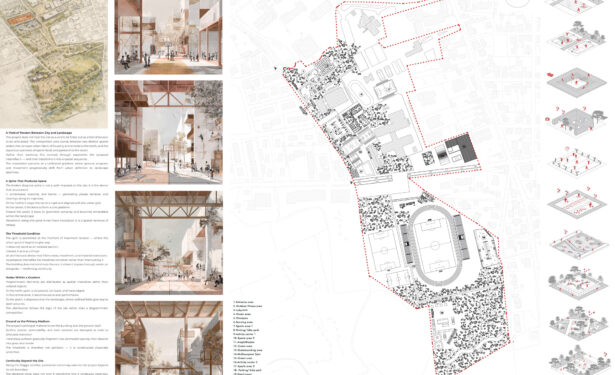
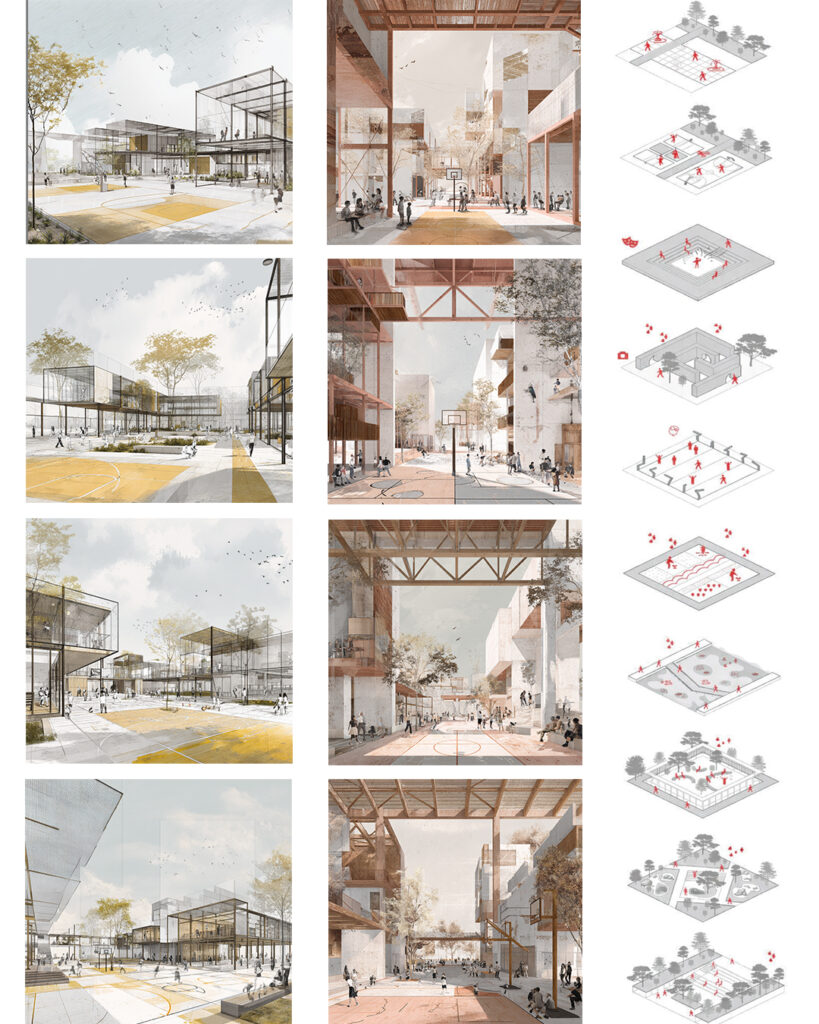
Programmatic elements such as fitness, skateboarding, mini soccer, and event lawn are organized as nodes along the spine. Activities are compact and hard-edged in the north, and progressively more open and landscape-integrated in the south. Program follows spatial intensity rather than arbitrary placement.
The project’s primary material is the ground. Hard plaza surfaces in the north fragment into semi-permeable paving in the center and dissolve into grass and terrain in the south. Through this strategy, the transition from city to park becomes physically perceptible.
Along the Roggia corridor, pedestrian continuity extends the field beyond its boundary. The spine narrows into landscape paths, ensuring the intervention remains open-ended and embedded within a broader ecological framework.
Field of Transition proposes a unified spatial system where architecture, ground, and movement transform contrast into a lived gradient.
Etiketler