
- 11 Kasım 2025
- 4922 defa okundu.
1. Ödül, Revitalization of “Asllan Rusi” Sports Palace
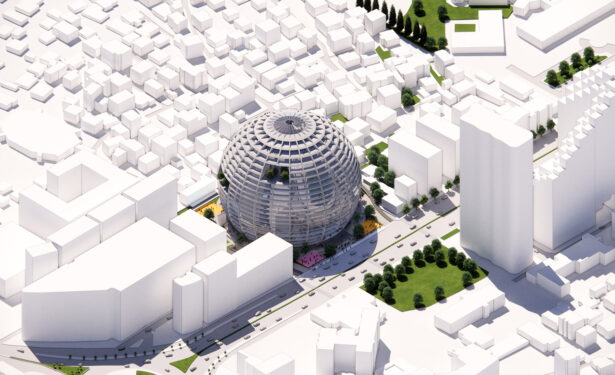
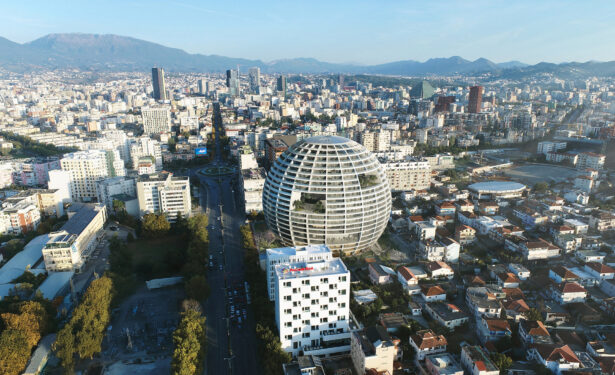
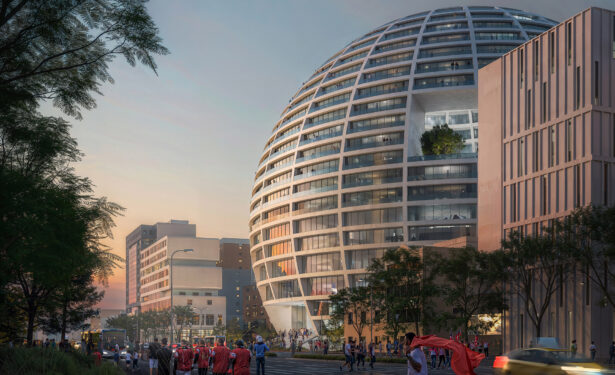
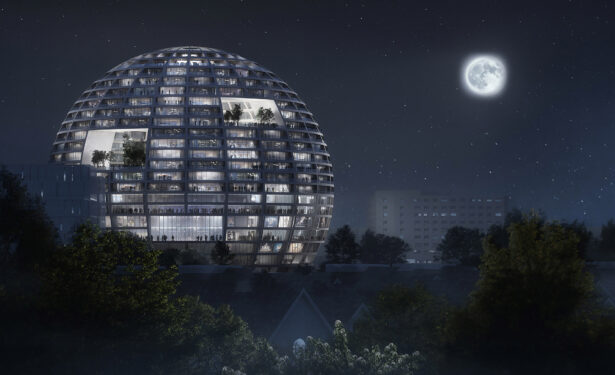
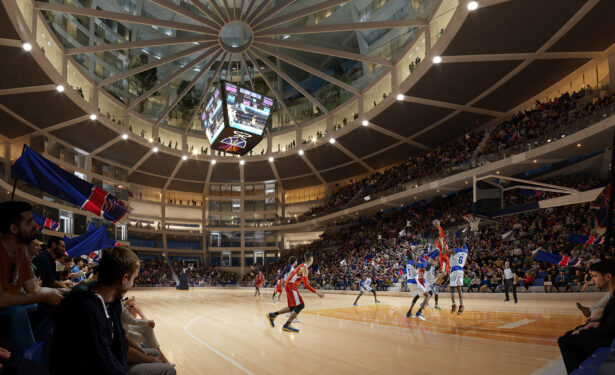
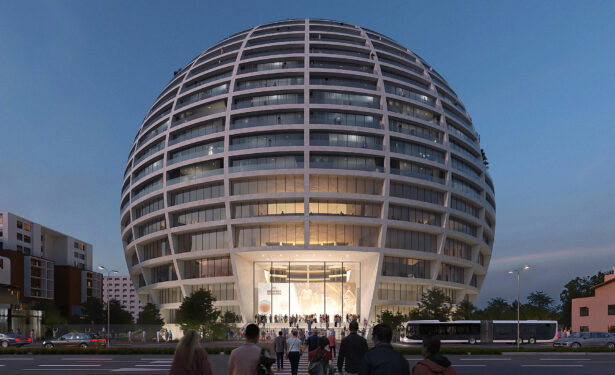
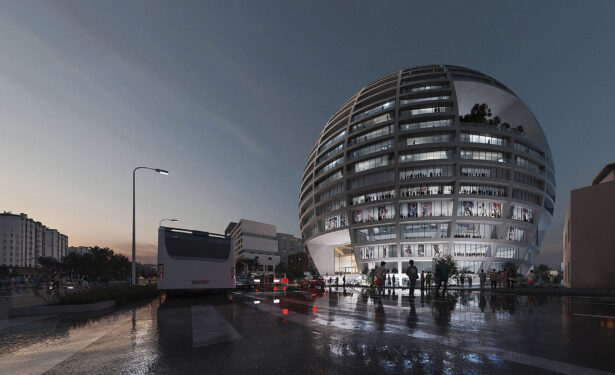
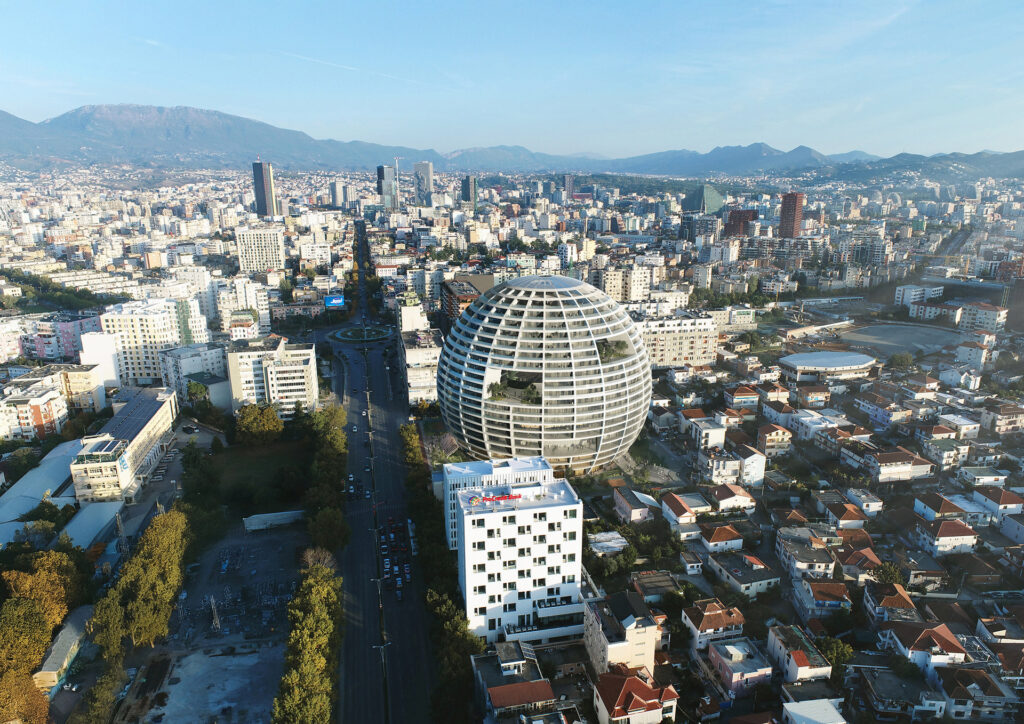
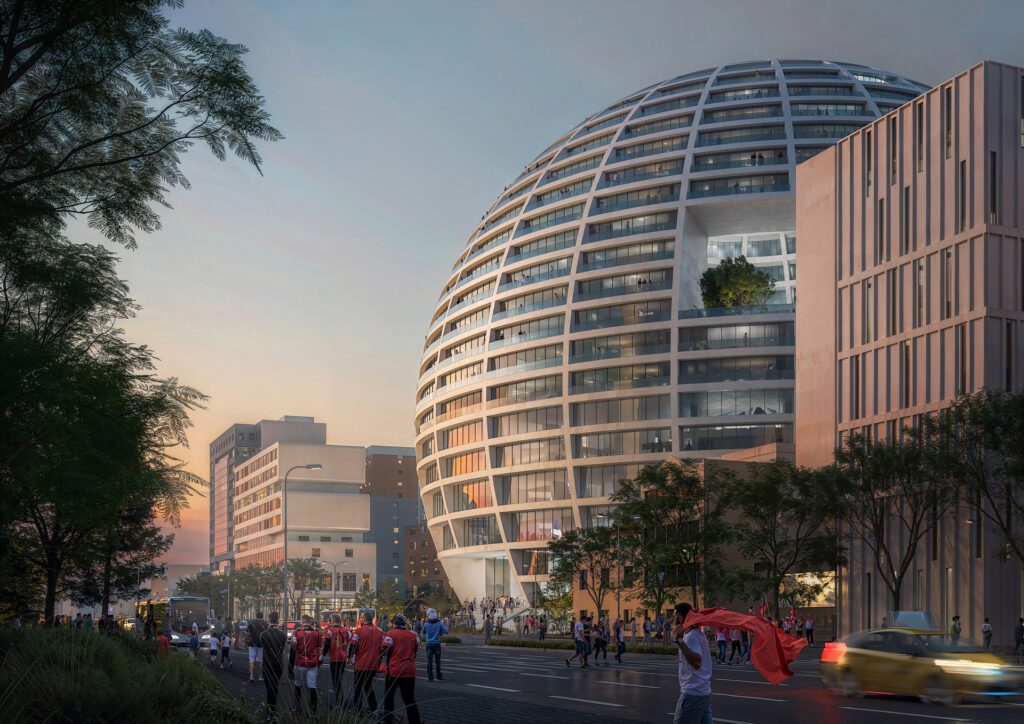
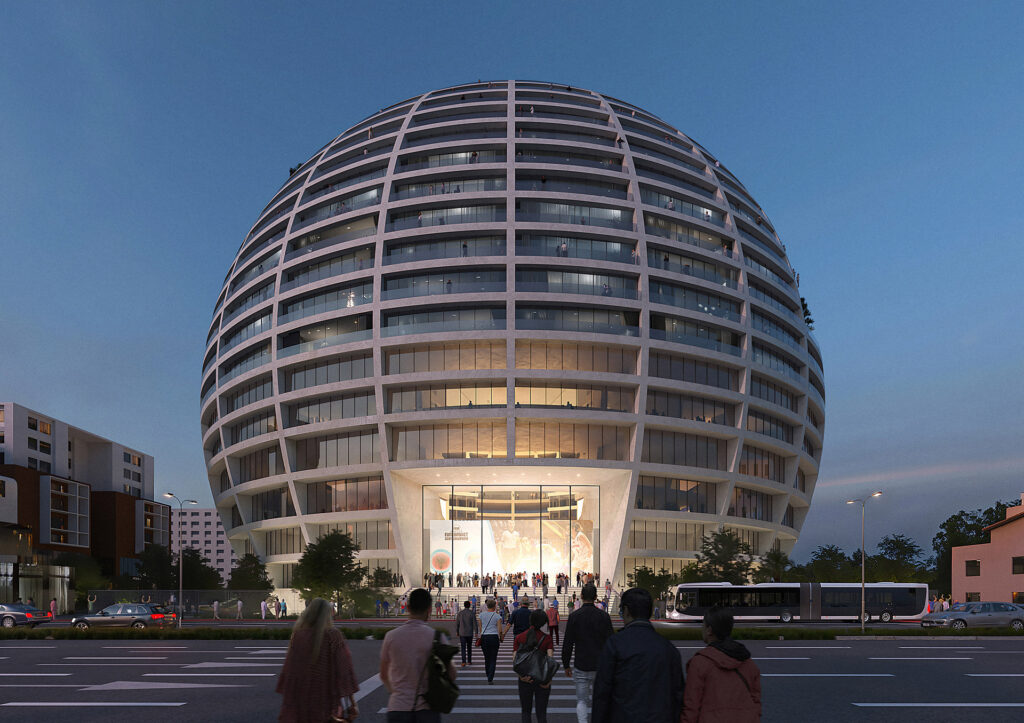
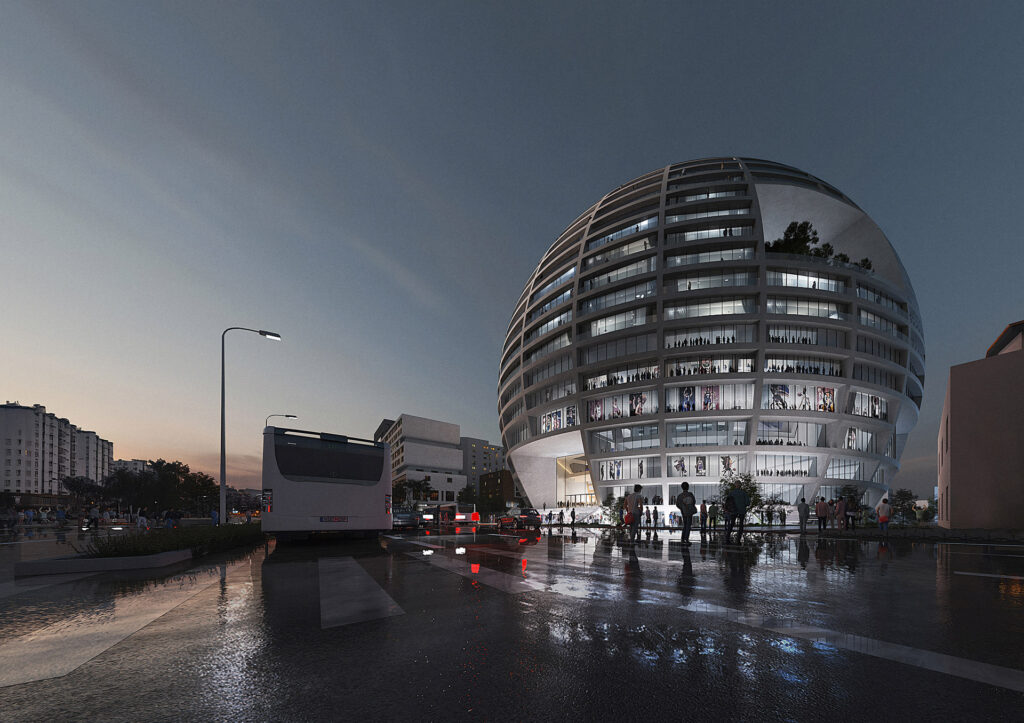
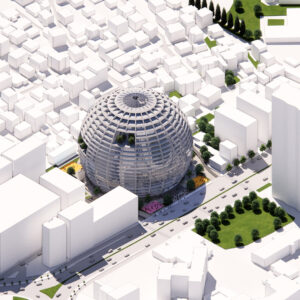
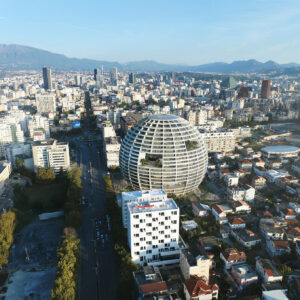
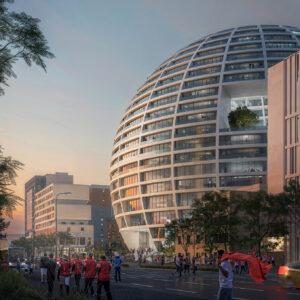
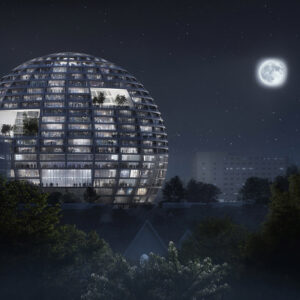
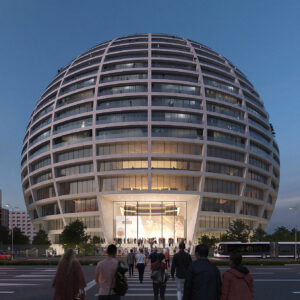
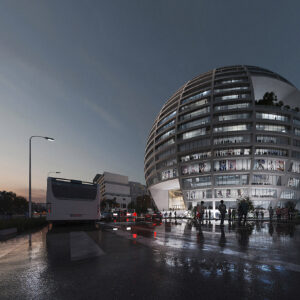
MVRDV'nin, Tiran’daki yeni Asllan Rusi Spor Sarayı için düzenlenen yarışma için tasarladığı proje 1. ödülü kazandı. Proje; basketbol ve voleybol için 6.000 kişilik bir arena, konut daireleri, bir otel ve zemin katta ticari alanlar içeren karma kullanımlı bir kompleks olarak tasarlandı. Yaklaşık yüz metrelik çapa sahip bir küre biçiminde tasarlanan yapı, tüm bu işlevleri spor ve toplumu bütünleştiren anıtsal bir stadyum mekanında bir araya getiriyor. “The Grand Ballroom” adını taşıyan proje, kentin özgün mimari yapıları arasına katılacak ve Tiran halkı için bir araya gelmeyi simgeleyen yeni bir odak noktası haline gelecek.
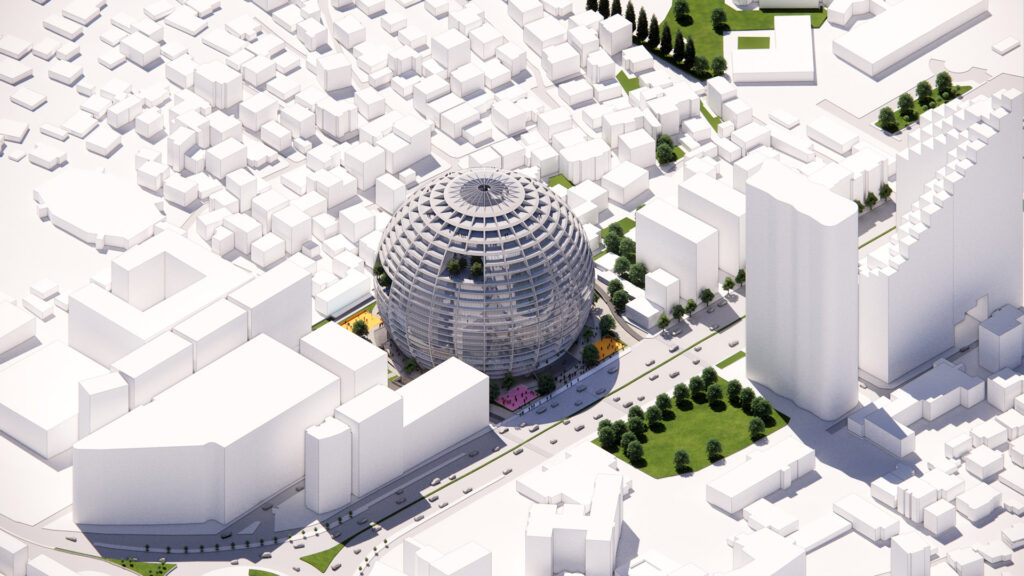
The competition entry was produced with a consortium comprising Trema Tech shpk, Likado BV, Albanian Capital Group shpk, and BCN Investments BV. The design’s distinctive feature, its spherical shape, accomplishes much more than simply creating an iconic structure alongside the road connecting the airport to the city centre. By stacking the hotel and residential functions on top of the arena itself, the design accommodates a significant amount of programme on a relatively small site. By making the building rounded, it avoids creating any “rear” façades that neglect the surrounding neighbourhood. By tapering inwards towards the building’s base, it creates more space for public plazas and outdoor sports facilities that can be used by local children. And by tapering inward at the top, it creates terraces for the building’s residents.
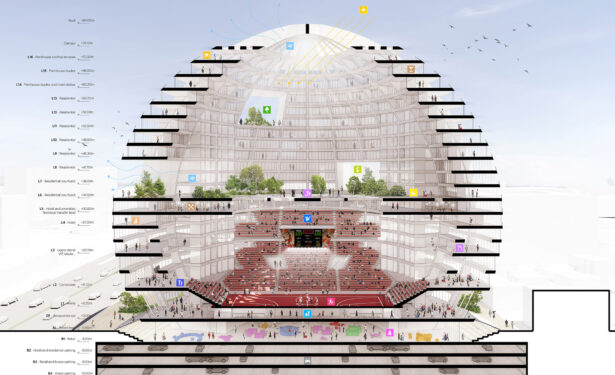
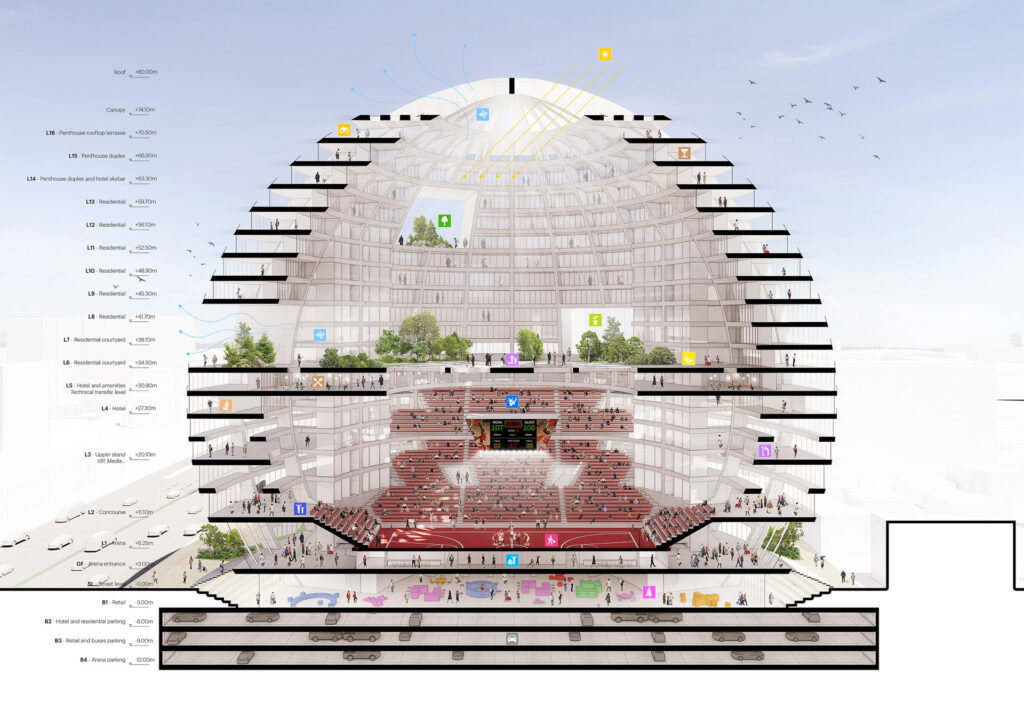
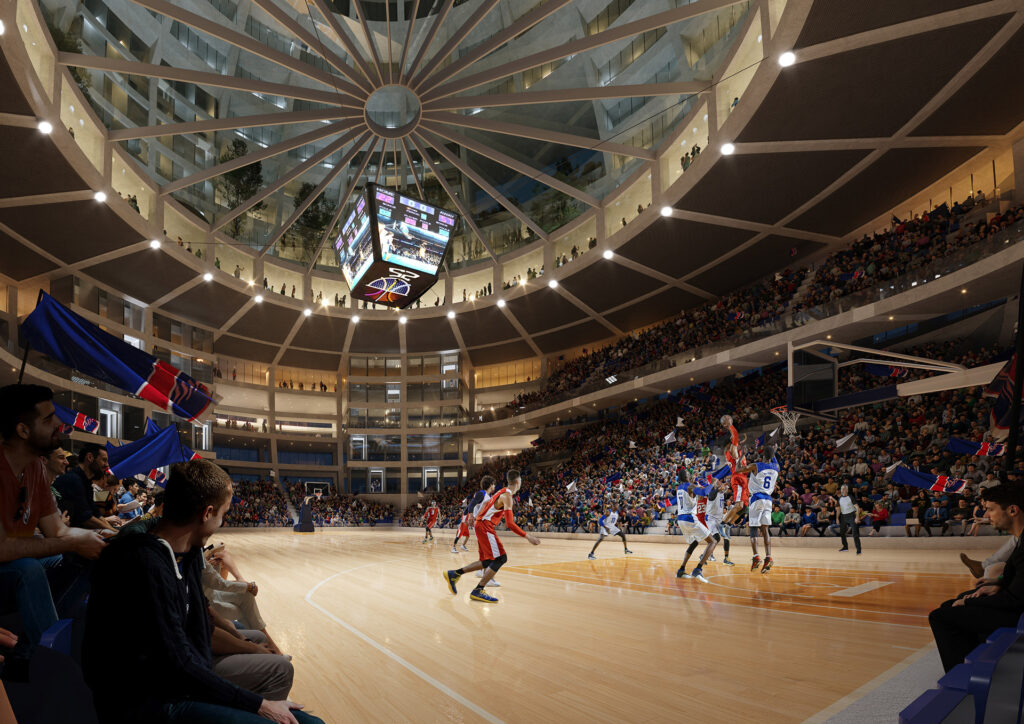
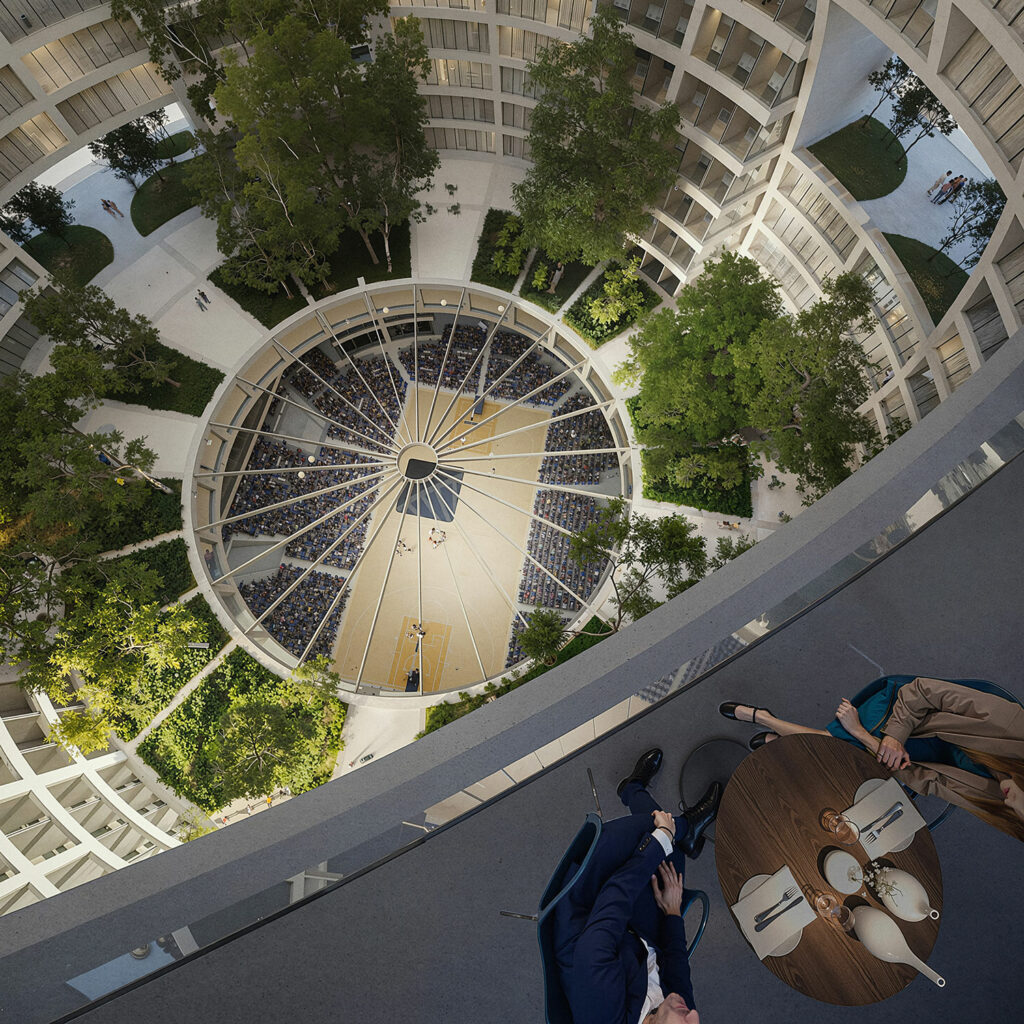
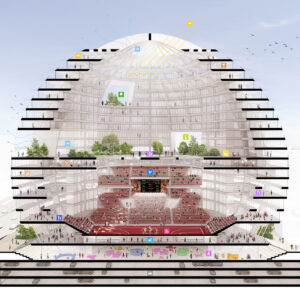
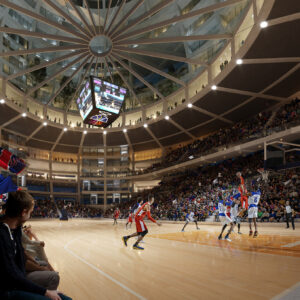
The building’s functions are arranged in layers. Where the sphere meets the ground, it imprints the earth, creating a lower-ground floor with steps and tribunes leading downwards to a ring of retail spaces, cafés, and amenities that supports the arena’s events. Above this is the arena itself, accessed by short bridges at ground level, with the main venue flanked by two additional training courts hidden beneath the stands. The hotel occupies two floors above this. With this gesture, the hotel is given a unique feature, allowing the guests to see the matches from the windows of rooms on the lower level of the hotel, and from the amenity spaces on the upper level, which cantilever over the stands to create an oculus in the arena ceiling.
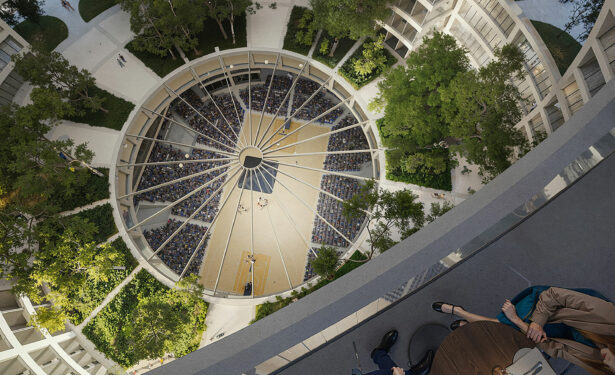
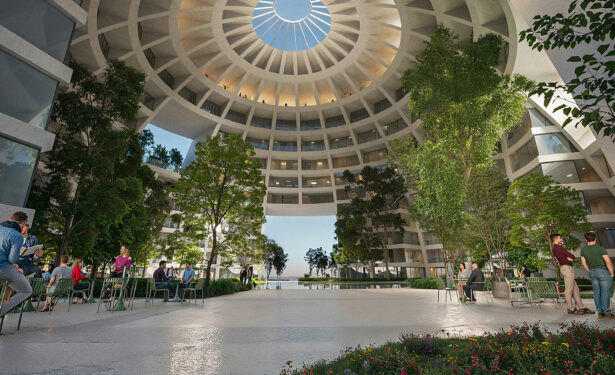
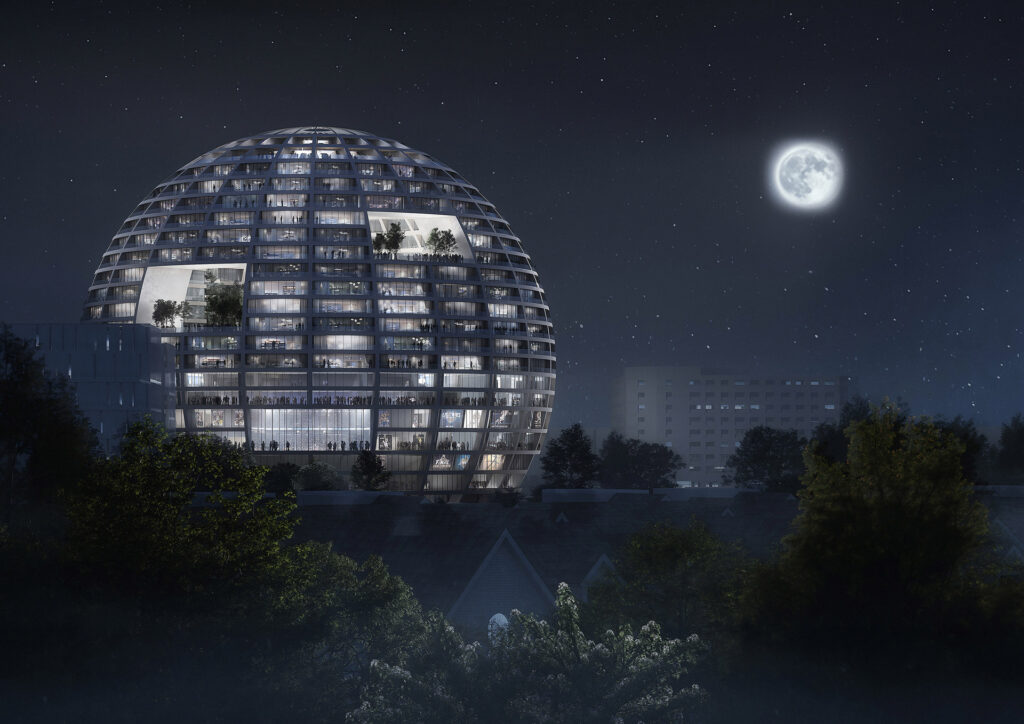
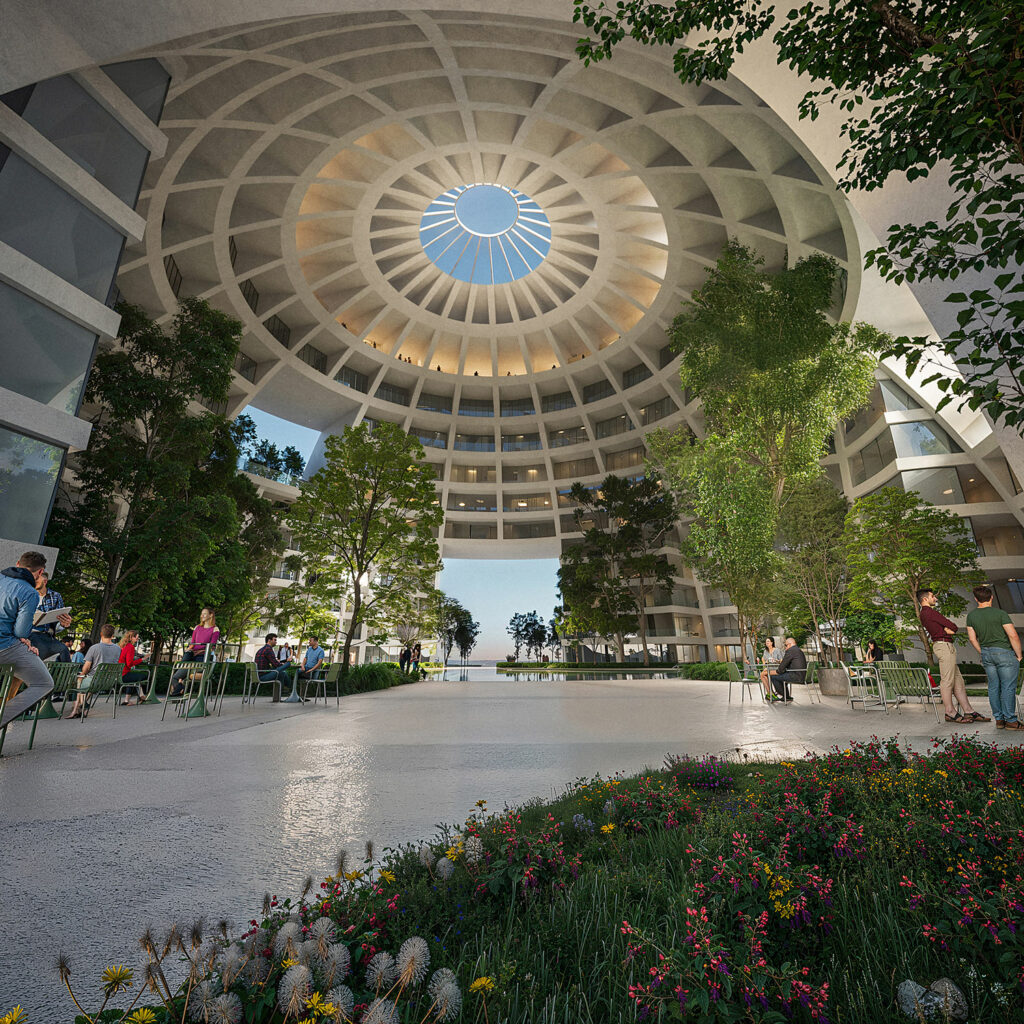
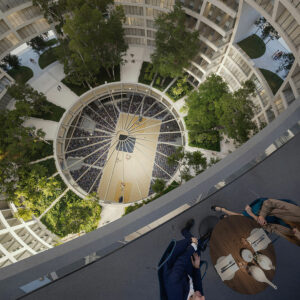
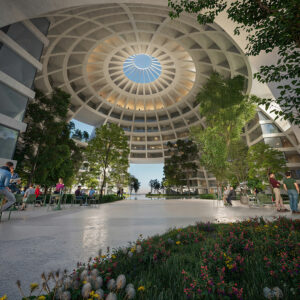
The oculus could be closed with a thick layer of glass to form a soundproof barrier while maintaining a visual connection between the upper and lower volumes. Above this level, apartments are contained within the sphere’s double-shell structure, forming a colossal semi-outdoor domed space on the interior – almost a mirror of the bowl-shaped arena. This space becomes a courtyard garden for residents, with mature trees and furniture for relaxing. In a number of places, the dome of apartments gives way to three- and four-storey rectangular holes punched through the building’s shell, allowing natural ventilation and creating additional communal green spaces for residences, each with its own theme.
The apartments in the sphere’s shell comprise a mixture of outward-facing units and a portion of dual aspect units, which offer spectacular views not only of the city but also of the interior dome, courtyard garden, and a glimpse into the arena through the oculus. As the sphere tapers in at the top, large terraces are created for residents. The external walls of the apartments are set back within the sphere’s shell, ensuring that the apartment interiors are shaded from the sun by the floor above, while accentuating the size of these terraces. The very top of the dome mostly hosts duplex penthouses, each with access to a private rooftop terrace, while one quarter of this upper ring hosts a double-height hotel skybar, with views over the city. A second oculus, that can be closed with glass and opened for ventilation, completes the sphere.
Etiketler