Eşdeğer Mansiyon, International Competition for the Conceptual Design of the Revitalization and Landscaping of the Zlatica Forest Park in Podgorica

- 9 Aralık 2025
- 4704 defa okundu.
Eşdeğer Mansiyon, International Competition for the Conceptual Design of the Revitalization and Landscaping of the Zlatica Forest Park in Podgorica
Merve Yamak Aksoy ve İbrahim Özvariş'in "International Competition for the Conceptual Design of the Revitalization and Landscaping of the Zlatica Forest Park in Podgorica" için tasarladığı proje eşdeğer mansiyon ödülü kazandı.
Proje Raporu:
Zlatica Forest Park
“WHERE NATURE LEADS”
THE PATH CARRIED BY TREES
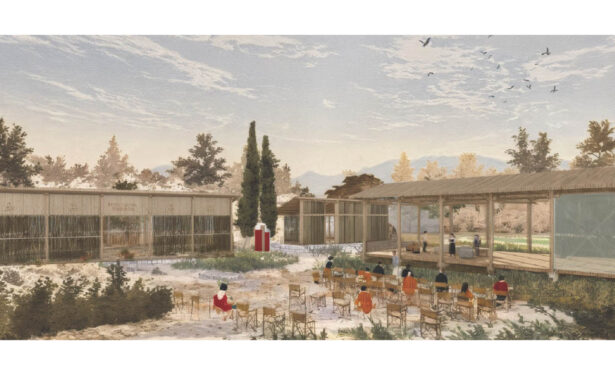
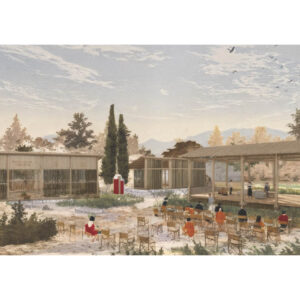
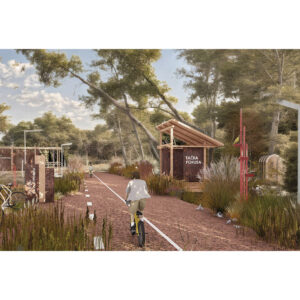
Nature is often an unfamiliar and rarely encountered environment for urban dwellers. The Aleppo pines, cypresses, and various plants of Zlatica Forest Park — the insects on branches, fallen twigs on the ground, and unfamiliar animal tracks — offer city residents an experience that feels both extraordinary and ordinary within the park’s own natural rhythm. What enables the urbanite to connect with this place is the awareness of the tension between the city visible on the horizon and the natural setting they find themselves in.
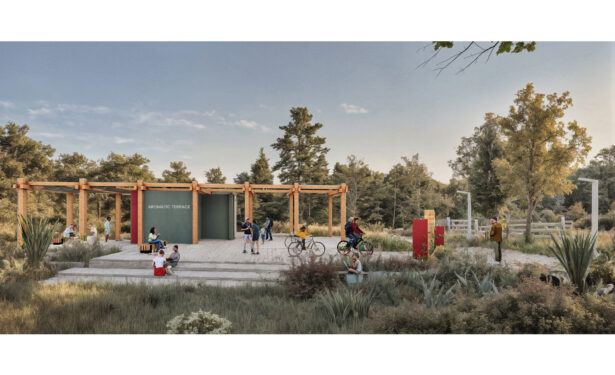
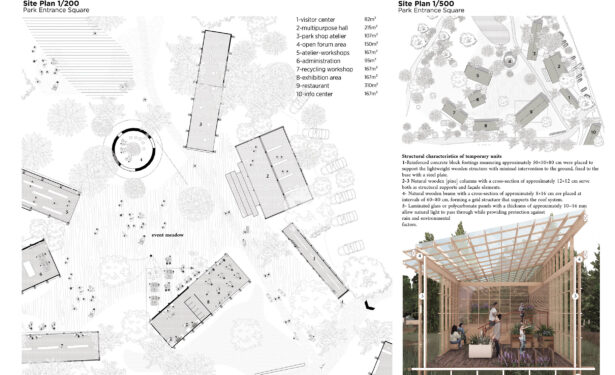
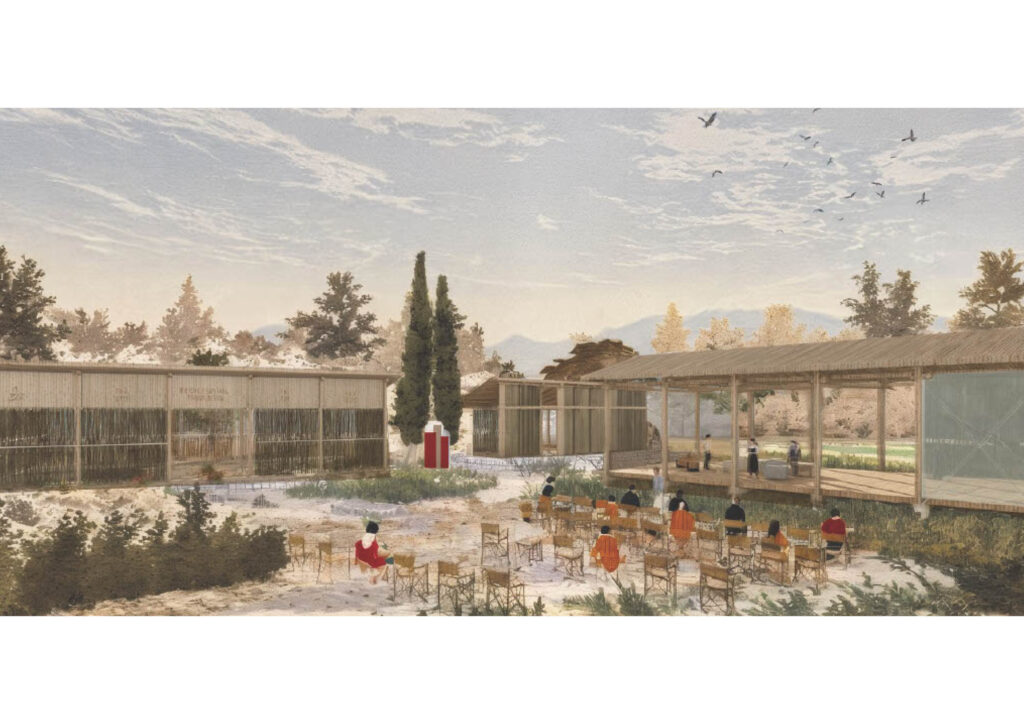
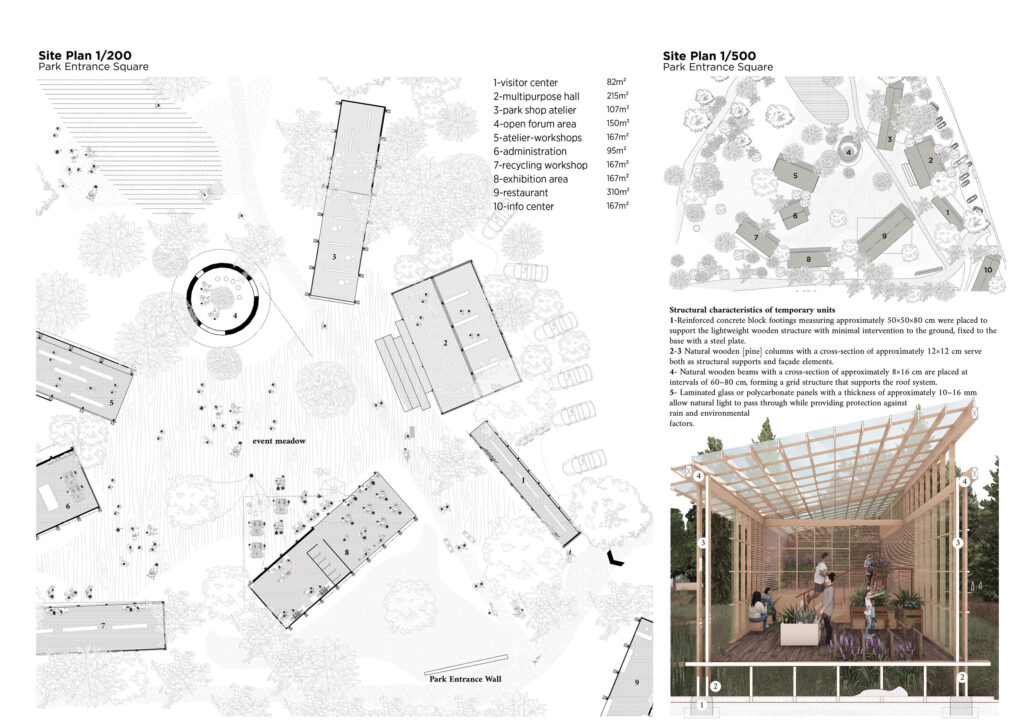
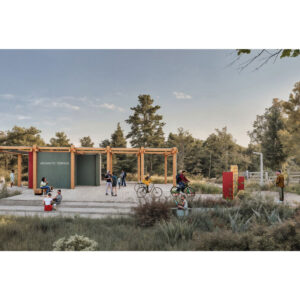
This area can be defined as a welcoming space — a fragment of nature, a ground for local producers seeking support in their production practices, and a meeting point for city residents wishing to enjoy their weekends. In such a layered and ordinary context, the designer’s approach must be realistic: to intervene by understanding and by leaving space for the site itself.
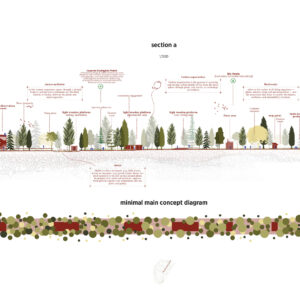
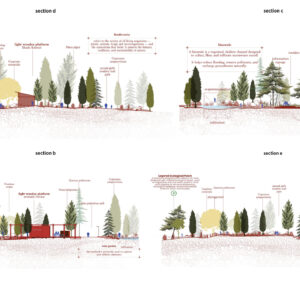
What is not done in the park will be as defining as what is done. The main idea is to complement and strengthen the existing natural texture. However, applying these ideas on-site with minimal intervention — transforming the area through decisions made in place — is of far greater importance.
Small interventions that understand natural movement and life — what we call “natural reinforcement” — form the core of the design approach, empowering both nature and its users. By supporting spontaneous processes, we aim to enhance biodiversity and strengthen the physical character of the park.
Turning the city dweller’s coincidental encounters into a clear and meaningful layer, subtly blending them into daily life — this is the most effective intervention a designer can make in such an environment. Our approach in Zlatica Forest Park is based on enhancing the natural fabric and user experience through minimal intervention.
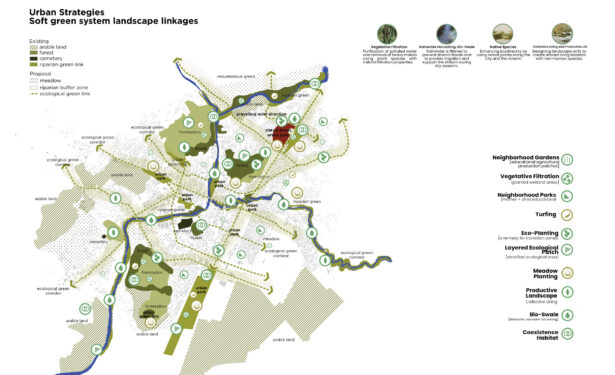
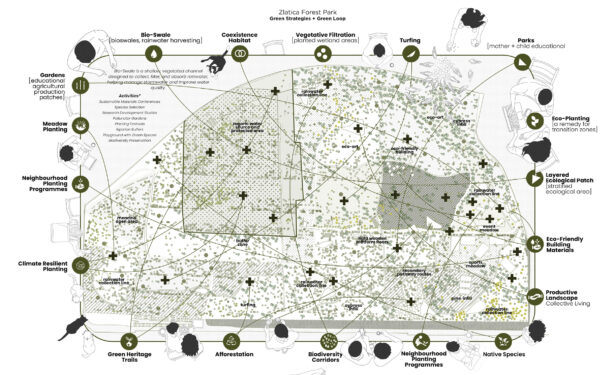
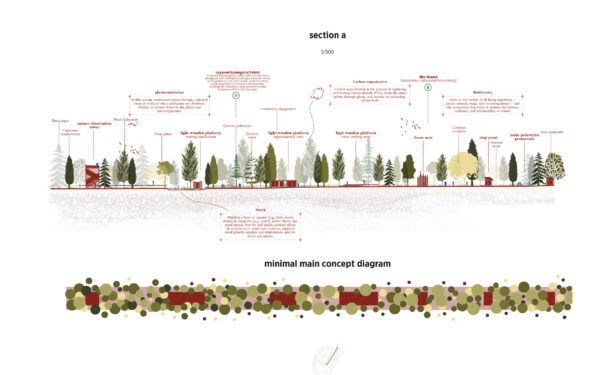
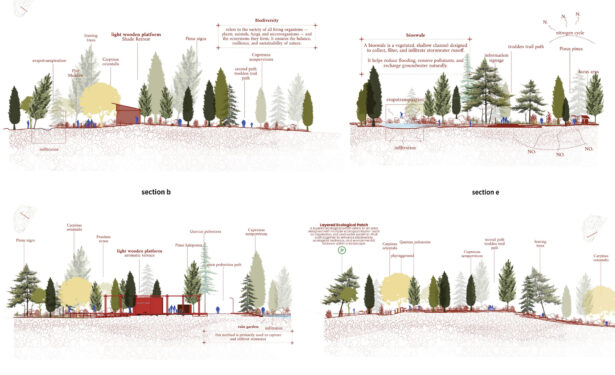
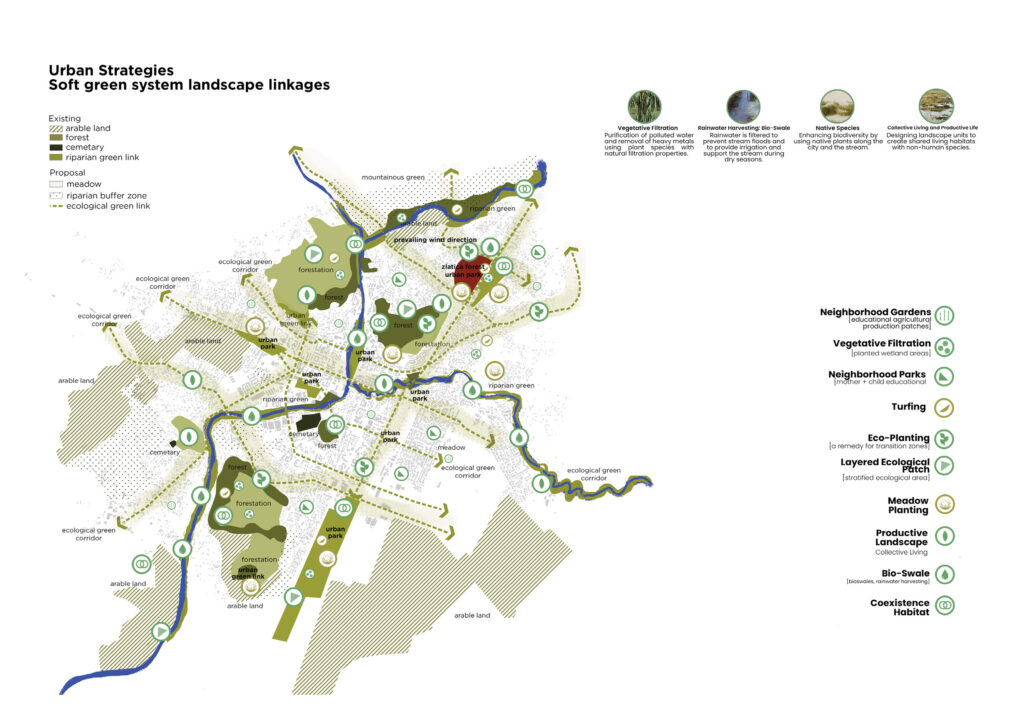
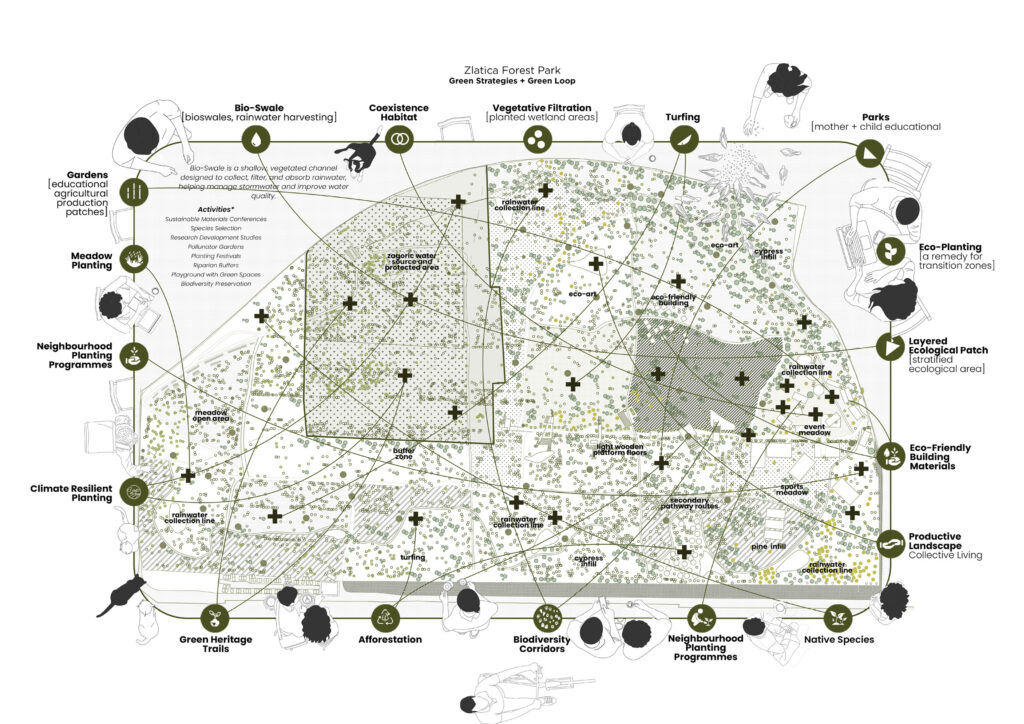
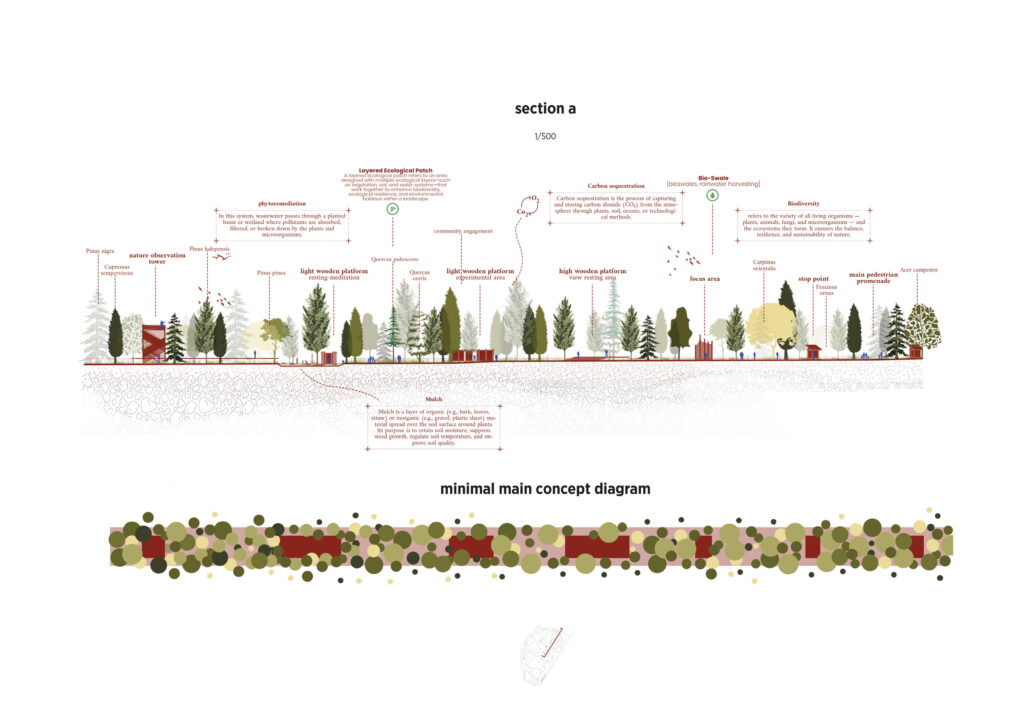
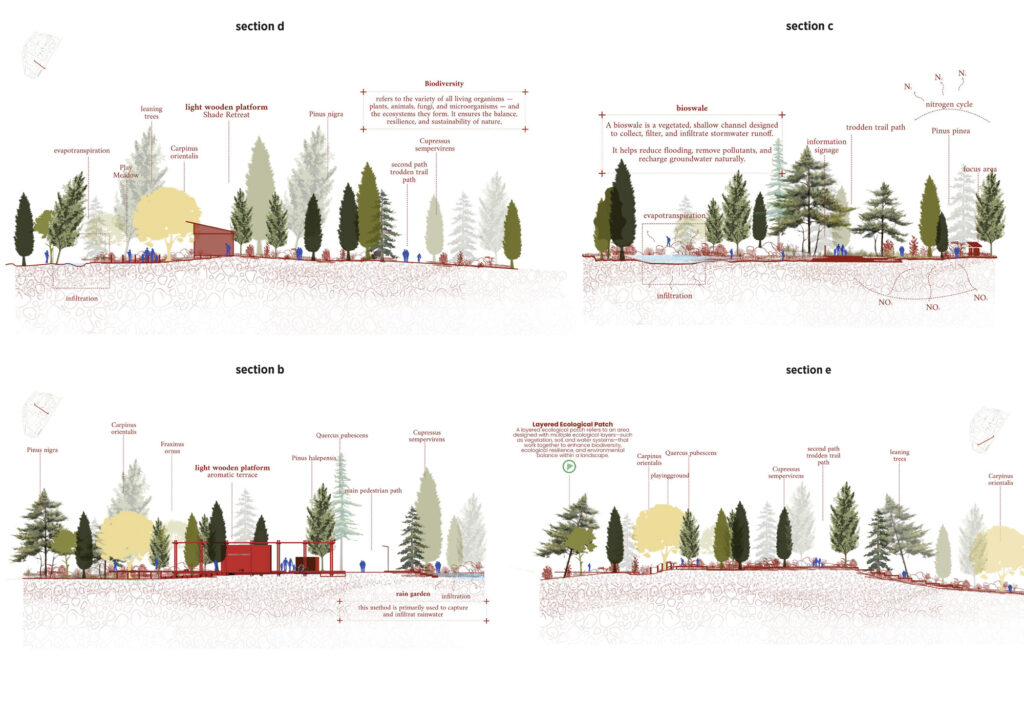
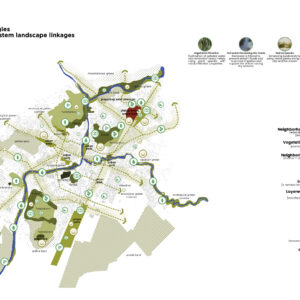
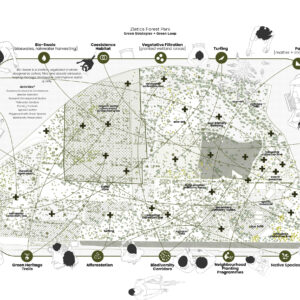
The Soft Green System establishes a continuous network of ecological and social connections between Zlatica Forest Park and the surrounding urban fabric. This system integrates natural infrastructures and landscape-based solutions to enhance ecological resilience, manage stormwater, and promote biodiversity at an urban scale.
At its core, the system introduces a layered ecological patchwork that functions as a connective tissue between the forest and adjacent neighborhoods. Bio-swales and vegetative filtration zones are strategically placed to collect and naturally filter rainwater, reducing runoff and improving groundwater recharge. Meadow planting and eco-planting strategies are implemented to restore native vegetation, providing habitats for pollinators and supporting local ecosystems.
Neighborhood parks and community gardens serve as productive and social nodes, enabling residents to engage in small-scale urban agriculture and environmental stewardship. The coexistence habitats integrate human activity with ecological continuity, ensuring wildlife corridors remain intact while offering educational and recreational experiences.
The productive landscape concept transforms underutilized or fragmented spaces into active green infrastructure—spaces that produce both ecological and social value. Through turf and vegetative filtration, the soft green system enhances soil permeability and urban cooling while reinforcing the park’s relationship with the broader city network.
Overall, the Soft Green System acts as a living infrastructure—flexible, adaptive, and participatory—strengthening the symbiotic relationship between nature and urban life in Podgorica.
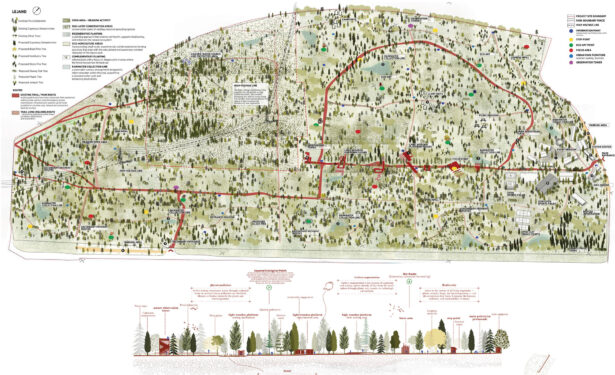
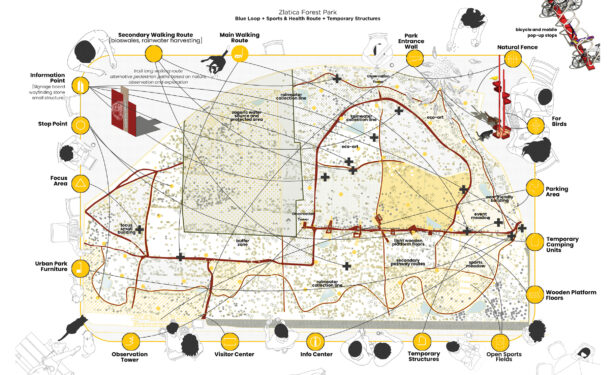
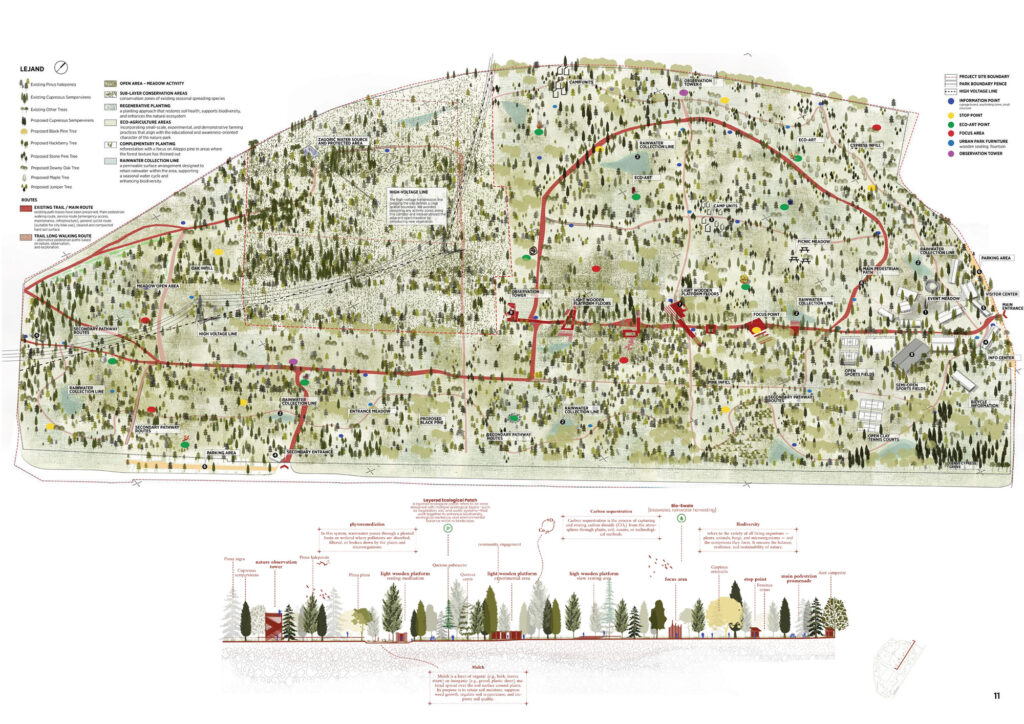
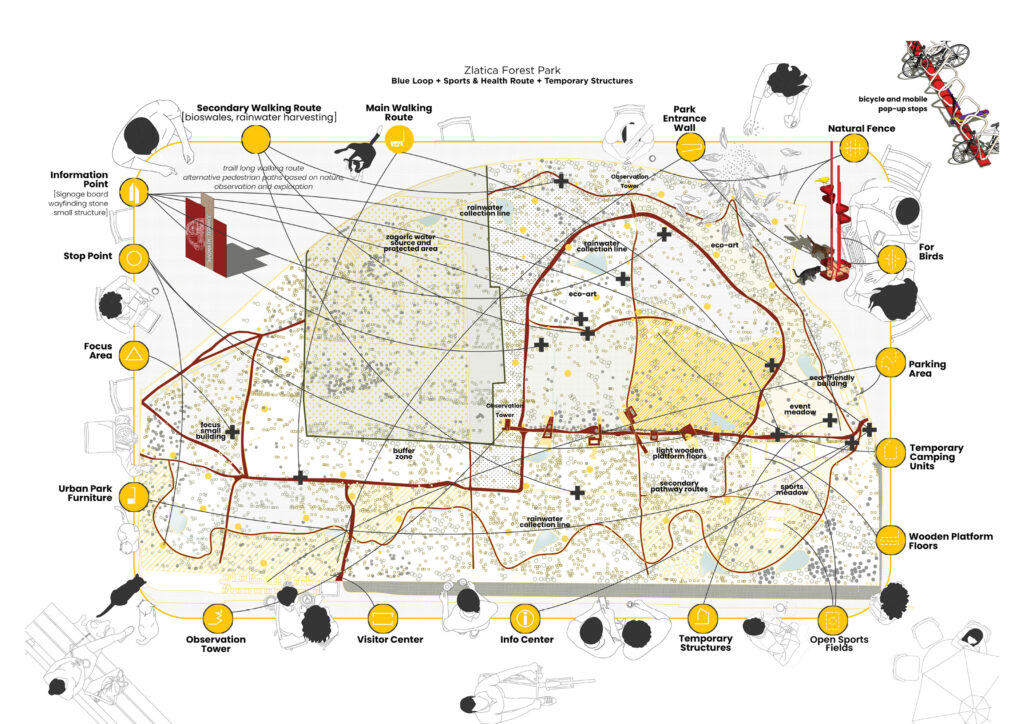
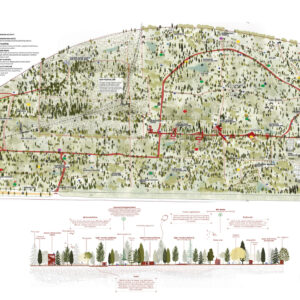
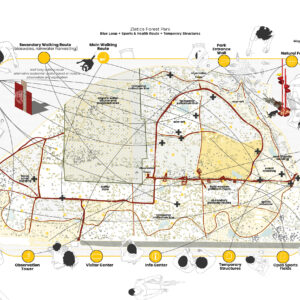
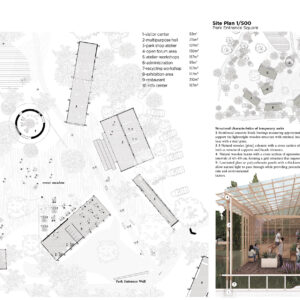
The Hard Landscape System defines the spatial and structural framework that organizes movement, accessibility, and cultural continuity across Zlatica Forest Park and its urban context. While the Soft Green System focuses on ecological flow, the Hard System establishes the physical routes that connect people with nature, health, and heritage through a layered network of pathways.
The system is represented through three primary route typologies, each identified by a distinct color:
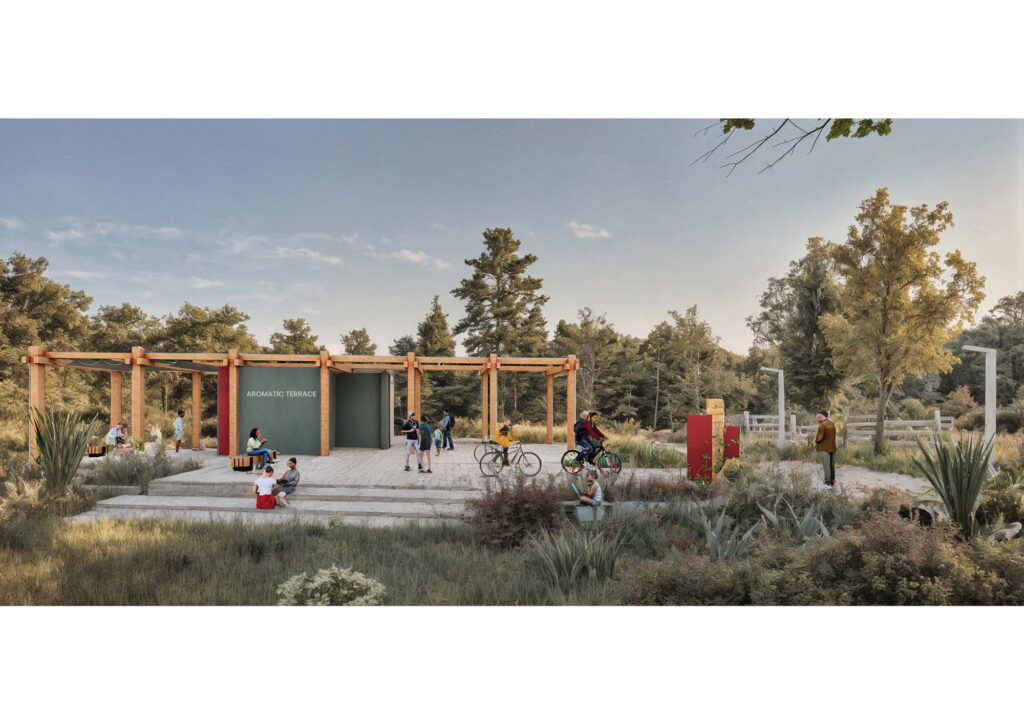
Yellow – Sports & Health Route: a dynamic circulation path designed for active recreation such as jogging, cycling, and outdoor fitness. It provides access to sports facilities and open areas, promoting physical well-being and everyday use of the park.
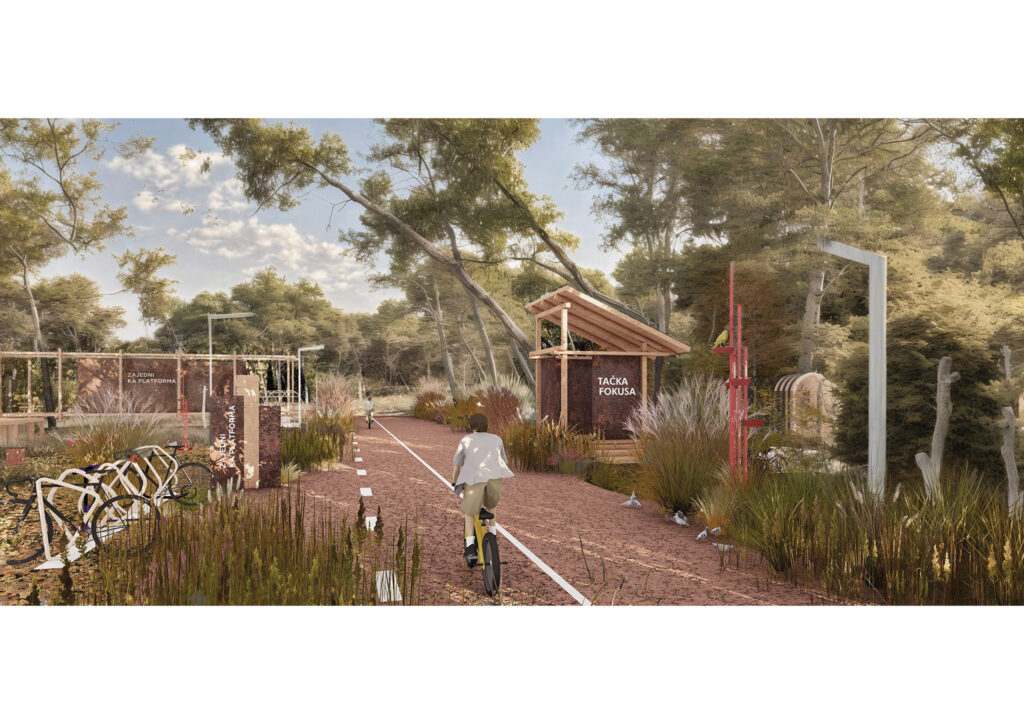
Green – Nature Route: a slower, immersive path that meanders through existing vegetation and topography. Constructed with natural and permeable surfaces, it minimizes environmental impact and enhances the visitor’s sensory connection with the forest’s ecological character.
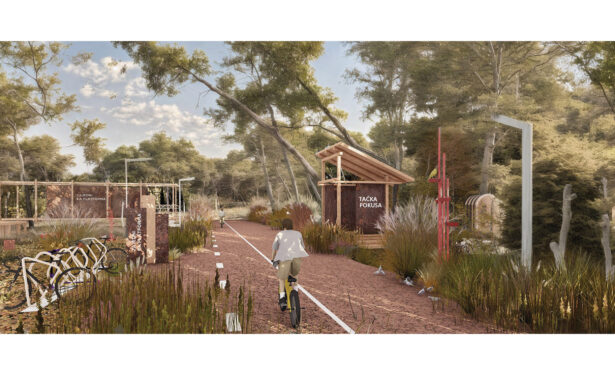
Terracotta (Cultural Heritage Route): the newly proposed route that links the park with Podgorica’s cultural and historical layers, connecting landmarks, viewpoints, and community gathering spaces. This route integrates permeable pedestrian and cycling paths, replacing hard, impermeable surfaces with natural ground materials to improve water absorption and landscape continuity.
Together, these routes form a multi-scalar network that unites health, ecology, and culture. The Hard Landscape System not only structures movement but also reinforces identity—transforming Zlatica Forest Park into a place where recreation, ecological awareness, and cultural memory intersect within a sustainable, resilient landscape.
Etiketler

İlgili Projeler
-
 Mansiyon, TerraViva Nidos De Aqua
-
Eşdeğer Mansiyon, SATSO Üretim ve Dijital Dönüşüm Merkezi Ödüllü Mimari Proje Yarışması
-
Katılımcı, Kayseri Mimarsinan OSB Giriş Mekanları Öğrenci Mimari Fikir Yarışması
-
Deep Flow – Hafriyat Geri Dönüşümü ve Entegre Ekolojik Yaşam Modeli
-
Satın Alma, Muğla Büyükşehir Belediyesi Sosyal Kültürel ve İdari Hizmetler Binası Mimari Proje Yarışması