Eşdeğer Mansiyon, Podgorica Ticaret Fuarı ve Kongre Merkezi için Kavramsal Kentsel ve Mimari Tasarım Yarışması

- 8 Aralık 2025
- 4516 defa okundu.
Eşdeğer Mansiyon, Podgorica Ticaret Fuarı ve Kongre Merkezi için Kavramsal Kentsel ve Mimari Tasarım Yarışması
Kaan Kağızman, Nergis Şenkaya ve Eren Kırıştıoğlu'nun projesi Podgorica Ticaret Fuarı ve Kongre Merkezi için Kavramsal Kentsel ve Mimari Tasarım Yarışması'nda eşdeğer mansiyon kazandı.
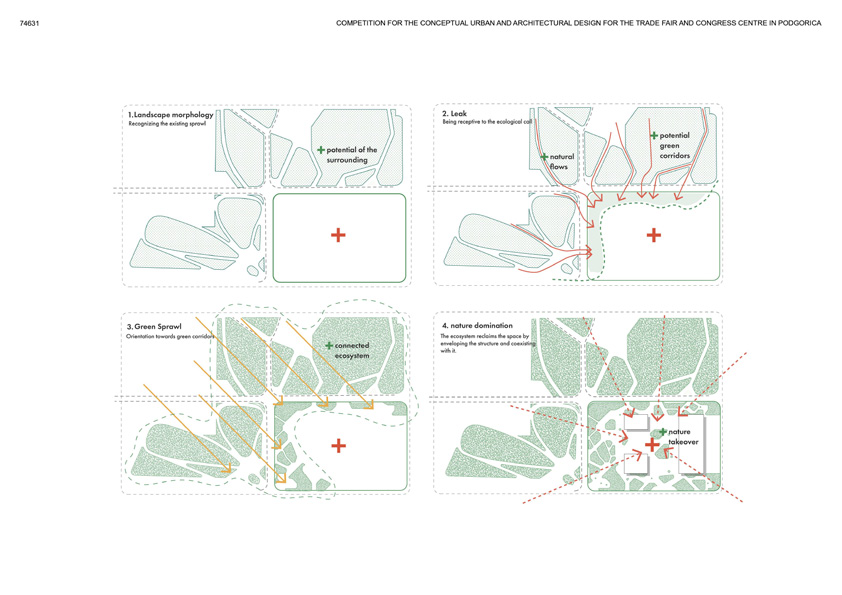
The project transforms the tensions between nature and industry into a spatial spine that establishes a multifunctional public continuity. The sequence of open, semi-open, and enclosed spaces creates a flexible and porous structure that allows for diverse modes of use. In doing so, the project proposes a living urban system that adapts to environmental and social flows
INTRODUCTION
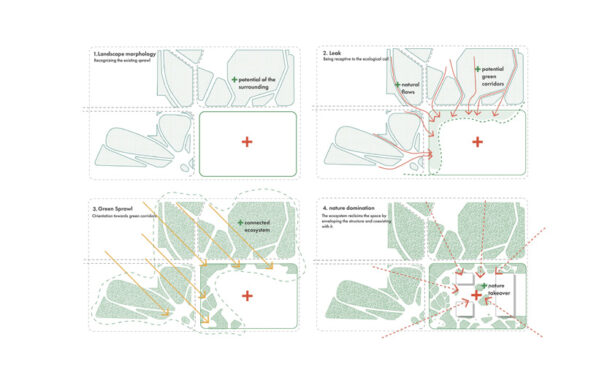
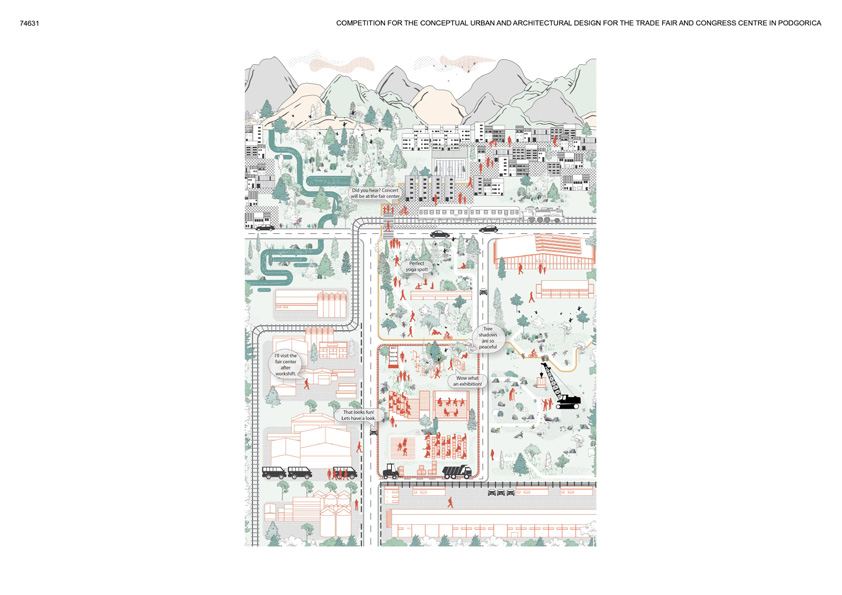
This site is neither a tabula rasa nor a consolidated part of the urban fabric. it belongs neither entirely to nature nor to the industrial logic that defines its surroundings. lts distance from the city center, adjacency to large-scale production infrastructure, and position at the threshold of a future metropoliten park make it a fragment of the city that remains unresolved-not a site of fixed identity, but one of latent potential. To approach this site is to confront its ambiguities. it resists conventional zoning and cannot be reduced to a singular urban reading. Therefore, the task is not simply to place a building, but to articulate the spatial conditions that allow for negotiation. This approach seeks to make visible the tensions already embedded in the terrain: between nature and industry, openness and enclosure, representation and the everyday. rnThe functions defined by the competition brief-such as a trade fair and congress center-are not treated as static architectural programs, but as instruments through which ideas like publicness, porosity, and adaptability can be explored. Architecture here is not merely responsible for enclosing space, but for establishing a civic infrastructure that is open, evolving, and contextually grounded. rnSuch an infrastructure must not only encourage participation, but also allow for diverse modes of occupation: orientation, waiting, observing, or even doing nothing. Public space is not simply a stage for events, but can also operete as a passage, a void, or a legitimate zone for passive presence. The value of such space lies in its capacity to accommodate multiple rhythms of urban life. in this sense, the intervention is not limited to hosting functions. it must also contribute to the identity of this emerging urban fragment-becoming a spatial anchor, a point of collective reference, and a tool for urban orientation. As a kind of wayfinding device,11 the built environment can help position this peripheral area within the mentol and physical map of the city. Not through monumentality, but through its ability to adapt, absorb, and remain unfinished. it is within this unfinishedness that the site finds its architectural relevance. Not as a building frozen in form, but as a spatial choreography-shaped by presence, encounter, and change. A ground that does not merely host people, but grows with them.
URBAN CONTEXT
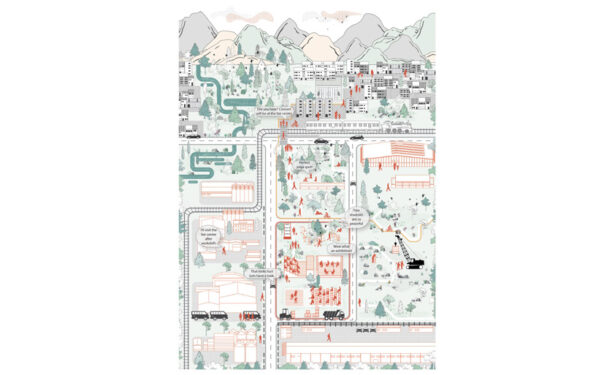
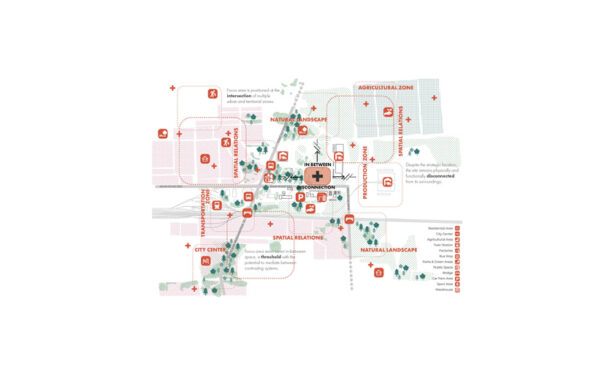
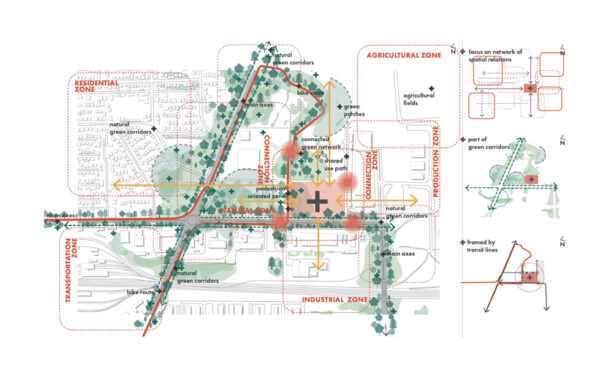
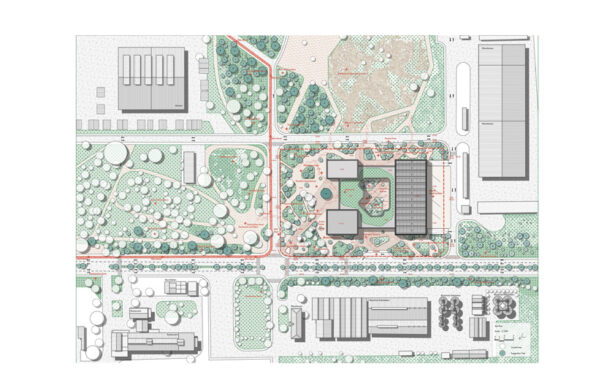
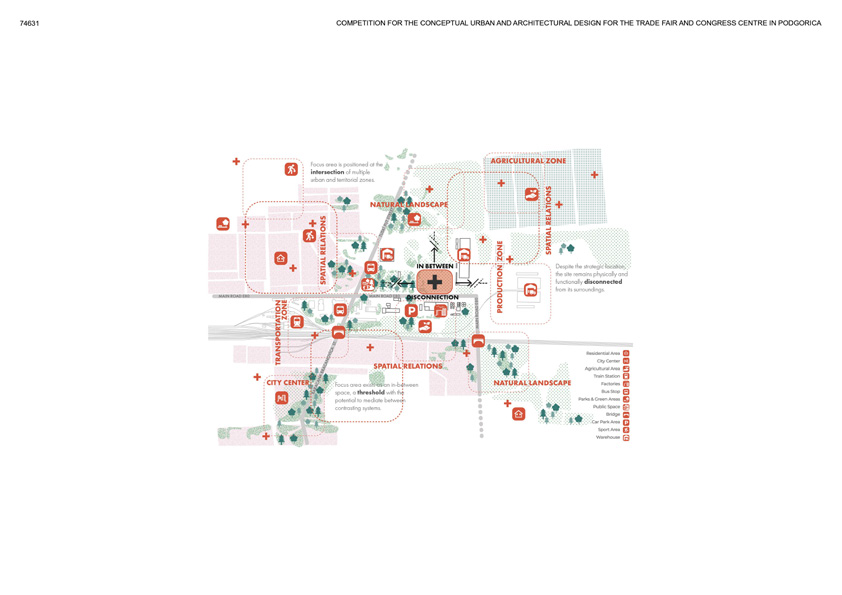
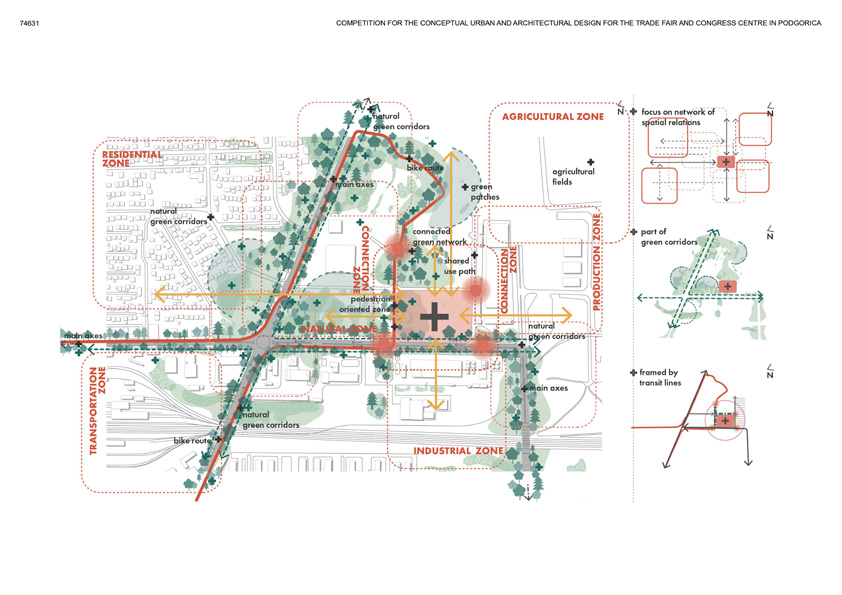
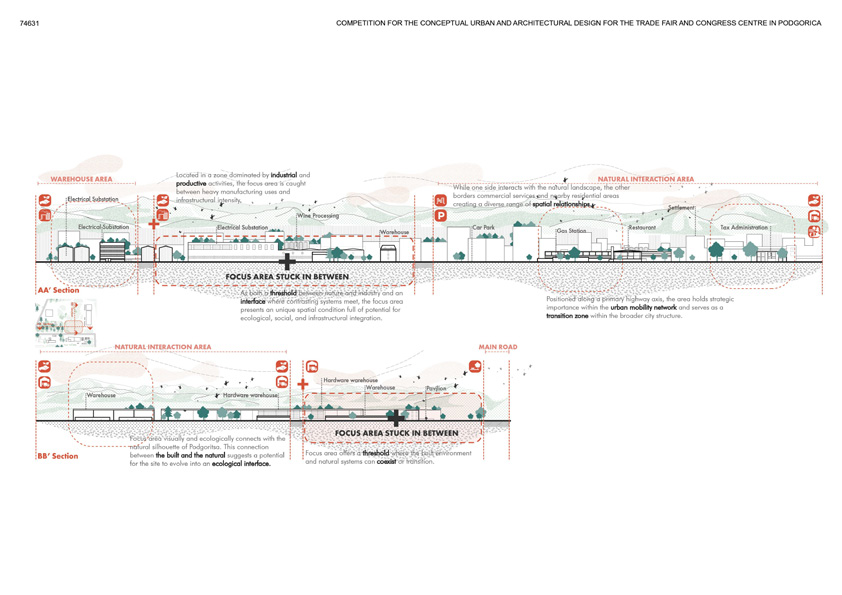
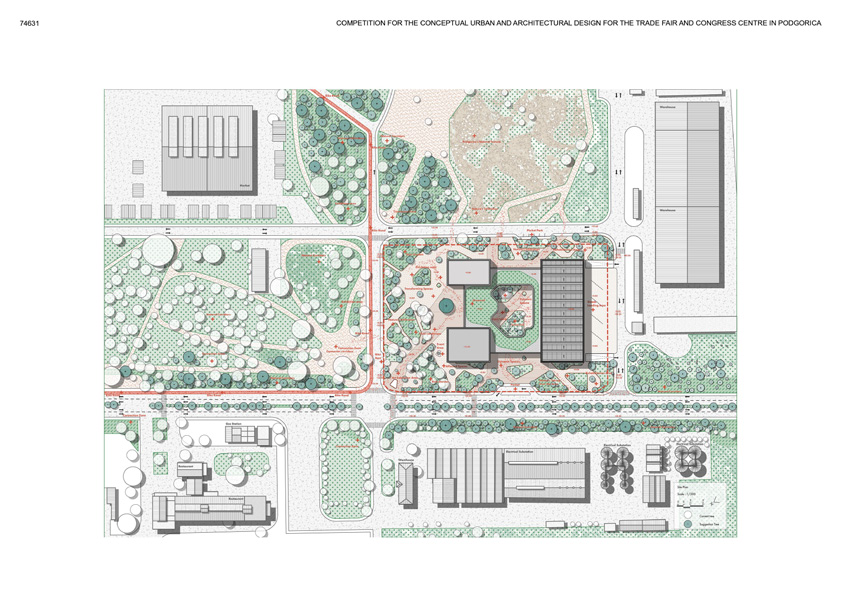
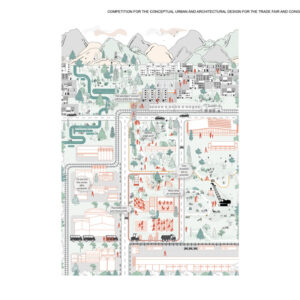
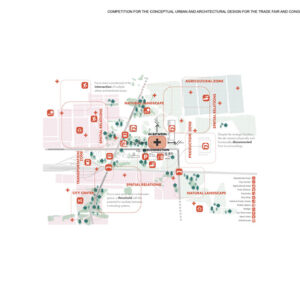
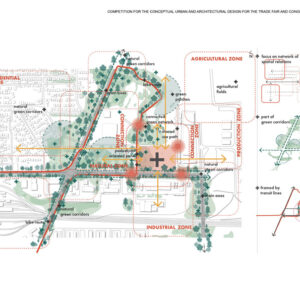
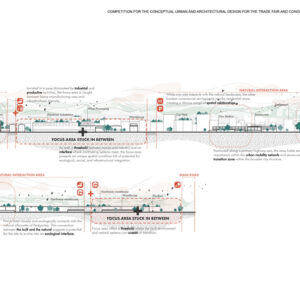
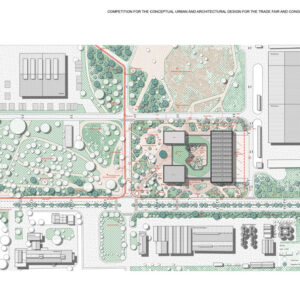
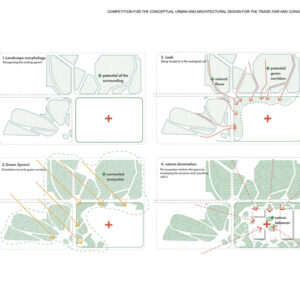
The focus area acts as a spatial threshold caught between contrasting land uses: agricultural zones, natural landscapes, residential neighborhoods, and transportation infrastructure. Despite its location among these zones, it remains fragmented and isolated in function, access, and identity. On one side, it borders the agricultural zone, yet no productive or ecological relationship has been established, the land remains unused and disconnected from the rhythms of cultivation. Adjacent to the natural landscape zone, the area lacks ecological continuity or habitat value, missing the opportunity to contribute to a broader green system. Toward the residential side, the space is physically close but socially distant. There are no shared spaces, accessible paths, or transitional interfaces to encourage interaction, leaving it underutilized by the surrounding community. The dominant transportation zone – an infrastructural corridor – cuts through and further segregates the site, acting more as a barrier than a connector. This spatial in-betweenness defines the focus area as a mute threshold – visible yet disengaged – highlighting the need for design interventions that weave it back into its urban and ecological context.
DESIGN APPROACH
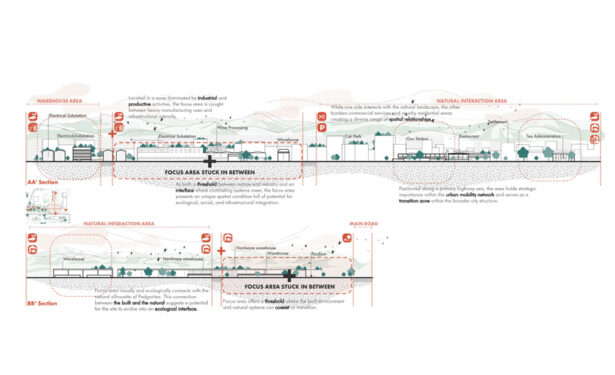
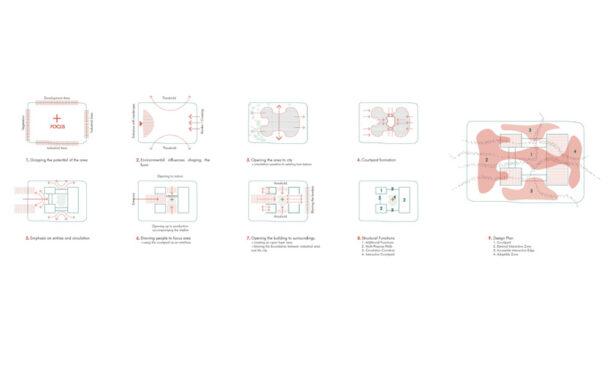
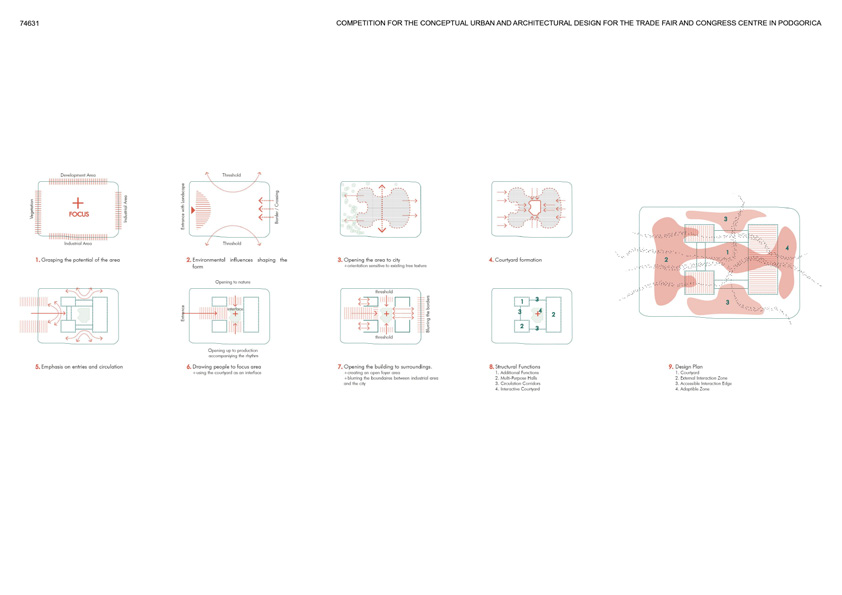
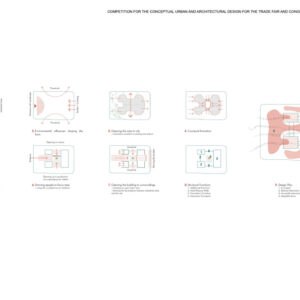
The competition site is located at the periphery of the city, surrounded by visible traces of industrial infrastructure, yet engaging with them only indirectly. Positioned between a major highway and a planned recreational axis, the site sits within a transitional zone with limited gravitational pull. in this context, the building functions as a threshold space-mediating between city and nature, representation and the everyday, event and void. This threshold condition shapes not only the building’s external relationships but also informs its internal spatial logic, offering a framework for circulation, orientation, and programmatic distribution.
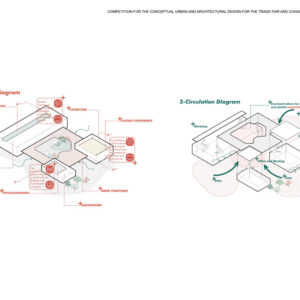
Rather than proposing a singular structural formula, the architectural approach embraces adaptability-offering a spatial framework capable of responding to multiple user scenarios at various scales. This flexibility does not suggest a formless or identity-less structure; on the contrary, it implies a spatial intelligence that guides without restricting, accompanies without imposing. The circulation spine becomes more than a line of movement—it defines a sequence of encounters, pauses, and transitions. Along this spine, a mix of open, semi-open, and enclosed spaces accommodates diverse climatic and social rhythms. The project avoids reducing the user to a purely functional subject. Instead, it recognizes multiple forms of presence, allowing for dwelling, waiting, observing, or simply being. Regardless of why one comes here, the spatial structure remains present—quietly accompanying every possible mode of use.
In BETWEEN, defines itself not as a machine, but as a living organism. It is composed not of rigid modules but of porous layers that respond to social and spatial flows. Rather than predefining scenarios, it invites improvisation.
DESIGN
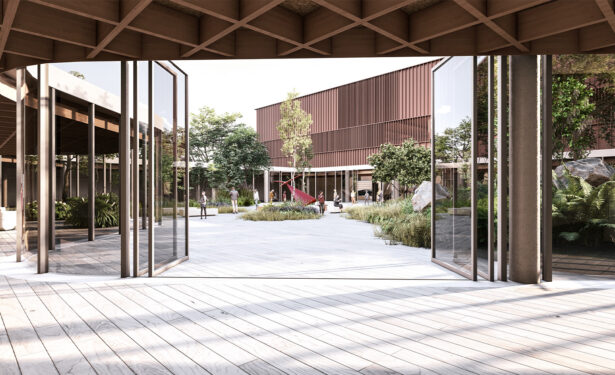
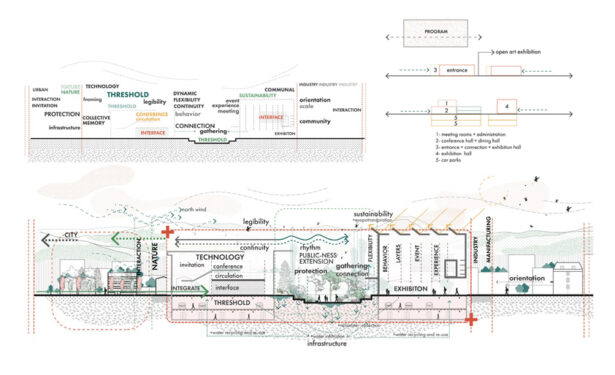
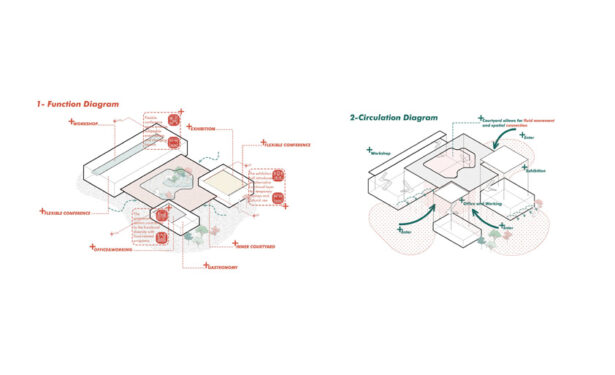
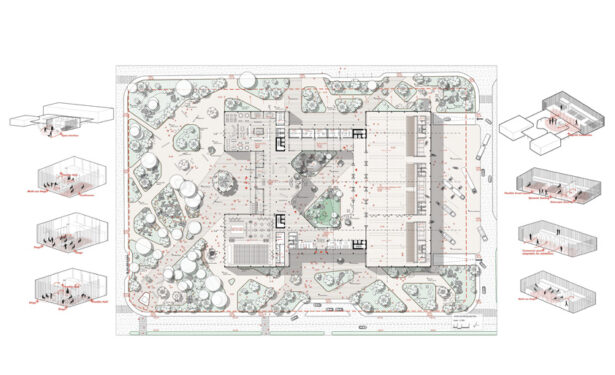
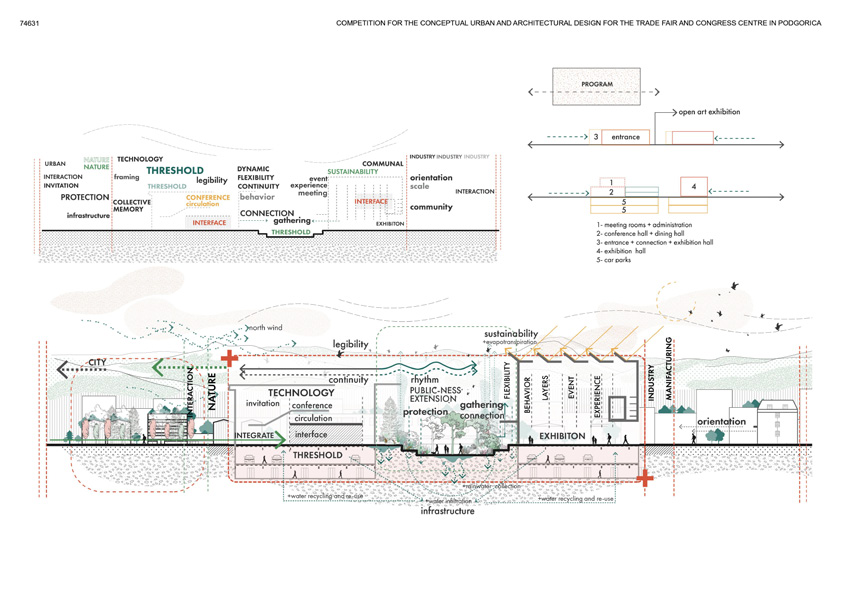
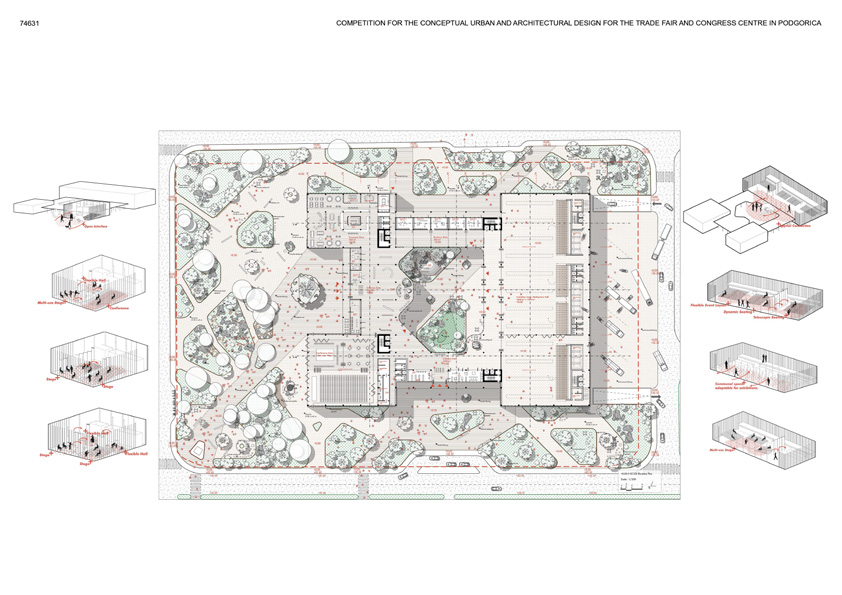
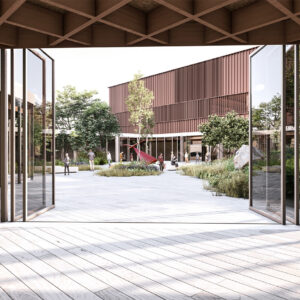
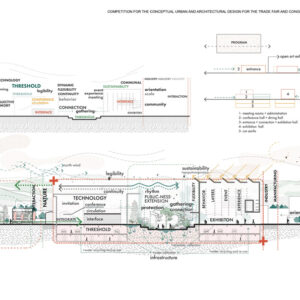
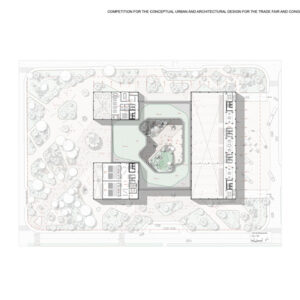
The spatial organization begins with the idea that the building is not a sealed container of functions, but a permeable ground that establishes continuous dialogue with its surroundings-guiding the user, producing spatial porosity, and framing lived experience. Based on this approach, the internal circulation is woven around a central corridor that connects the programs. This corridor is not merely a line of transition but acts as a threshold that negotiates between interior functions and the open landscape.
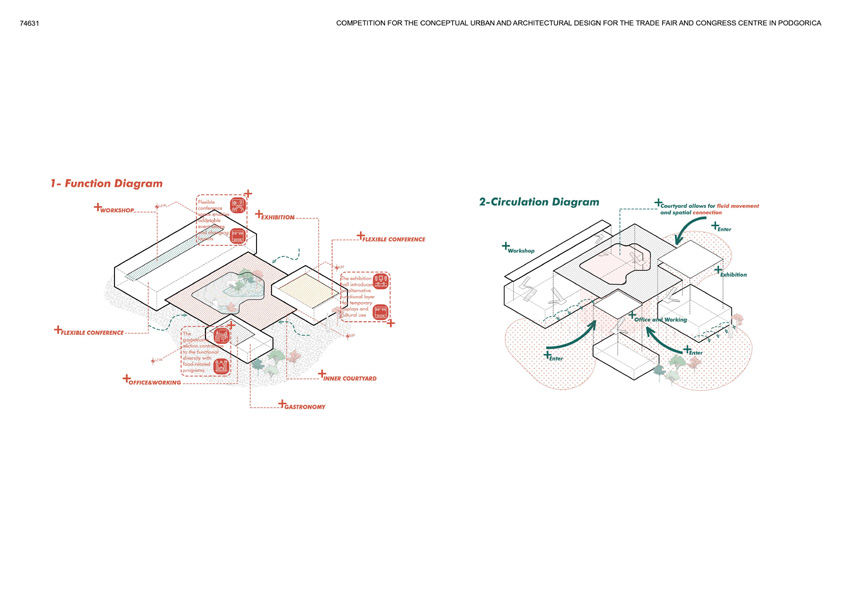
The façade facing the recreational axis houses the economic zone, gastrohub, workshops, cafeteria, and the conference
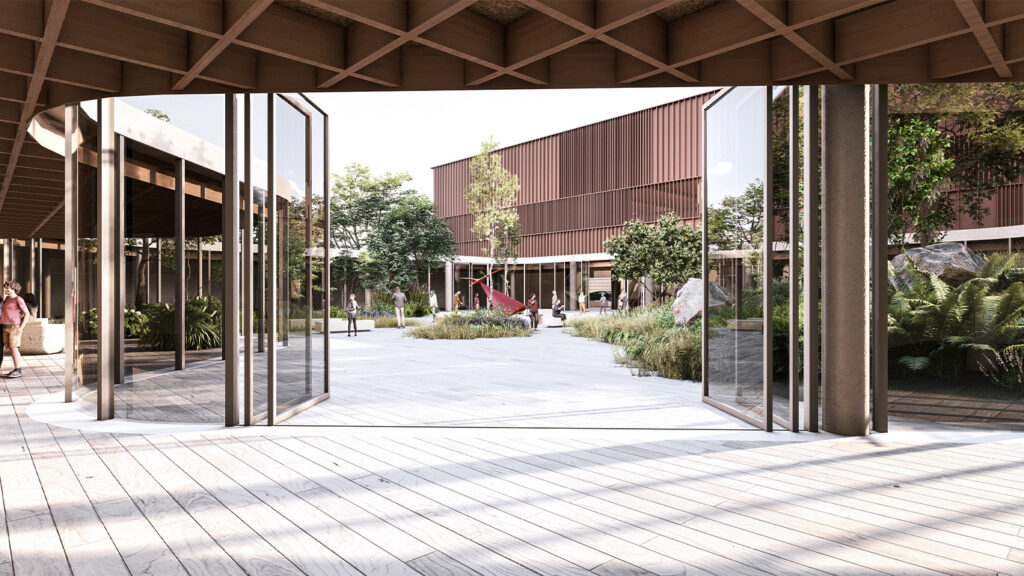
hall-public-oriented functions that are not confined inwardly but instead open up toward semi-open intermediate spaces. These openings foster a tangible continuity between architecture and nature, transforming the relationship between the building and the landscape into one of active integration, rather than passive adjacency.
This Is Not a Building, But a Ground Proposition
This structure is an interface positioned between city and nature. Neither a self-contained facility nor a static public object-it is a permeable system in continuous dialogue with its surroundings. lts relationship with the site is defined not only by topography or infrastructure, but by latent potentials, thresholds, memory, and spatial voids embedded in the territory. Situated between industrial remnants and a recreational axis, the site appears peripheral-yet it offers a rare urban condition where boundaries blur and redefinition becomes possible.
The project approaches this terrain not as an empty lot to be filled, but as a performative ground to be activated. The architectural gesture is not a singular figure imposed upon the landscape, but a spatial framework that adjusts to context, time, and movement. The open spaces proposed are not residual-rather, they become carriers of everyday use, informal gatherings, symbolic events, and spontaneous encounters. Identity emerges not from architectural form, but through transitions, permeability, and the affordances it creates.
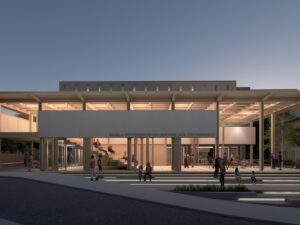
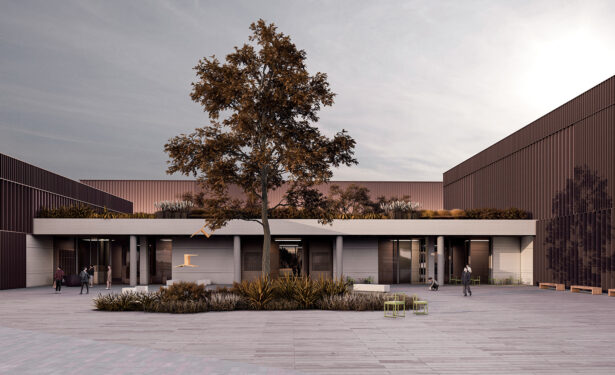
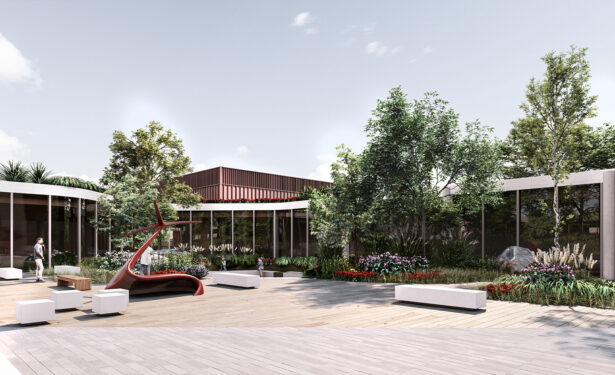
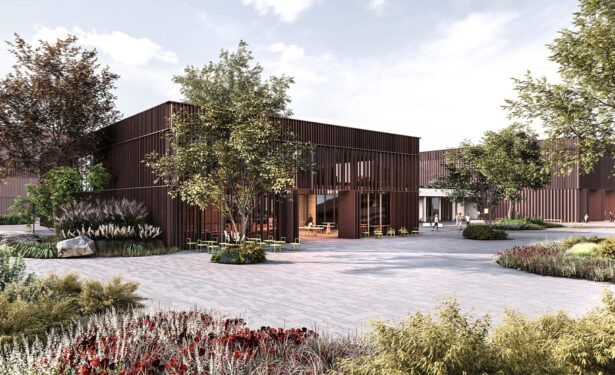
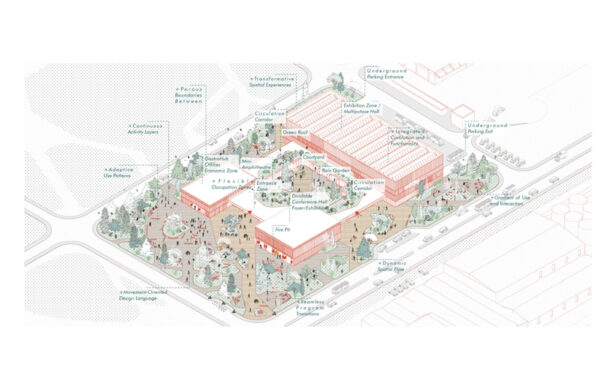
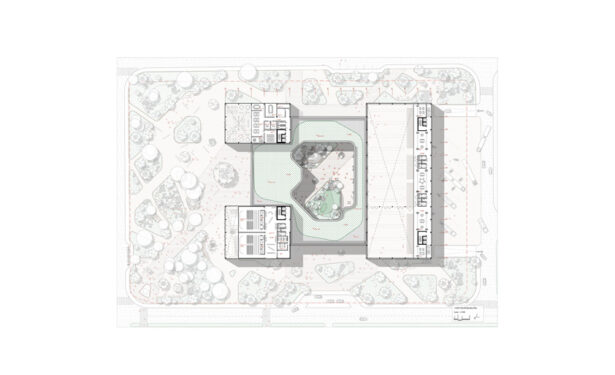
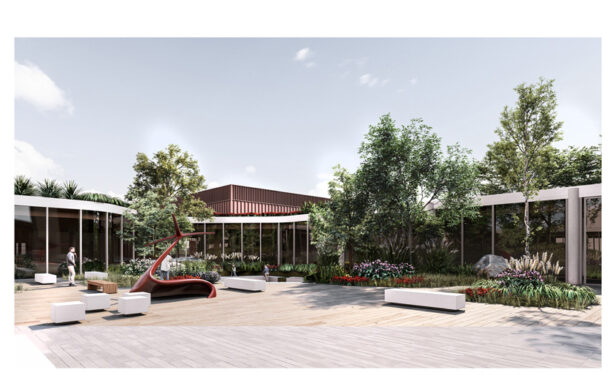
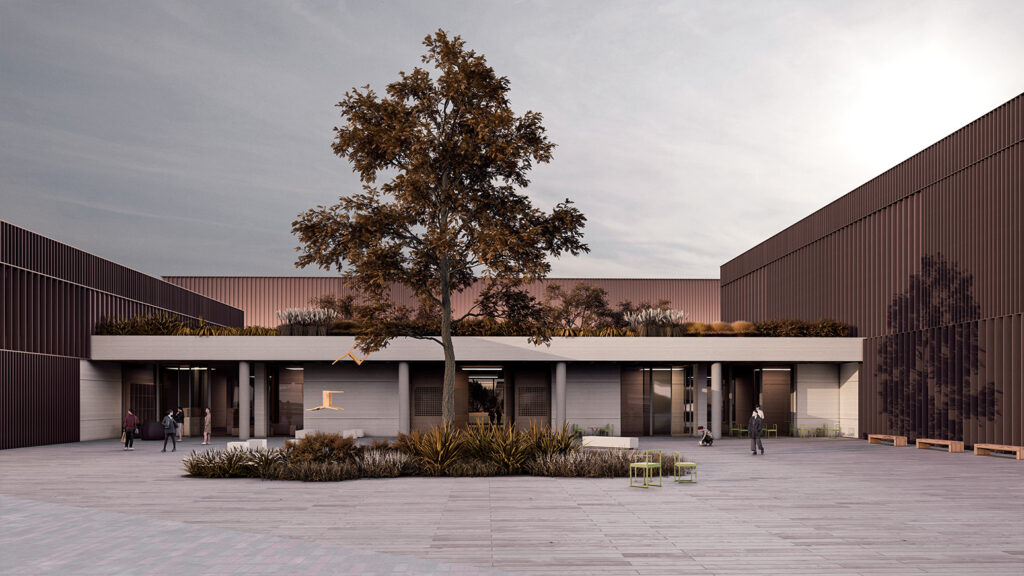
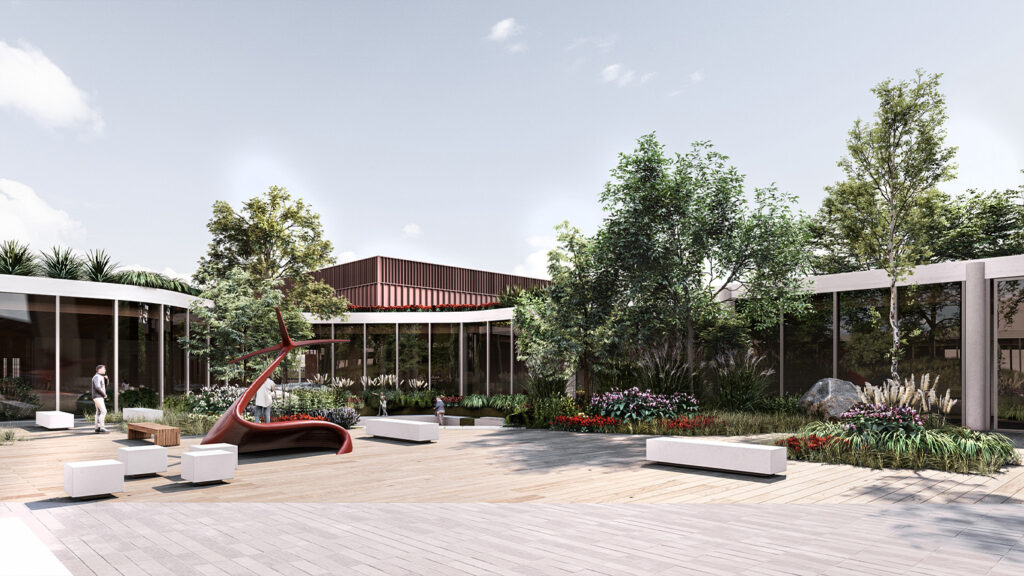
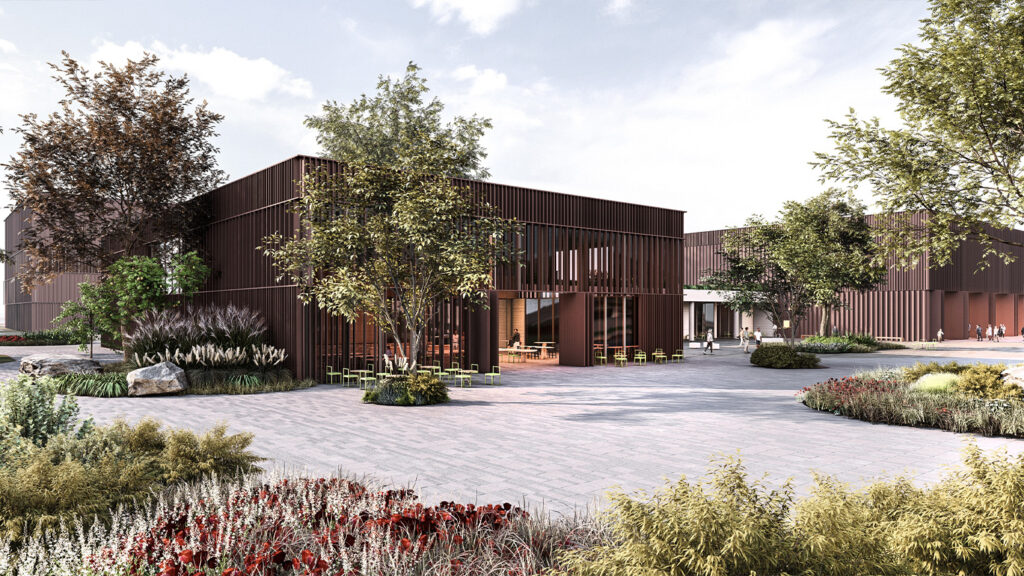
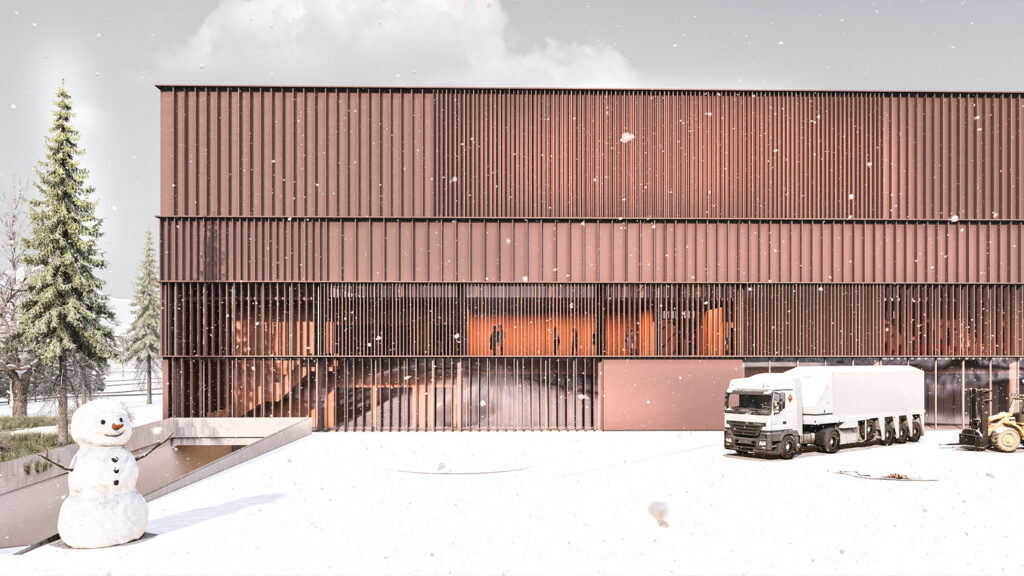
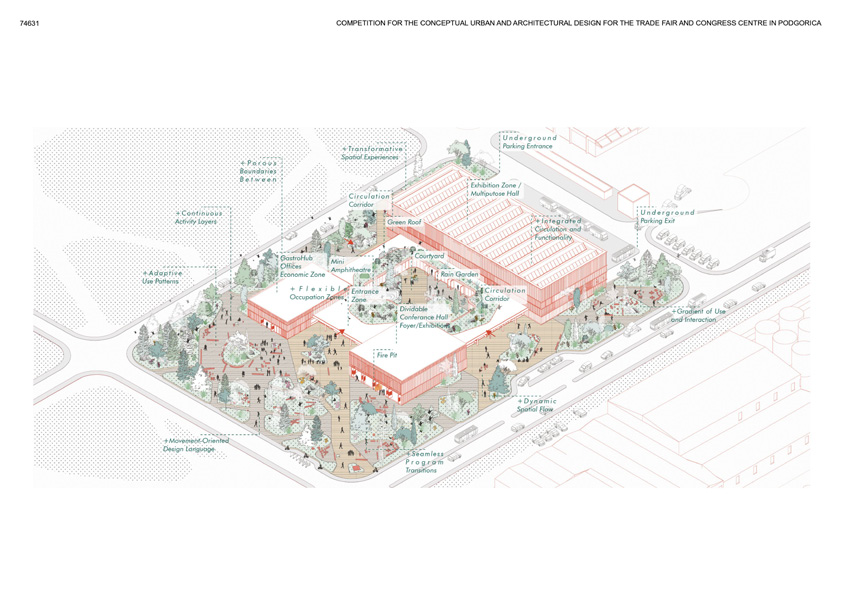
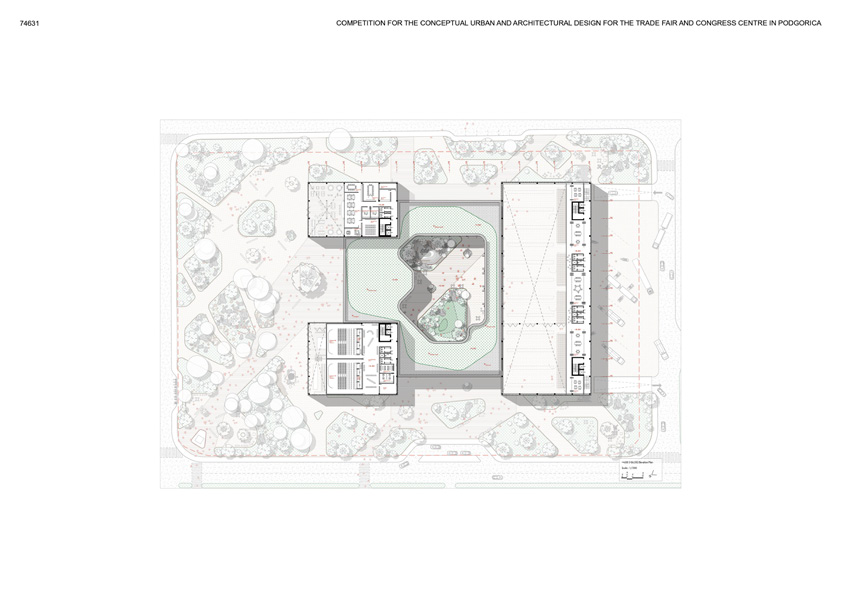
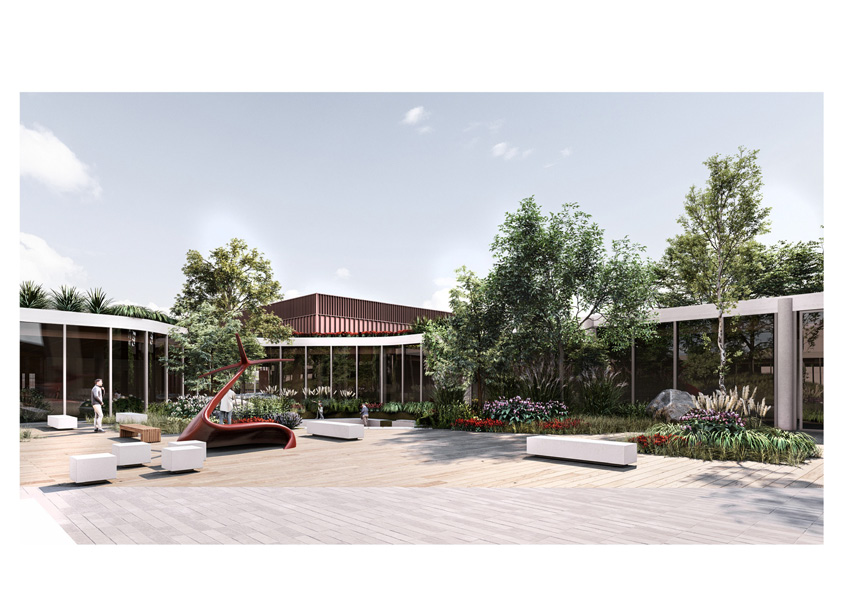
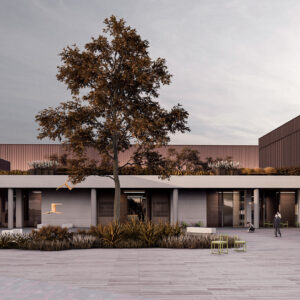
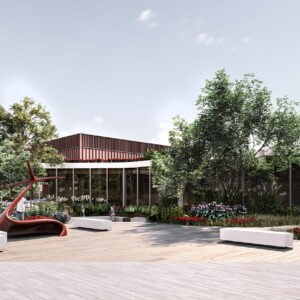
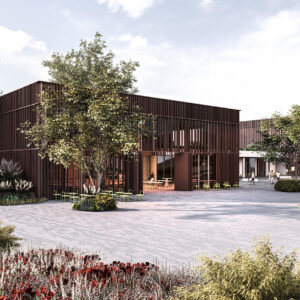
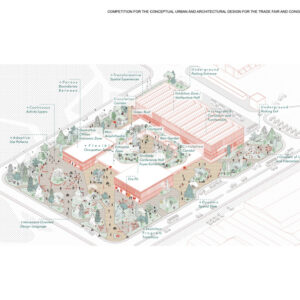
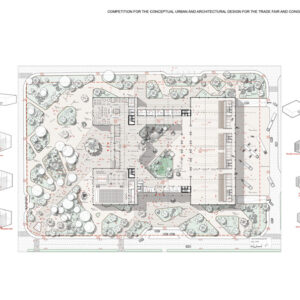
The main frontage is directed toward the northeast, establishing continuity with the adjacent recreational corridor. Meanwhile, buffer zones are strategically inserted between the highway, industrial backdrop, and the project’s active uses-transforming the site into a layered field of orientation. Preserved trees shape the central courtyard, which functions as a climate-responsive, shaded, and wind-protected outdoor core. it is neither square nor garden, but a hybrid zone for collective rhythms to unfold. Parking and logistical functions are discreetly located on the rear, along the edge of the old tobacco factory-allowing the public reclaim to remain uninterrupted. A connective mass ties together all functions as a mediating spine, not as hierarchy but as interface. Roof openings enable natural ventilation and passive cooling, while green roof strategies and permeable surfaces return much of the footprint to nature. Recycled and low-maintenance materials are deliberately used to avoid short lifespans and constant repair. This is not a building frozen in form-but a ground of spatial choreography, shaped by continuity rather than enclosure, and defined not by what it contains, but by what it enables.
SUSTAINABILITY
By re-purposing existing materials such as soil and wood, the project establishes a circular material cycle that reduces environmental impact and increases resource efficiency. Soil is transformed into compressed surfaces, natural fill, and sub-base layers, while wood is reused as seating elements, decking, and natural borders. The site transitions from impermeable surfaces to permeable systems, enabling water to infiltrate and rejoin the natural cycle. Sand and gravel filtration layers facilitate infiltration while also reducing surface runoff and supporting erosion control. As a spatial interface between built and natural environments, the focus area becomes a responsive node. Vegetative buffer zones help sequester carbon, regulate microclimates, and mediate between hard structures and soft ecologies. These buffers also assist in wind deflection and solar shading, contributing to passive climate strategies. Through the integration of a rain garden as a system, stormwater is collected from hardscapes, filtered through vegetation and substrate, and slowly returned to the ground. This supports the natural water cycle and helps create a self-sufficient micro-ecosystem within the site. the holistic sustainability strategies aim to create a resilient, regenerative, and ecologically sensitive space, where each layer reconnects the built environment with natural system
MATERIAL
In this project, material selection is not merely a matter of construction technique or aesthetic choice-it is a spatial strategy that responds to behavior, topography, and the rhythms of public life. The building is conceived not as a fixed object, but as a porous organism that continuously negotiates with its surroundings. Within this framework, each material is evaluated through its structural, experiential, and temporal roles.
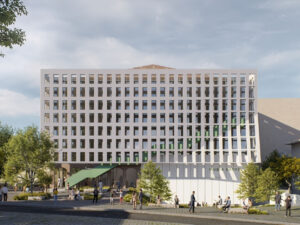
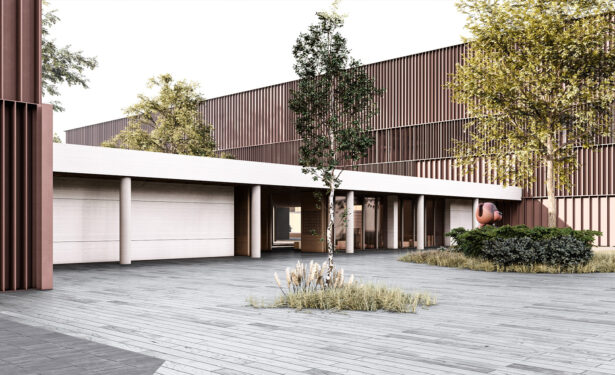
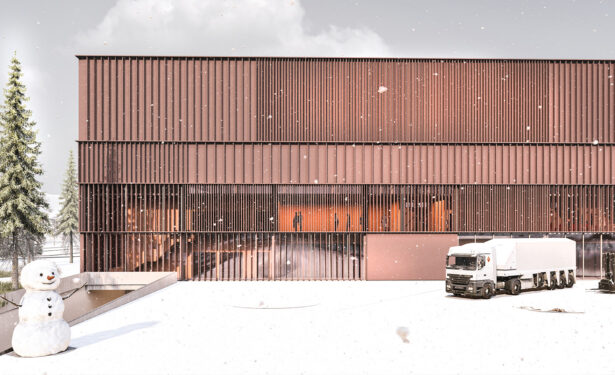
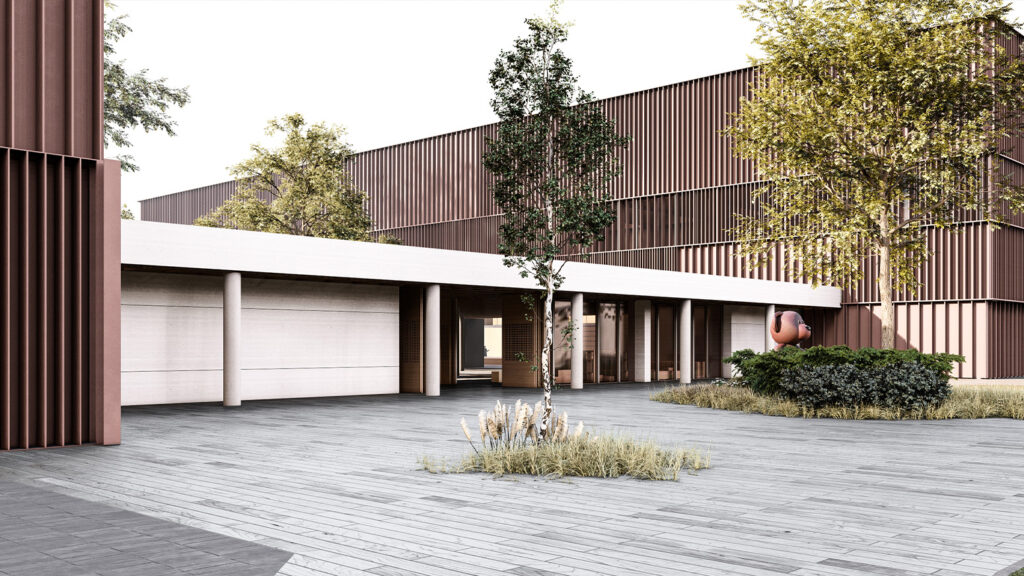
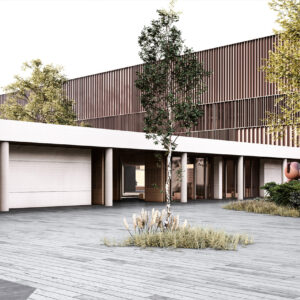
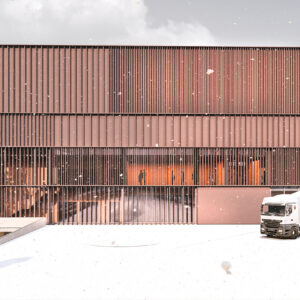
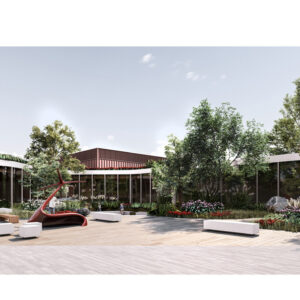
The exterior of the structure is defined by vertically placed metal panels in a rose-copper hue, which subtly shifts with the changing light throughout the day. This metallic skin establishes a contemporary yet sensitive dialogue with the sky and terrain, lending the structure a sense of lightness and responsiveness. The concrete frame offers durability and long-term stability, while its integration with generous openings and shaded thresholds transforms it from a rigid skeleton into a fluid spatial infrastructure.
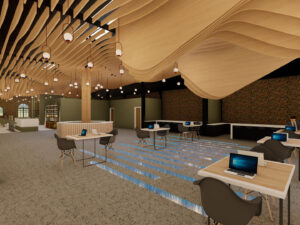
inside, wood serves as a key atmospheric and acoustic element. Used in ceilings, wall claddings, and seating components, natural wood introduces tactile warmth and sensory depth. Paired with light-toned, non-reflective surface finishes in circulation areas, it helps establish a serene and human-centered interior atmosphere. Rather than presenting a sterile or over-polished interior, the design embraces materials that evolve over time and resonate with human presence.
in the main exhibition and event hall, the flooring is conceived as a seamless, concrete-look, matte-finished resin surface. This material offers acoustic absorption, ease of maintenance, and resistance to intensive use. lts neutral character allows the hall to function as a flexible background for a wide range of programs-concerts, trade fairs, sports events, performances-without imposing a visual hierarchy.
The project also employs tonal variation as a spatial strategy to articulate hierarchy and functional zoning. The courtyard and base level are defined by light-colored, matte-finished materials that emphasize openness, permeability, and a gentle connection to the ground. in contrast, the volumes attached above are rendered in darker tones, creating a visual tension that enhances the vertical composition of the building. This contrast supports both readability of program and the building’s dynamic relationship with changing light, shadow, and movement across the day.
Etiketler