
- 31 Mart 2026
- 3148 defa okundu.
Finalist, Living Ruins II Competition
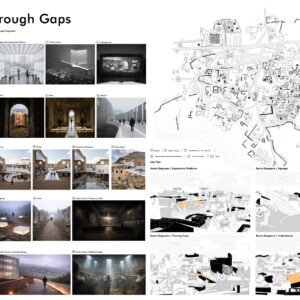
Ceren Özdem ve Furkan Demirbaş'ın TerraViva tarafından düzenlenen "Living Ruins II Competition" için tasarladığı proje, finalist olarak seçildi.
Proje Raporu:
IN–BETWEEN
Dereiçi Village is not a completed settlement. Yet it is not incomplete either.
Its spatial physiology and social structure invite the visitor to pause, refrain from intervention, and observe. The village possesses a strong and self-contained character that demands respect rather than transformation. Its current condition represents a suspended spatial state between past and present. This condition is not approached as a problem to be solved, but as a fundamental architectural circumstance.
For this reason, the project does not aim to reconstruct the village, complete what is assumed to be missing, or revive an idealized past. Such interventions would suppress the existing condition of the place. Instead, the proposal accepts the village as it is and transforms this condition into an architectural experience.
This approach leads the project toward the concept of in-betweenness.
“In-between” does not describe a physical void or a simple transition, but a condition imposed by the place itself. The tension between stone and void, ground and sky, observation and contact defines the visitor’s relationship with the site. Architecture here does not produce an object; it reveals a condition.
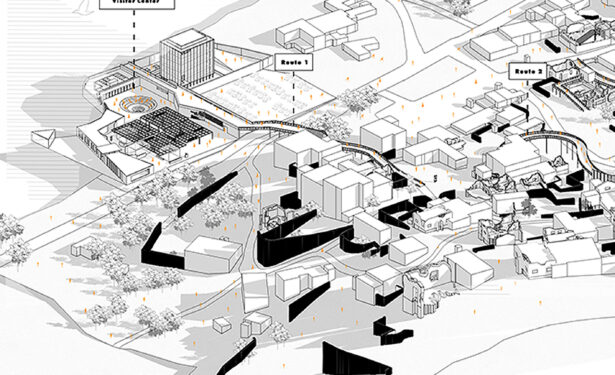
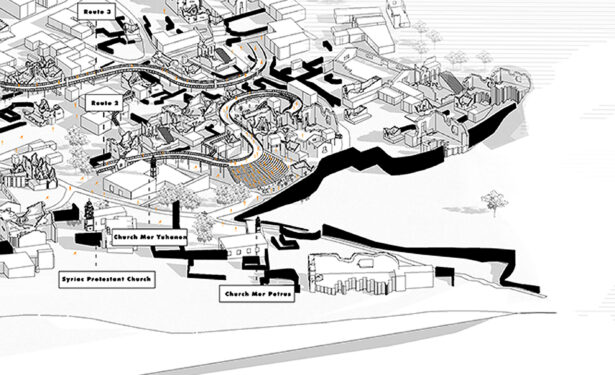
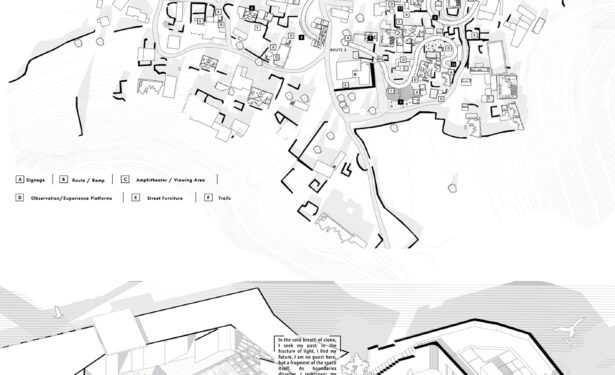
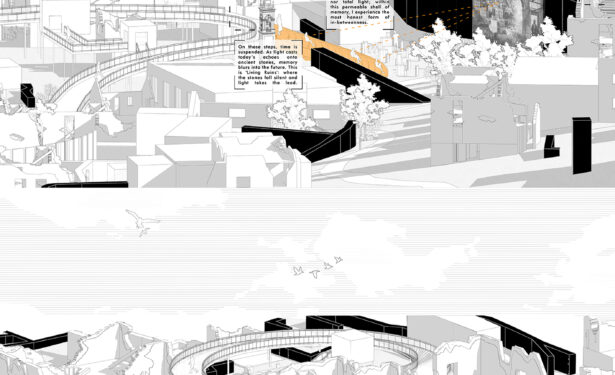
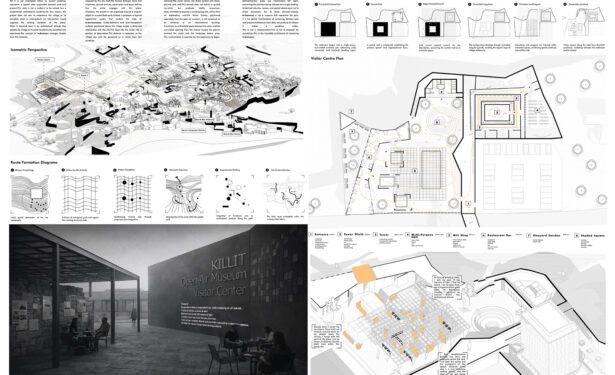
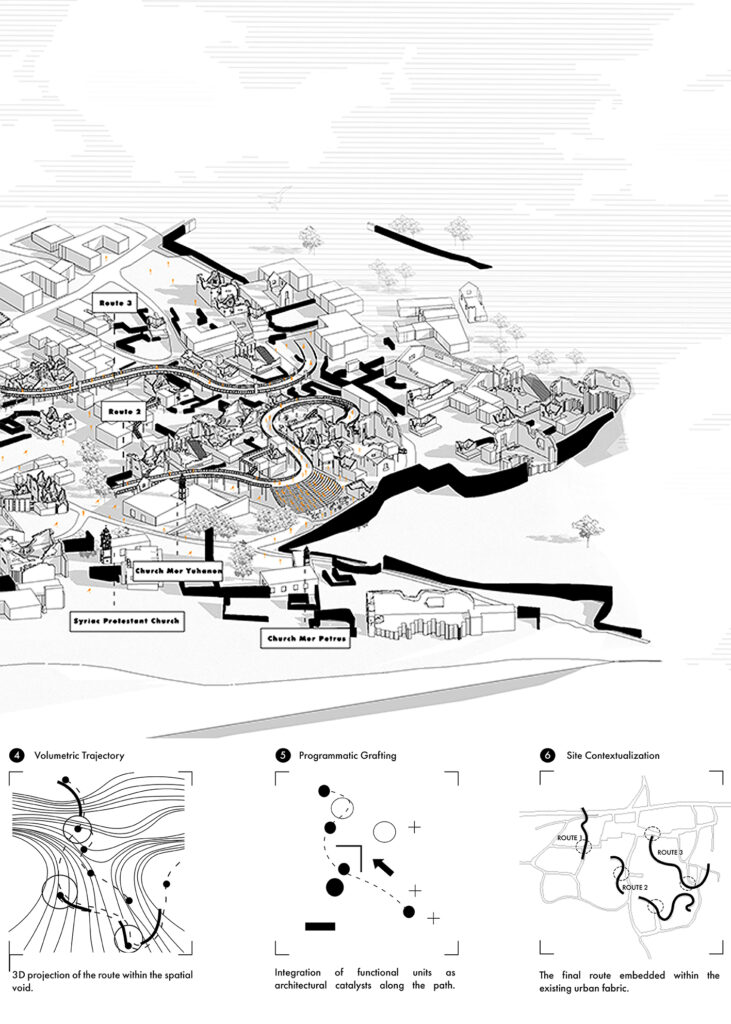
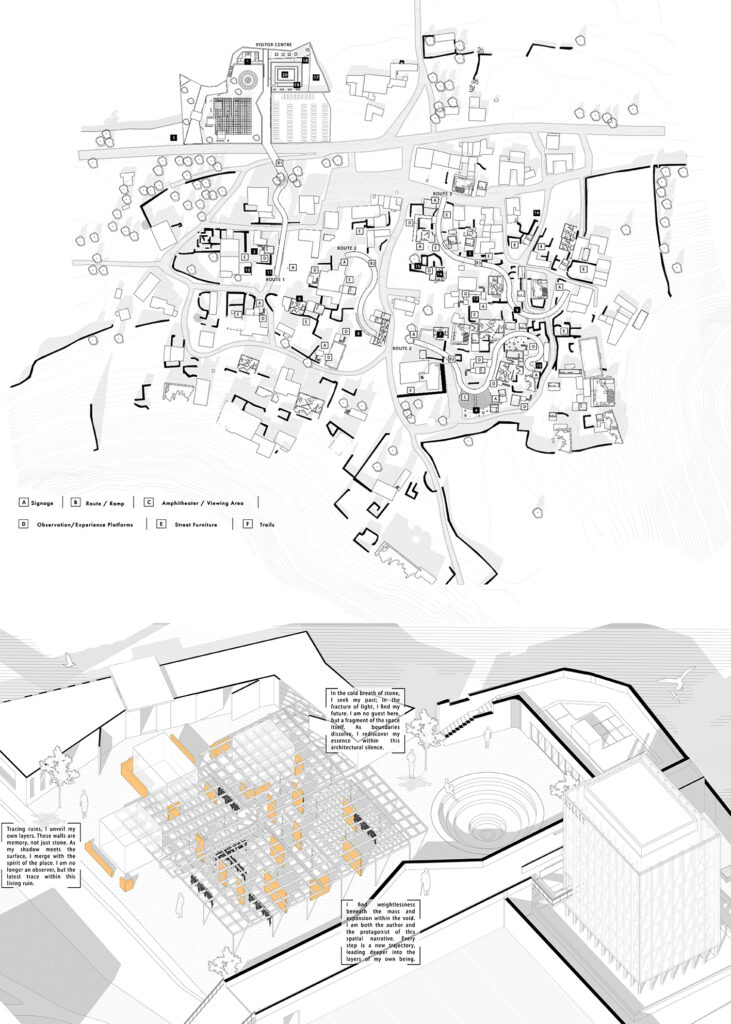
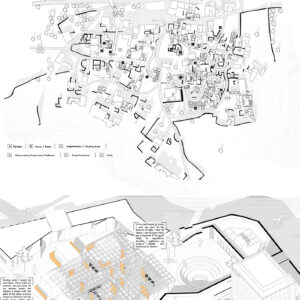
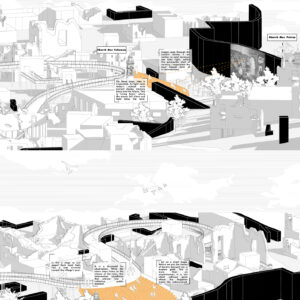
Accordingly, the project is not organized around a singular building or a predetermined route. Instead, it proposes a layered experiential system that makes the state of in-betweenness perceptible.
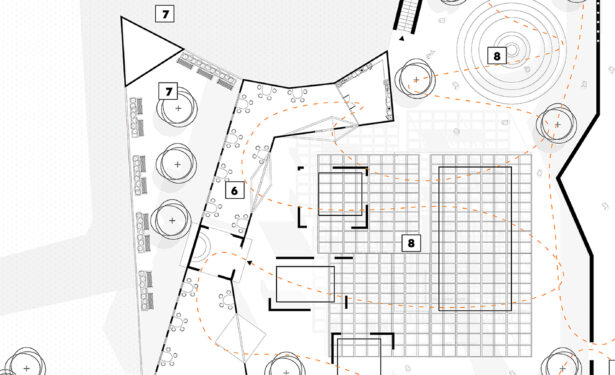
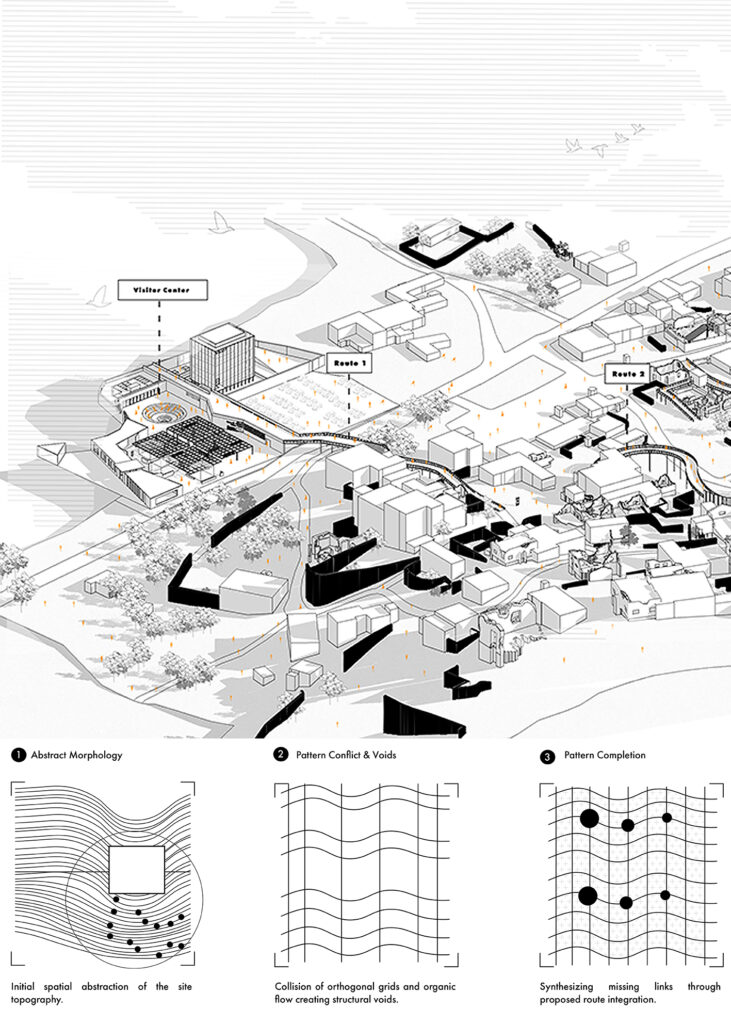
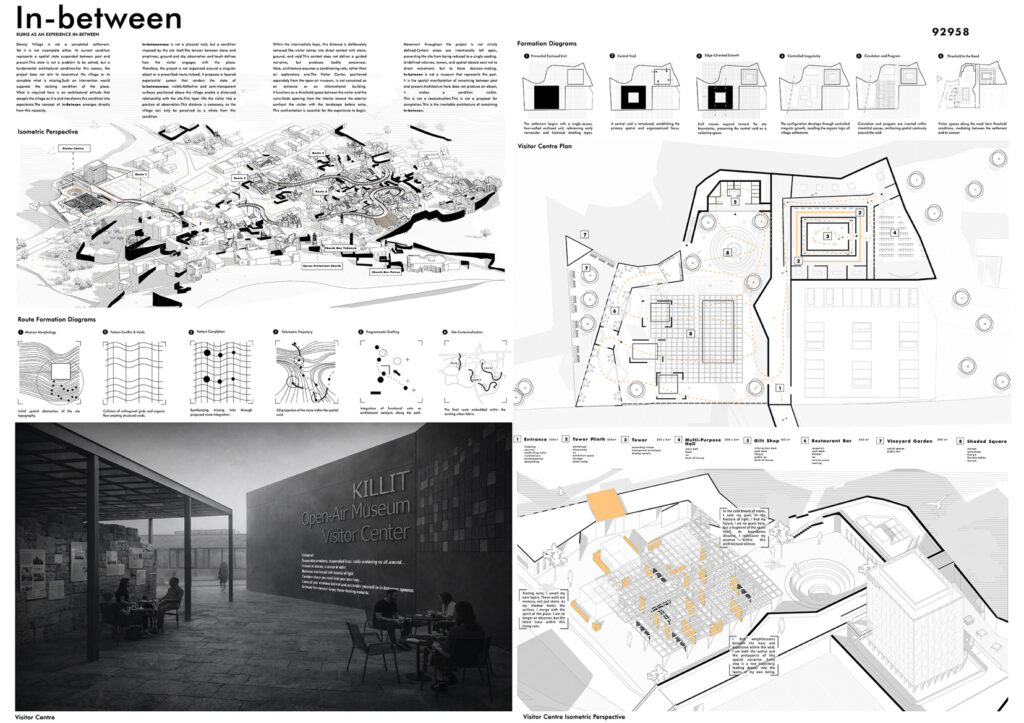
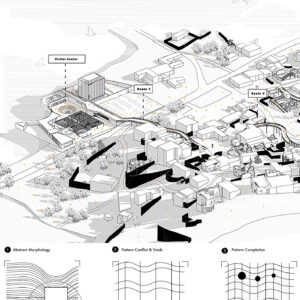
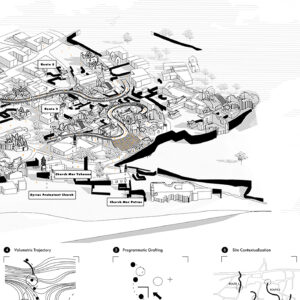
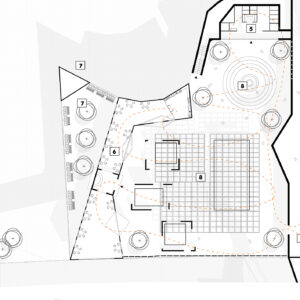
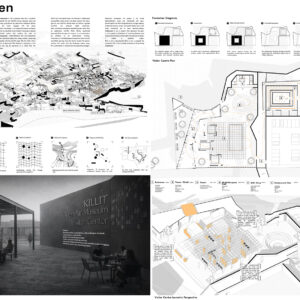
The spatial strategy originates from the village’s most fundamental architectural unit: four walls and a threshold. This elementary configuration is read and expanded to generate new spatial volumes and boundaries without disrupting the village’s organic morphology.
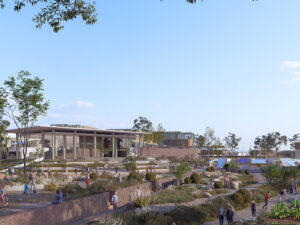
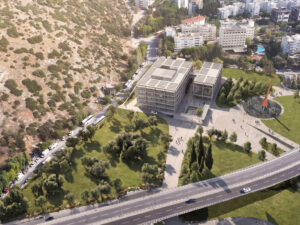
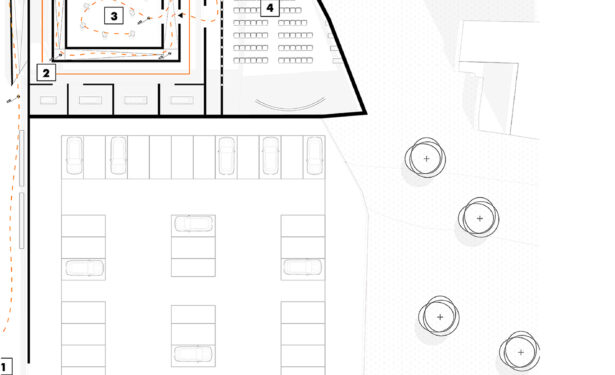
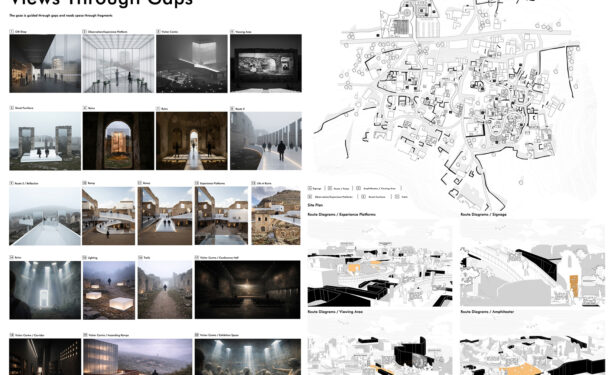
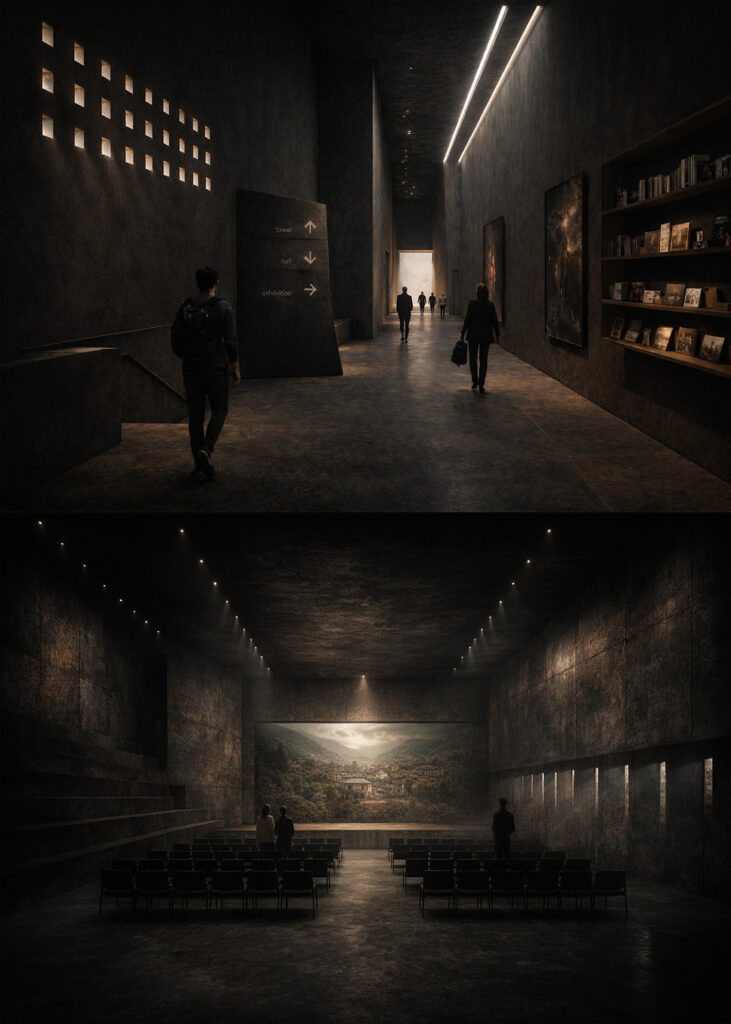
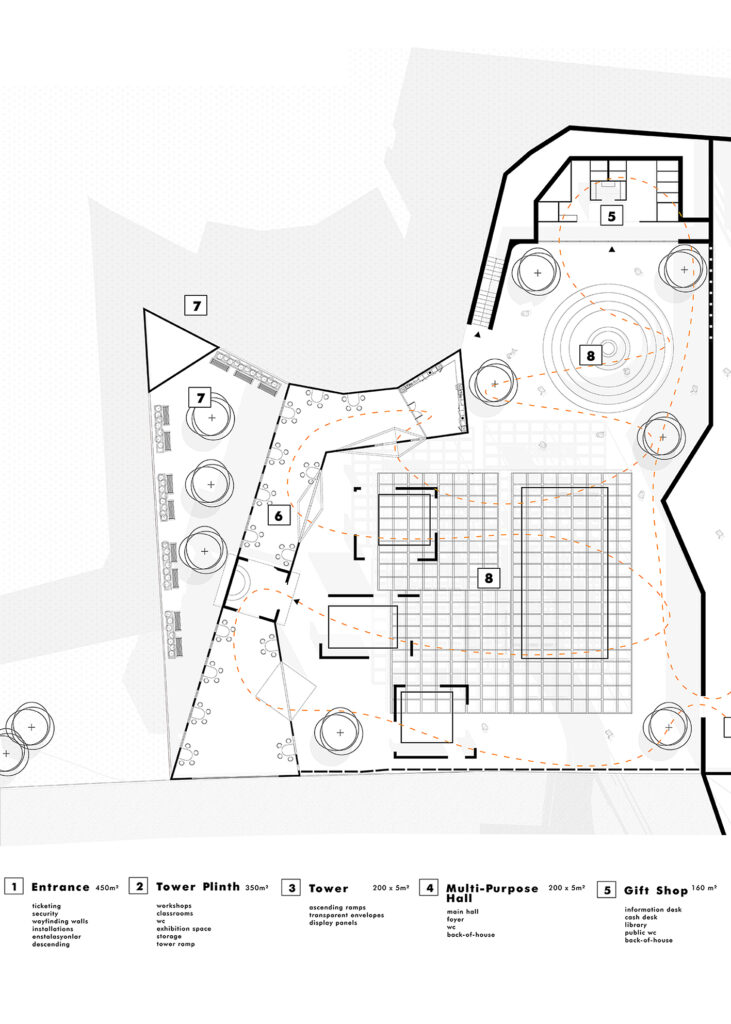
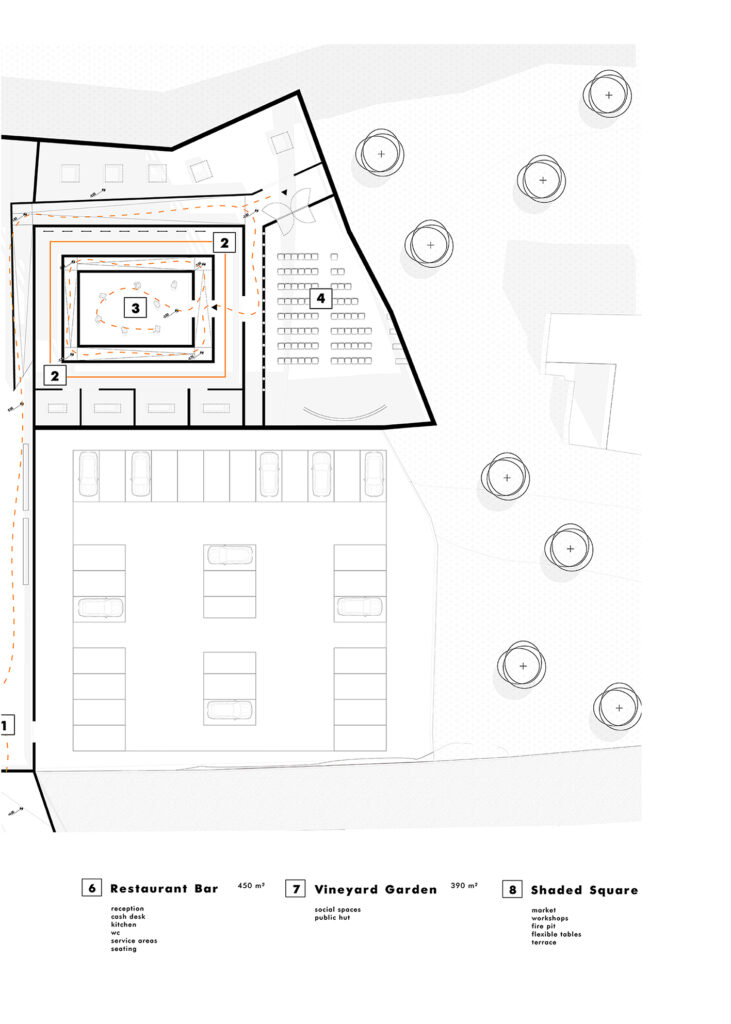
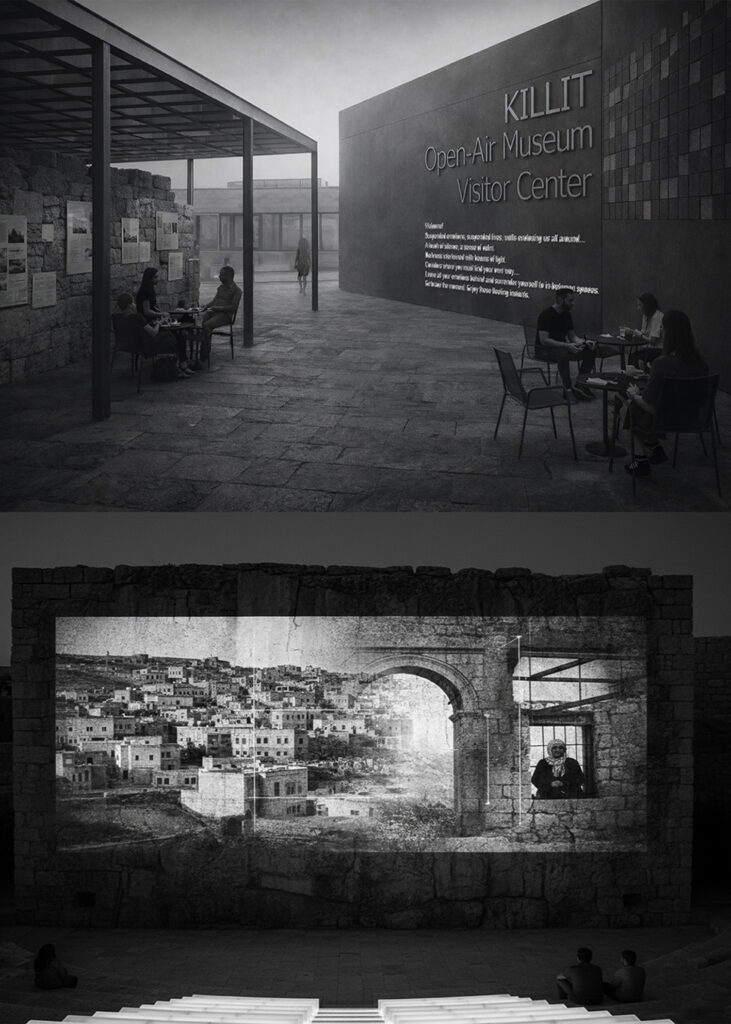
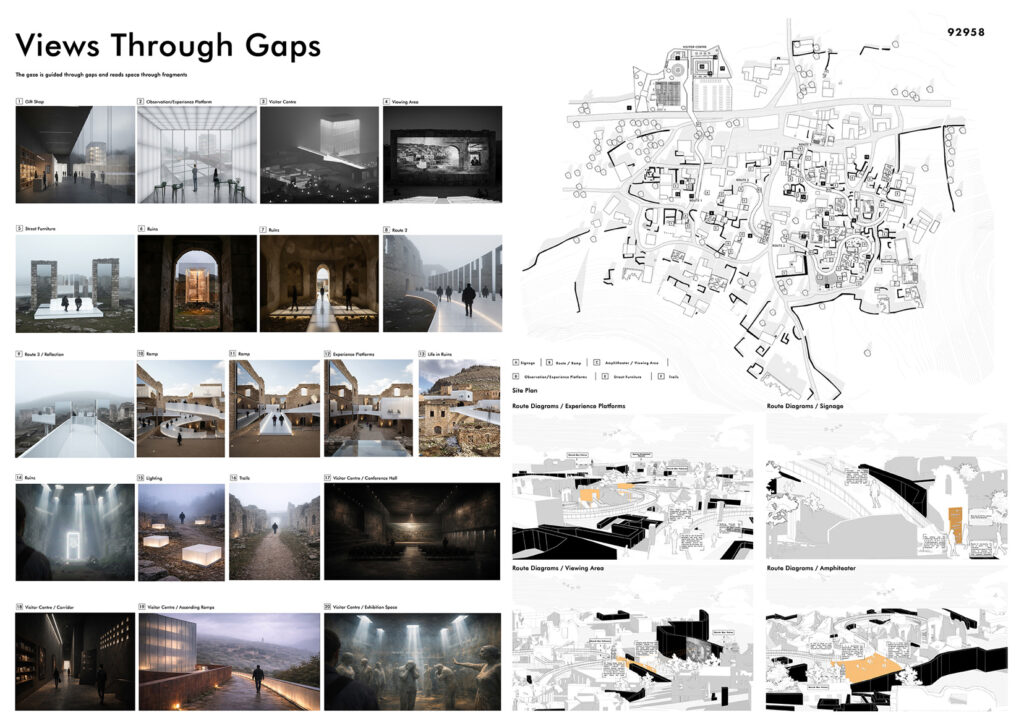
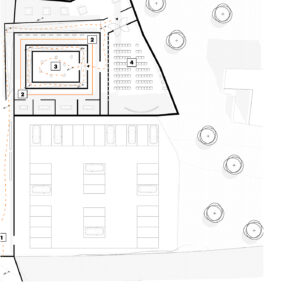
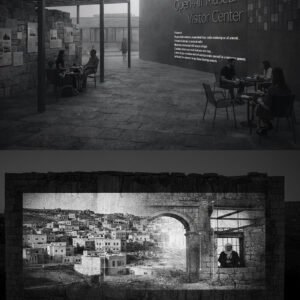
The road separating the Visitor Center from the village is not conceived as a division, but as a contextual interface. As the first point of encounter, the Visitor Center incorporates both open and enclosed spaces, adopting a spatial attitude consistent with the village’s inherent character.
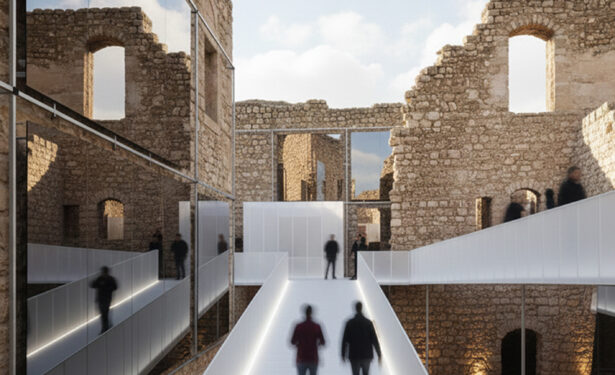
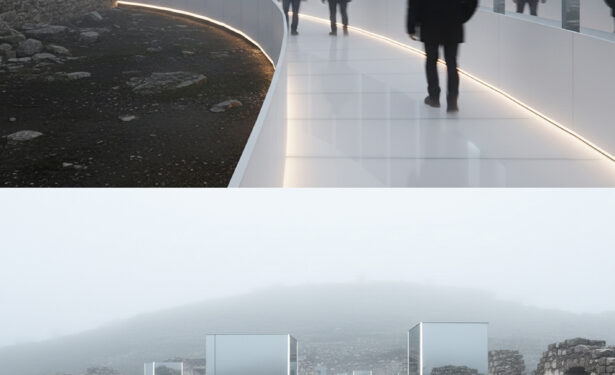
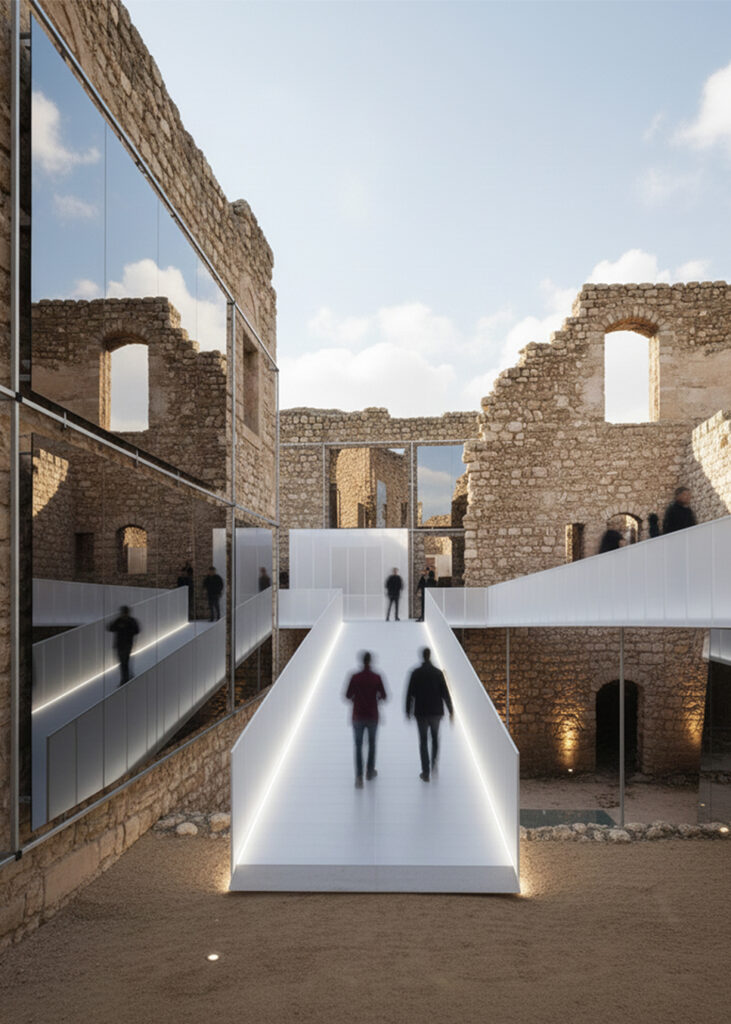
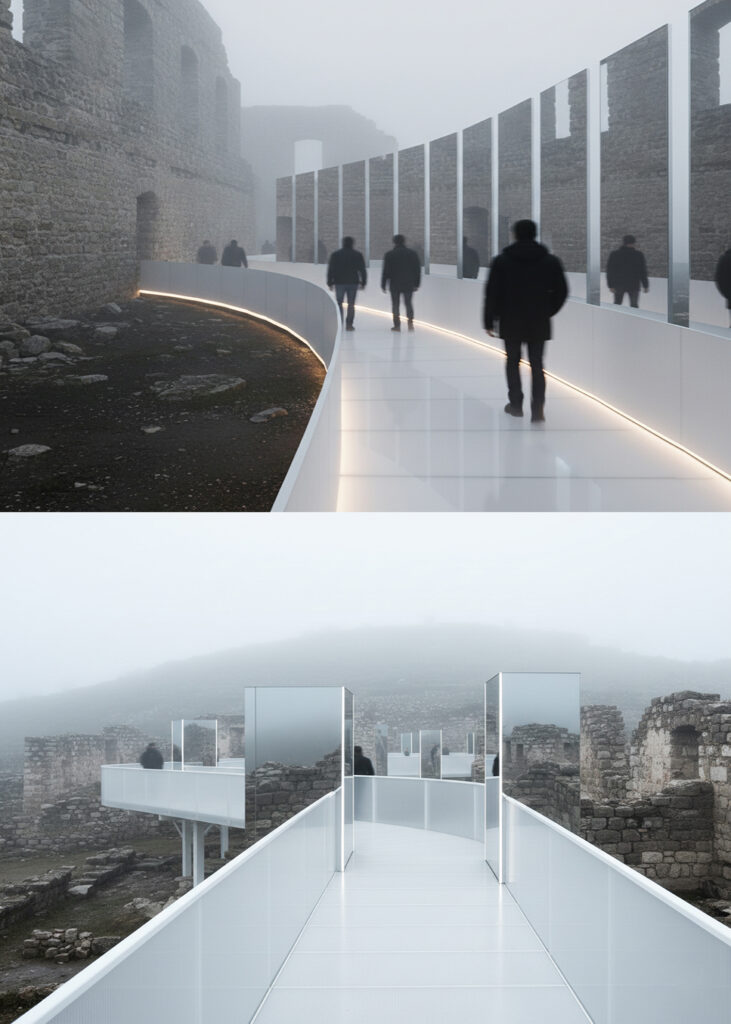
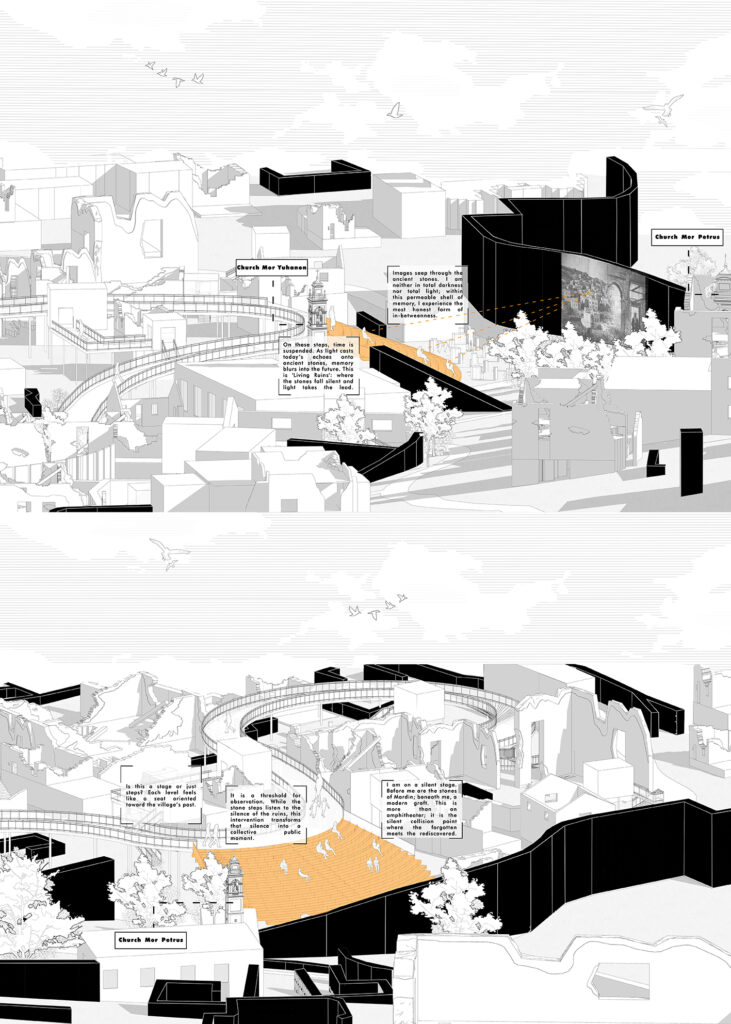
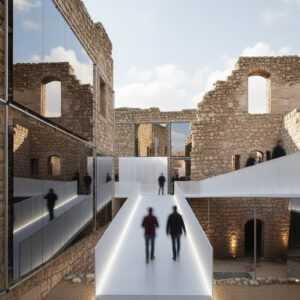
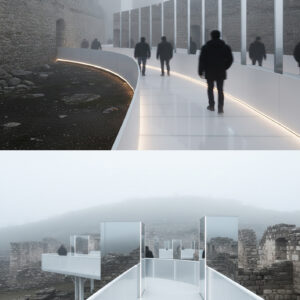
The spatial narrative unfolds through layers. At the upper level, reflective and semi-transparent surfaces establish a distant relationship with the site. Polycarbonate and mirrored elements lift the visitor from the ground, positioning them as an observer. This distance is intentional, as the village can only be perceived as a whole from this detached vantage point.
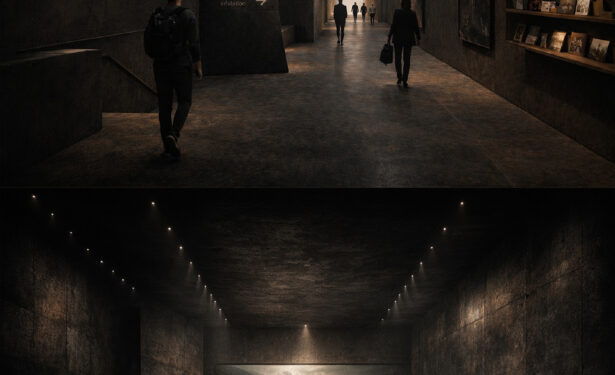
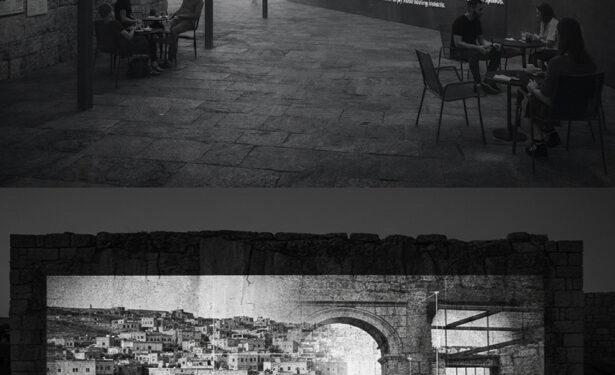
At the intermediate level, this distance is dissolved. The visitor comes into direct contact with stone surfaces, ground textures, and voids. This encounter does not offer a guided narrative; instead, it produces bodily awareness. Architecture assumes a conditioning role rather than an explanatory one.
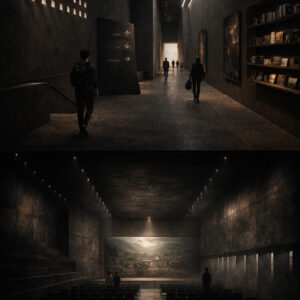
The Visitor Center, although spatially detached from the open-air museum, is not conceived as a conventional entrance or information building. It functions as a threshold space between the visitor and the site. Movement within the project is not rigidly defined, preventing the site from being reduced to a singular reading.
IN–BETWEEN is not a museum that narrates the past. It is the spatial manifestation of being suspended between past and present. This is not a reconstruction. This is not a proposal of completion. This is the inevitable architecture of in-betweenness.
Etiketler

İlgili Projeler
-
 Satın Alma, Kuşadası Belediyesi Hizmet Binası Mimari Proje Yarışması
-
Seçki Ödülü, Mimarhane Öğrenci Projeleri Ödüllü Seçkisi 2025
-
Eşdeğer Mansiyon, Alaşehir Kent Merkezi Kentsel Tasarım Projesi Yarışması
-
Satın Alma, Kuşadası Belediyesi Hizmet Binası Mimari Proje Yarışması
-
Katılımcı, Kuşadası Belediyesi Hizmet Binası Mimari Proje Yarışması